A county-driven tourism diversification agenda gained fresh momentum in Nyeri as government and local leaders convened at a cultural festival designed to reposition Kenya’s visitor economy beyond wildlife safaris and coastal leisure circuits toward a wider set of experiential offerings anchored on culture, agriculture, sport and innovation.
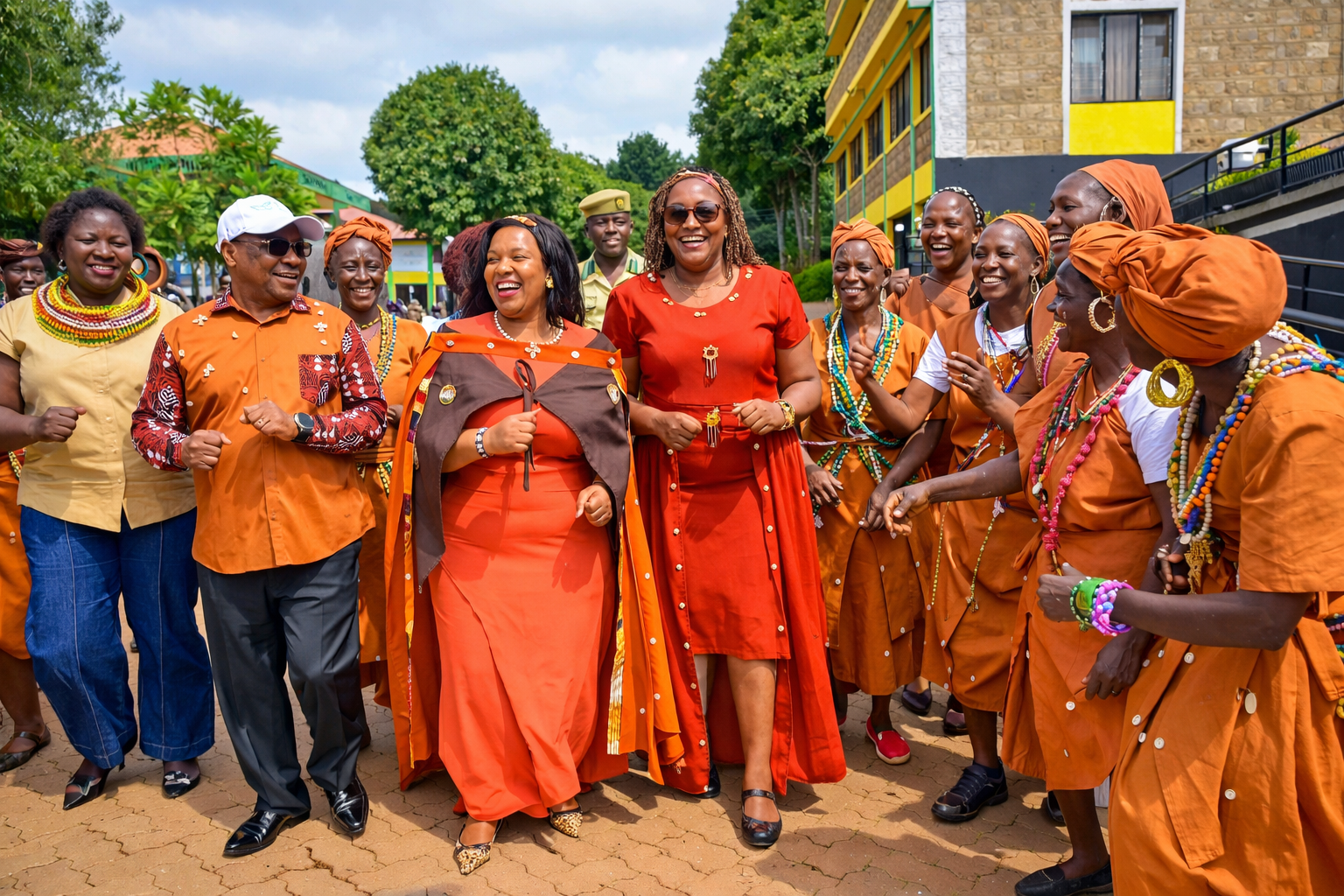
Tourism and Wildlife Cabinet Secretary Rebecca Miano joined county leadership at the Nyeri National Polytechnic for the seventh Nyeri County Annual Tourism and Cultural Festival, where discussions centred on expanding the country’s tourism value chain through locally rooted products.
The gathering brought together Governor Mutahi Kahiga, cultural practitioners, youth creatives and tourism stakeholders in a setting that reflected growing policy interest in devolved tourism development, where counties are expected to shape distinctive visitor experiences that can be integrated into national destination branding and marketed across regional and international markets.
Policy direction outlined by Miano points to a shift in tourism architecture that moves away from concentration around wildlife parks and coastal zones toward distributed attraction nodes built on agritourism, sports tourism, gastronomy and cultural heritage circuits.
She noted that visitor behaviour is evolving, with demand rising for immersive experiences that connect travellers to production systems, local traditions and community life across different regions of the country.
Nyeri County🇰🇪
— CS Rebecca Miano, EGH (@rebecca_miano) June 13, 2026
Joined Governor @GovernorKahiga and the people of Nyeri County this afternoon for the 7th Nyeri County Annual Tourism and Cultural Festival at the Nyeri National Polytechnic.
Looking forward to celebrating the rich fusion of culture, youth creativity, and… pic.twitter.com/IFh0cx9Zxy
“Kenya is much, much more,” said Miano, Cabinet Secretary for Tourism and Wildlife.
The agritourism segment is being positioned around agricultural value chains such as tea and coffee production, where visitors can trace origins, engage with farming communities and participate in farm-based experiences that convert production landscapes into tourism assets.
Sports tourism is also gaining attention as Kenya leverages its global reputation in athletics to build event-driven travel flows, while gastronomy tourism is being framed around culinary traditions that reflect regional diversity and local food systems.
“We have sports tourism, we have agri-tourism and also cultural tourism,” said Miano.
The Nyeri festival added a county-level dimension to this strategy, showcasing how cultural expression and youth creativity can be structured into tourism products capable of extending visitor stays and widening economic participation at local level.
The county’s historical identity linked to the global scouting movement offers additional leverage, with the final resting place of Robert Baden-Powell providing a heritage anchor that can support specialised cultural tourism flows.
Discussions at the festival also reflected Kenya’s broader ambition to position itself as a regional innovation and technology hub, with references to the “Silicon Savannah” narrative being used to explore linkages between technology ecosystems and business tourism.
This approach aligns with efforts to diversify Kenya’s destination brand beyond nature-based attractions toward a multi-sector identity that integrates innovation, heritage and creative industries.
County collaboration with national government agencies and private sector actors is emerging as a central mechanism for product development, marketing and infrastructure support, with Nyeri serving as a case study for how heritage-rich counties can convert cultural identity and historical relevance into structured tourism offerings within a decentralised development framework.