A coordinated national rollout of the second tranche of the NYOTA Business Support Programme deployed Ksh 3 billion to 122,000 young entrepreneurs across Kenya on a single day, with President William Ruto leading the main launch in Nairobi while Cabinet Secretary Rebecca Miano and her Cabinet colleagues simultaneously presided over regional cluster launches in counties spanning the country.

The scale of coordinated government disbursement positions NYOTA as one of the most operationally ambitious youth enterprise programmes Kenya has executed in recent years, requiring multiministry coordination, county level administrative preparation, and financial disbursement systems capable of processing payments to over 120,000 beneficiaries within a compressed timeframe.
CS Miano led the Nanyuki Cluster launch, covering Laikipia, Isiolo, and Samburu Counties, joined by the Principal Secretaries in charge of Defence and Devolution, a multiministry presence that reflected the programme's status as an intergovernmental initiative rather than the mandate of a single department.
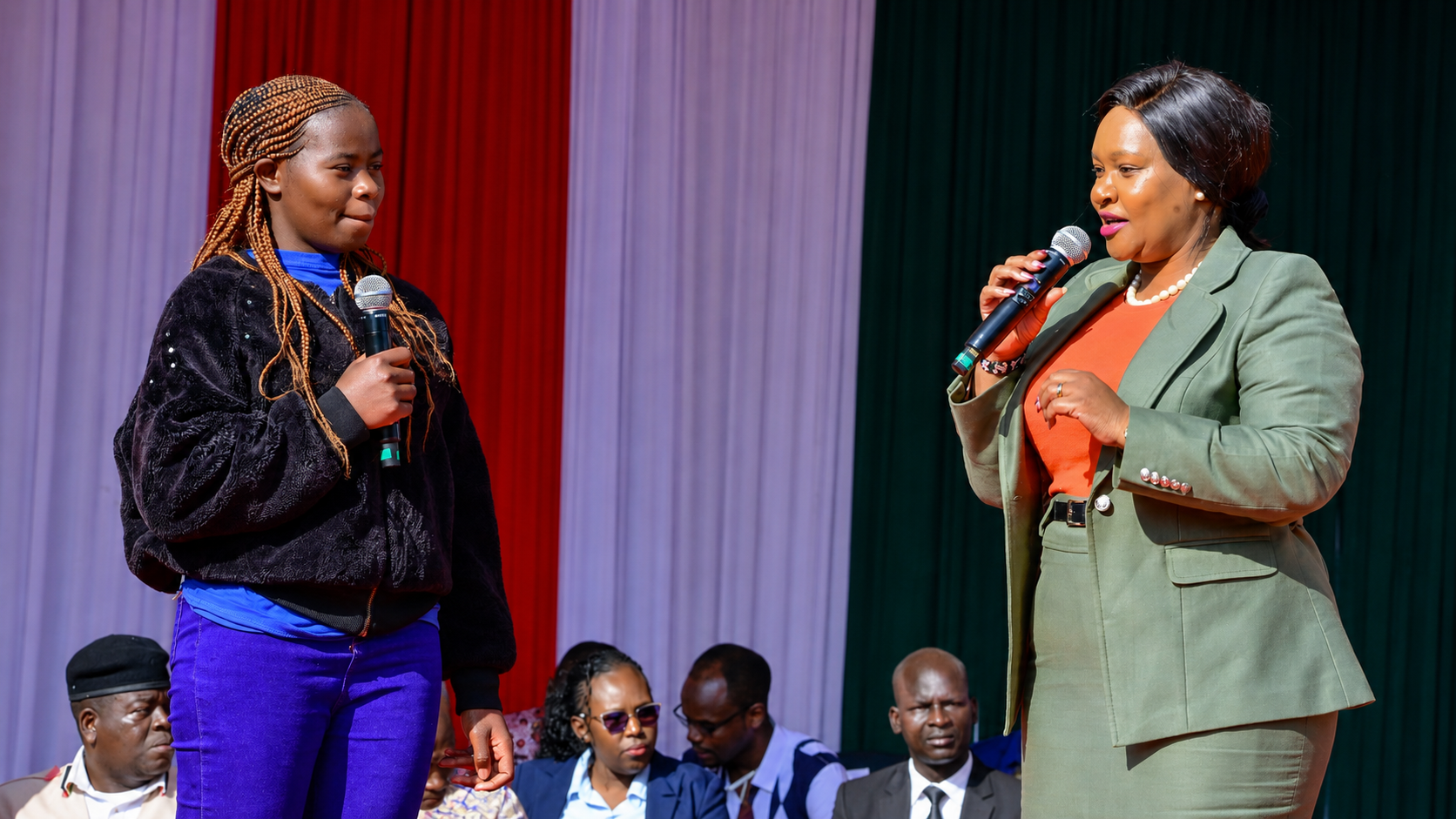
The northern and central Rift counties covered by the Nanyuki Cluster are characterised by a mix of pastoralist communities, agribusiness activity, and a growing small enterprise base among young people who have historically had limited access to formal financing and institutional business development support.
The disbursement in this tranche divides into two distinct streams: more than 88,000 young beneficiaries receiving a second allocation of Ksh 25,000 each to scale ventures they established with their initial funding, and 33,269 new entrants receiving their first tranche to begin their entrepreneurial journeys, a structure that builds both a scaling track for proven micro enterprises and an onboarding track for first time recipients.
The architecture of the NYOTA programme reflects a policy thesis that capital provision must be paired with mentorship and organisational support to generate durable enterprise outcomes, a position grounded in the observed failure rates of cash transfer programmes that do not invest in the business development capacity of recipients alongside the financial disbursement.
"Backing our youth with capital and mentorship delivers real impact, and our bottom up strategic focus ensures these micro enterprises grow sustainably and integrate seamlessly into our economic ecosystems," said Miano, Cabinet Secretary for Tourism and Wildlife, articulating the government's framing of the programme as a structural economic intervention rather than a welfare transfer.
CS Miano noted that witnessing young Kenyans who had organised and executed business plans across the Nanyuki region was an affirming indicator of the programme's early impact, pointing to enterprises already contributing to local economic activity and driving demand within their communities.
The longer term measure of NYOTA's impact will rest not on disbursement volumes alone but on the survival and growth rates of the enterprises it has seeded, a question that enterprise monitoring data collected at the county level over the coming months and years will need to answer if the programme is to justify its Ksh 3 billion scale and inform the design of subsequent phases.