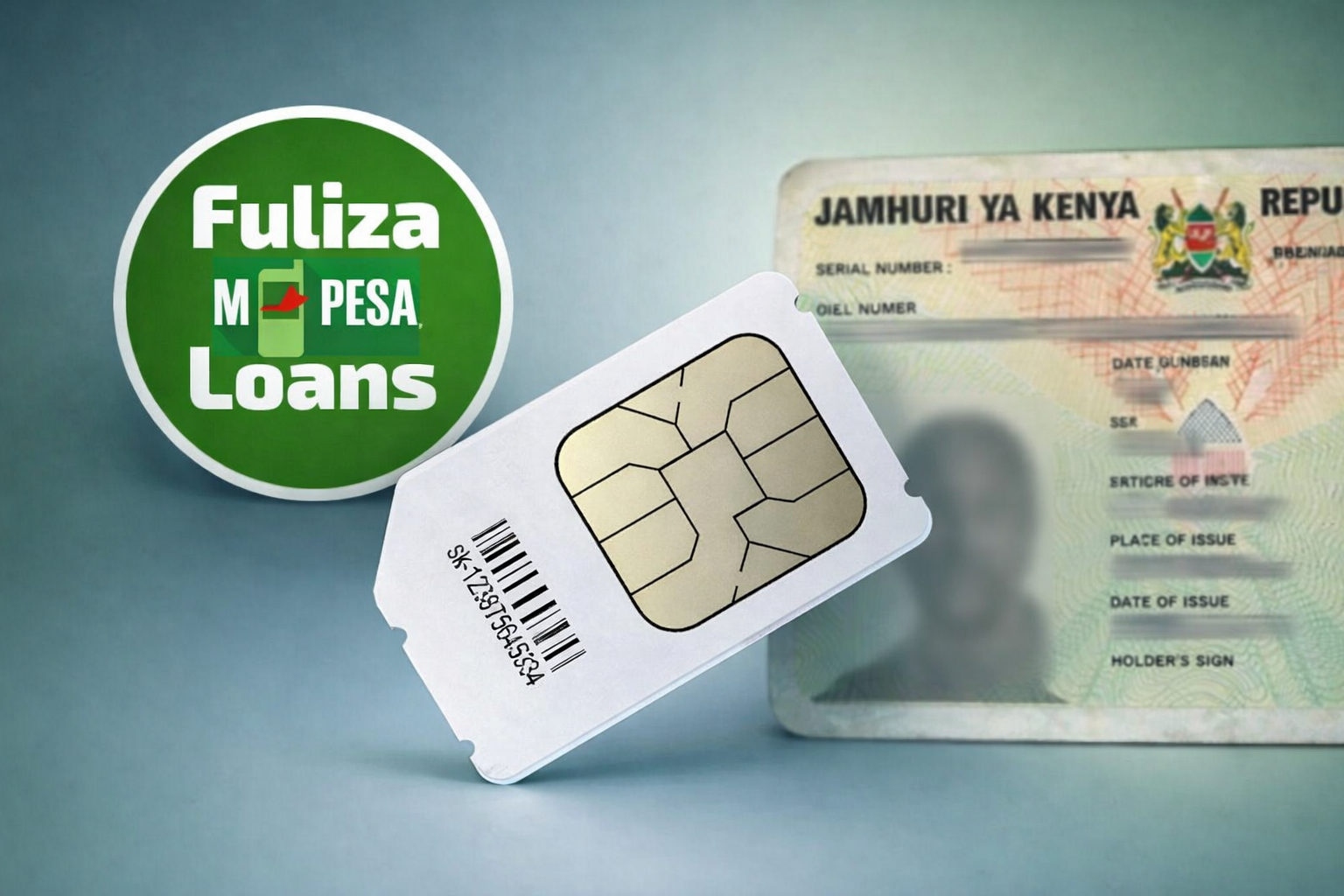
Safaricom has moved to close a persistent misconception among its subscriber base, clarifying through its official social media channels that outstanding Fuliza balances remain tied to a customer's national identification number rather than to the physical SIM card through which the debt was originally incurred.
The telecommunications company's statement, issued Monday under the hashtag FulizaYakoControlYako, directly addressed the assumption held by some users that replacing or discarding a SIM card might allow an overdraft balance to lapse or disappear. In its post, Safaricom stated plainly that the Fuliza debt remains linked to a customer's national identity document, not merely their SIM registration.
The company framed the clarification as part of a broader ongoing campaign to educate subscribers on responsible use of the overdraft facility.
The timing of the message suggests Safaricom is treating recurring confusion around Fuliza mechanics as a communication gap worth addressing directly, rather than a matter to be left to word of mouth among the service's millions of users.
#FulizaYakoControlYako pic.twitter.com/kDzoG8k0bf
— Safaricom PLC (@SafaricomPLC) July 13, 2026
The clarification prompted a public response from a customer using the handle boni0727, who used the moment to raise a separate concern about the practical accessibility of Safaricom's services for people with physical or speech related disabilities.
He argued that customers unable to travel easily to purchase airtime scratch cards, or unable to make voice calls, are disadvantaged by current service design; the exchange illustrated how a routine policy clarification can surface adjacent concerns about inclusivity within Kenya's dominant mobile money ecosystem.
Fuliza itself, launched in January 2019 through a partnership between Safaricom, KCB Bank, and NCBA, allows M-Pesa users to complete transactions, including person to person transfers, merchant payments, bill payments, and cash withdrawals, even when their account balance is insufficient, with repayment triggered automatically once new funds are deposited.
Individual borrowing limits are generated through an automated scoring system that weighs a customer's M-Pesa usage patterns, repayment history across Fuliza, M-Shwari, and KCB M-Pesa loans, Credit Reference Bureau standing, savings behaviour, and how long the mobile line has been active.
Users are permitted to request a limit review every 30 days by dialling the short code and selecting the relevant menu option.
Scale-wise, the facility has become a defining feature of Kenya's digital lending landscape, with Safaricom's financial results for the year ended March 2026 showing Fuliza disbursements climbing 49.3 percent to Ksh 1,470,000,000,000, alongside 17.7 million active users and Ksh 6,000,000,000 in revenue generated over the period.
Those figures place Fuliza among the largest short term credit products operating in the Kenyan market, and underline why clarity on debt attribution, tied to national ID rather than SIM ownership, carries real financial consequence for millions of borrowers who might otherwise assume a fresh SIM offers a clean slate.
Whether Safaricom responds substantively to the accessibility concerns raised in the exchange remains to be seen, but the episode reflects a broader pattern in Kenya's mobile money sector: as products like Fuliza scale into the trillions of shillings in annual disbursement, customer education efforts increasingly double as forums where users raise unrelated service design questions, testing how responsive dominant telecom providers are willing to be beyond their original messaging intent.