Millions of Kenyans who rely on M-Pesa for salaries, savings, and daily bill payments received a measure of reassurance this week, as Safaricom moved to clarify what actually happens to a customer's mobile money balance when their line falls dormant long enough to be deactivated and reassigned.
The clarification followed a public exchange with a customer attempting to recover an old, reportedly recycled number, an exchange that reignited a debate familiar to anyone who has ever worried what becomes of stored funds attached to a phone number they stopped using.
The episode began when an X user identified as derroh underscore sought to establish whether Safaricom could restore a mobile number he had previously held, prompting a public reply from Safaricom Care explaining that lines left without airtime top ups for more than six months are deactivated and recycled, with the customer directed to acquire a new line before the conversation moved to private messaging for further handling.
That public exchange, brief as it was, left many observers with the impression that funds vanish alongside a recycled number, a reading the company's own customer terms do not support.
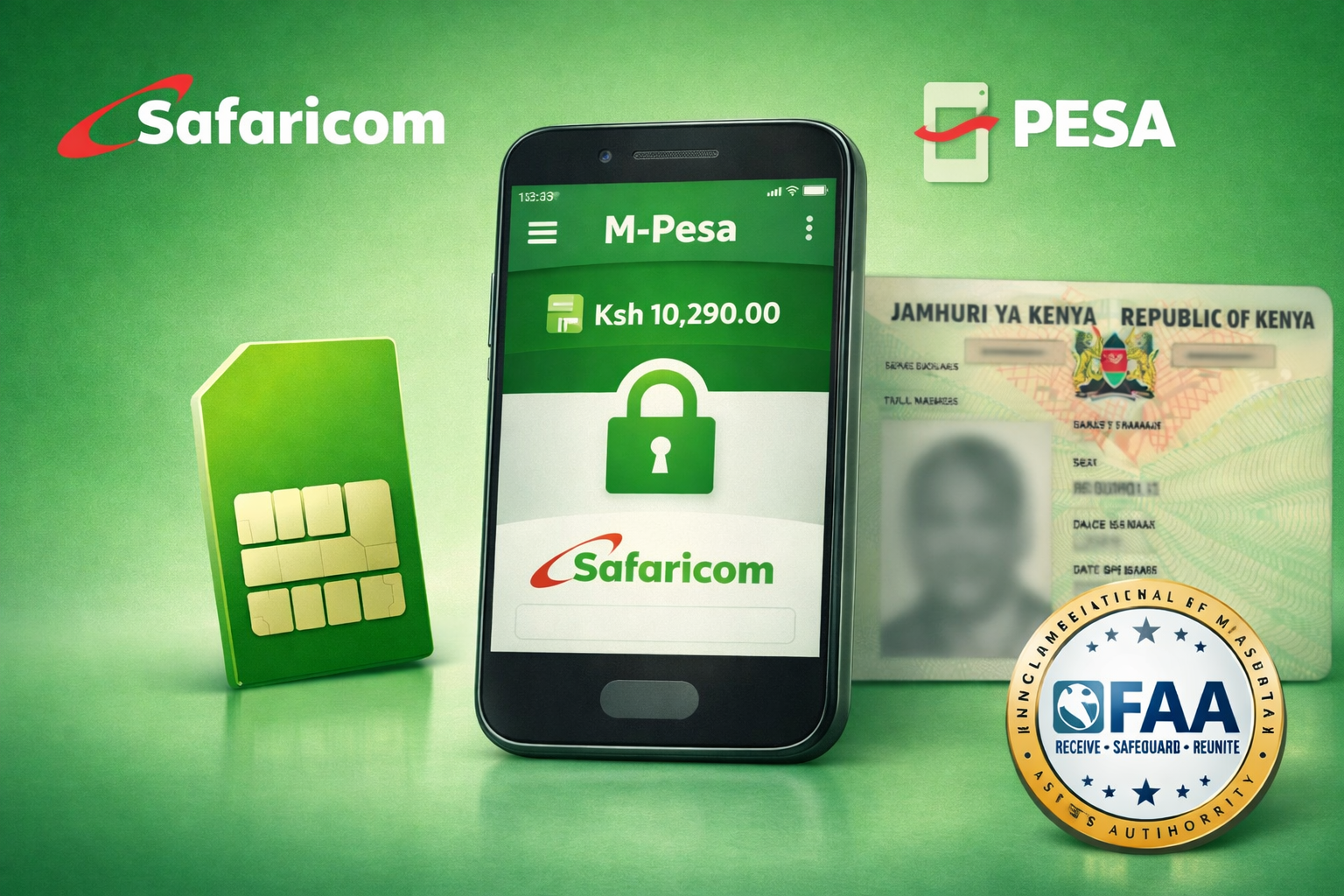
Safaricom's M-Pesa Customer Terms and Conditions, updated in 2025, describe a staged process rather than an abrupt loss: a line inactive for 90 days has its SIM suspended first, and only with continued inactivity does the company archive the associated M-Pesa account before eventually recycling the number itself in line with regulatory obligations set by the Communications Authority of Kenya.
That authority requires operators to free up dormant numbers so the country's limited numbering resources remain available for new subscribers.
Critically, the terms state that money held to a customer's credit will not be lost, and will be made available once the customer completes identification and account recovery procedures after activating a new line.
A legal deadline does eventually apply, since funds left unclaimed for more than two years are transferred to the Unclaimed Financial Assets Authority under Kenyan law rather than absorbed by Safaricom itself; ownership remains with the original customer throughout, and the money can still be reclaimed from the Authority through the prescribed legal process, meaning the two year mark functions as a custodial handover rather than a forfeiture.
For subscribers wary of losing a number altogether, Safaricom has introduced Daima, a subscription service aimed at customers living abroad, students in boarding institutions, and anyone holding a secondary line that sees infrequent use.
Pricing runs at Ksh 200 for six months, Ksh 500 for one year, and Ksh 1,000 for two years, with each package bundling 20 minutes of calls and 20 SMS messages monthly across networks, activated through the MySafaricom App or a short dial code.
Speaking at the service's launch, Safaricom Chief Executive Officer Peter Ndegwa framed the offering as a direct response to subscriber feedback, "we are yet again innovating around our customers' needs," said Ndegwa, Chief Executive Officer of Safaricom.
For customers whose numbers have not been fully reassigned, a separate Recreate Old SIM service offers a narrower recovery window, though the company notes that once a number is fully recycled and allocated to another subscriber, restoring the original owner's access becomes far harder.
That difficulty underscores the value of routine line activity, whether through calls, SMS, data use, or M-Pesa transactions, as the simplest safeguard against ever needing to test the recovery process at all.