Kenya's largest telecommunications operator has quantified just how central its footprint has become to the national economy, with Safaricom's newly released FY2026 Annual Report showing the company now contributes an estimated 5 percent of the country's Gross Domestic Product, a figure that reflects its evolution from a mobile network operator into a diversified force spanning financial services, connectivity infrastructure, and digital technology across nearly every economic sector.
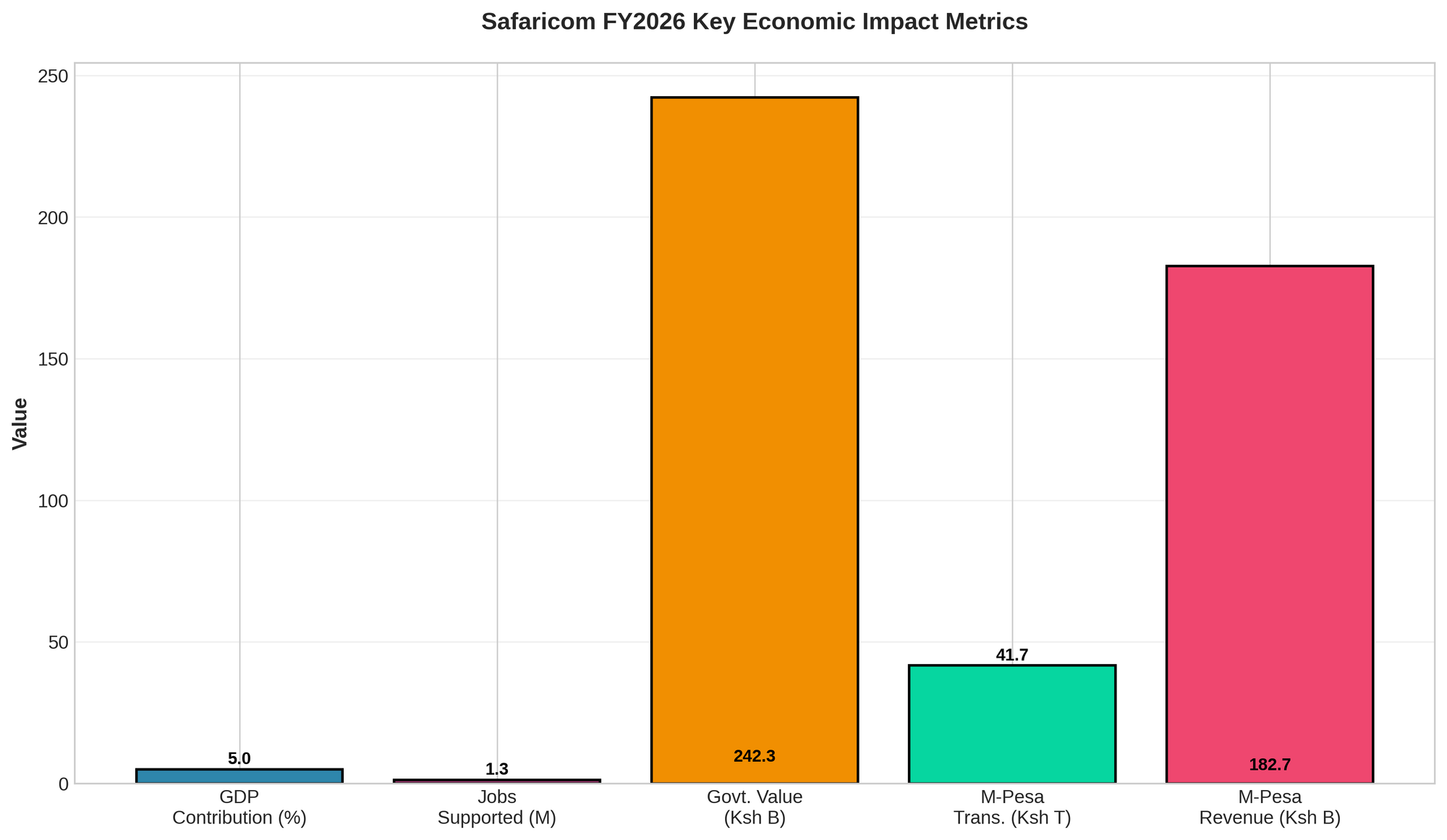
The report attributes this expanded footprint to Safaricom's operations and value chain, which the company says now support more than 1,300,000 jobs, extending well beyond its direct workforce into distributors, agents, merchants, suppliers, and technology partners whose livelihoods depend on the broader ecosystem the company has built; that ecosystem now touches sectors as varied as agriculture, trade, banking, education, healthcare, and public service delivery, according to the report's own accounting of where its economic value lands.
Central to that reach remains M-Pesa, the mobile money platform that has become the backbone of daily financial activity for millions of Kenyans, individuals, businesses, and government agencies alike.
During the financial year ended March 2026, the platform processed transactions worth Ksh 41,680,000,000,000, generating Ksh 182,700,000,000 in revenue over the period, a scale that positions mobile money as arguably the single most consequential piece of Kenya's retail financial infrastructure.
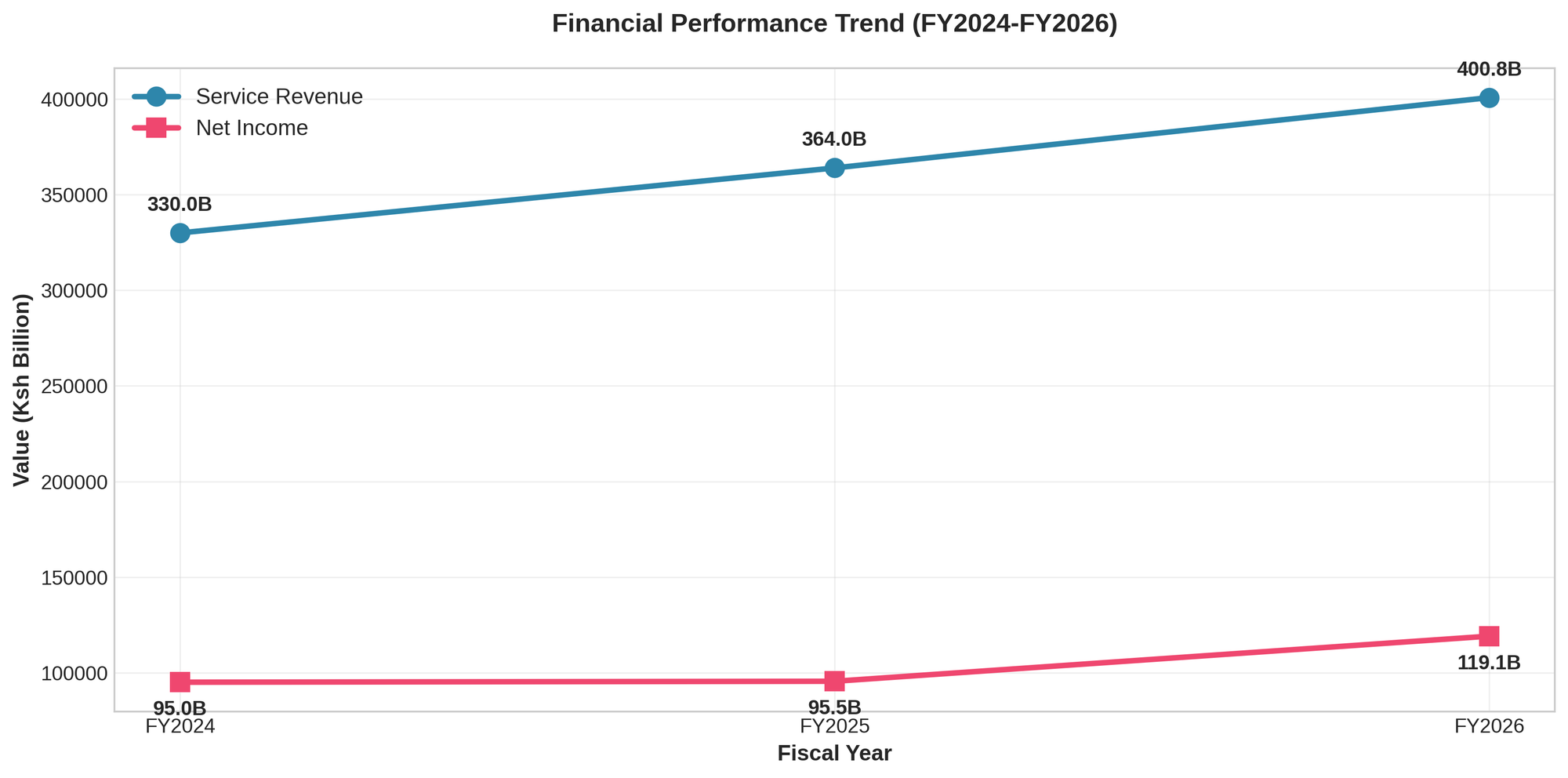
Financially, the company posted a record year across nearly every headline metric, with service revenue reaching Ksh 400,800,000,000, a 10 percent increase on the prior year, alongside EBITDA of Ksh 233,900,000,000, EBIT of Ksh 182,300,000,000, and net income of Ksh 119,100,000,000, representing growth of 24.7 percent. Operating free cash flow climbed to Ksh 173,600,000,000, up 16.7 percent, with mobile money and data emerging as the fastest growing segments driving that overall performance.
Small and medium sized enterprises feature prominently in the report's account of where this growth translates into tangible benefit, with digital payment tools such as Lipa na M-Pesa allowing businesses to receive payments electronically and reduce reliance on cash handling, a shift that has particularly benefited traders and merchants operating in both urban centres and rural communities where formal banking infrastructure remains thinner on the ground.
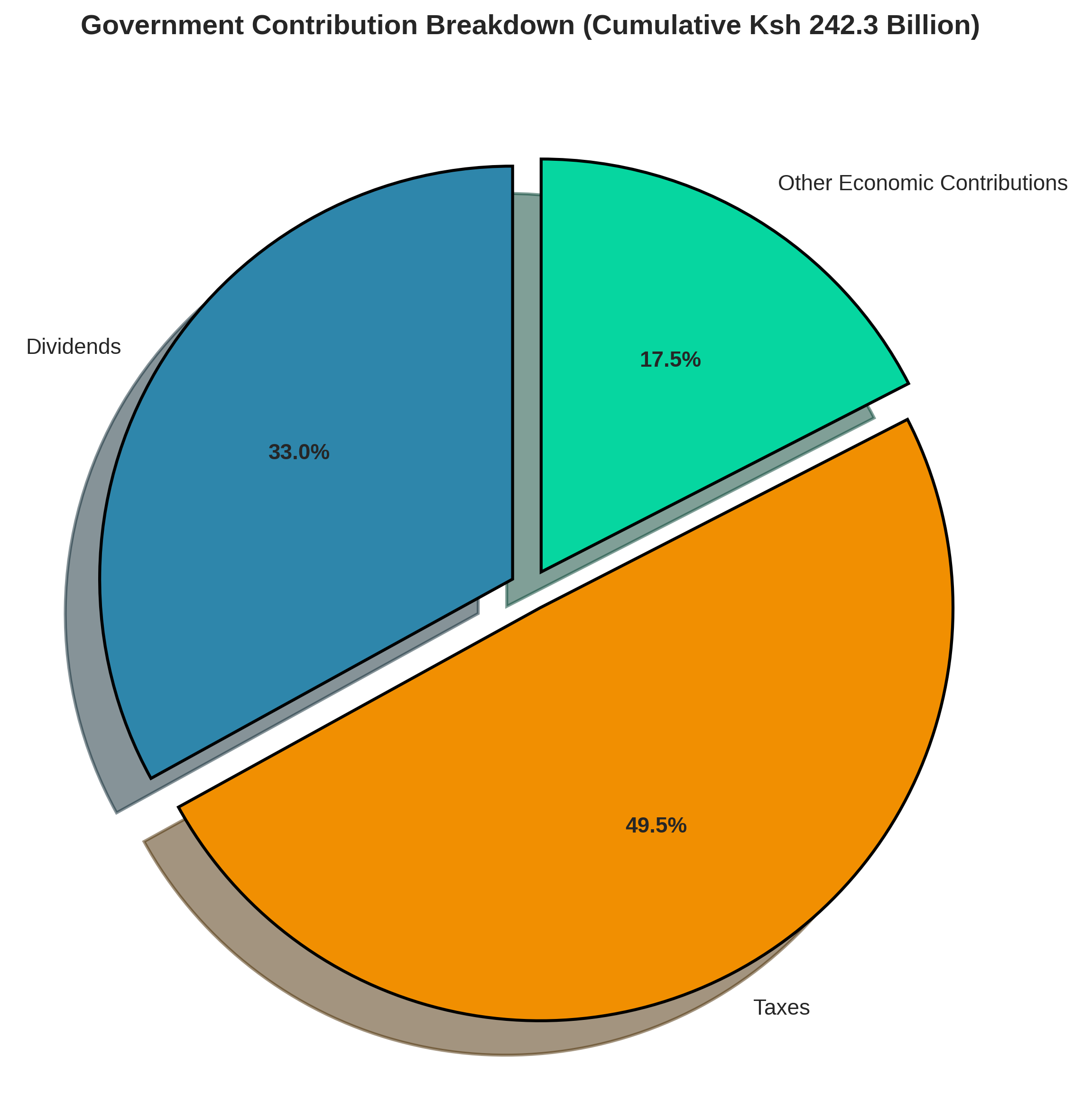
The Government of Kenya features as one of the report's most notable beneficiaries, having received an estimated Ksh 242,300,000,000 in cumulative value since becoming a shareholder in the company eighteen years ago, a sum spanning dividends, taxes, and other economic contributions tied to Safaricom's operations.
As one of the country's largest taxpayers, the company positions itself not merely as a private commercial success but as an active participant in government digitalisation efforts, supplying the payment integrations and connectivity infrastructure that increasingly underpin how the Kenyan state itself collects revenue and delivers services.