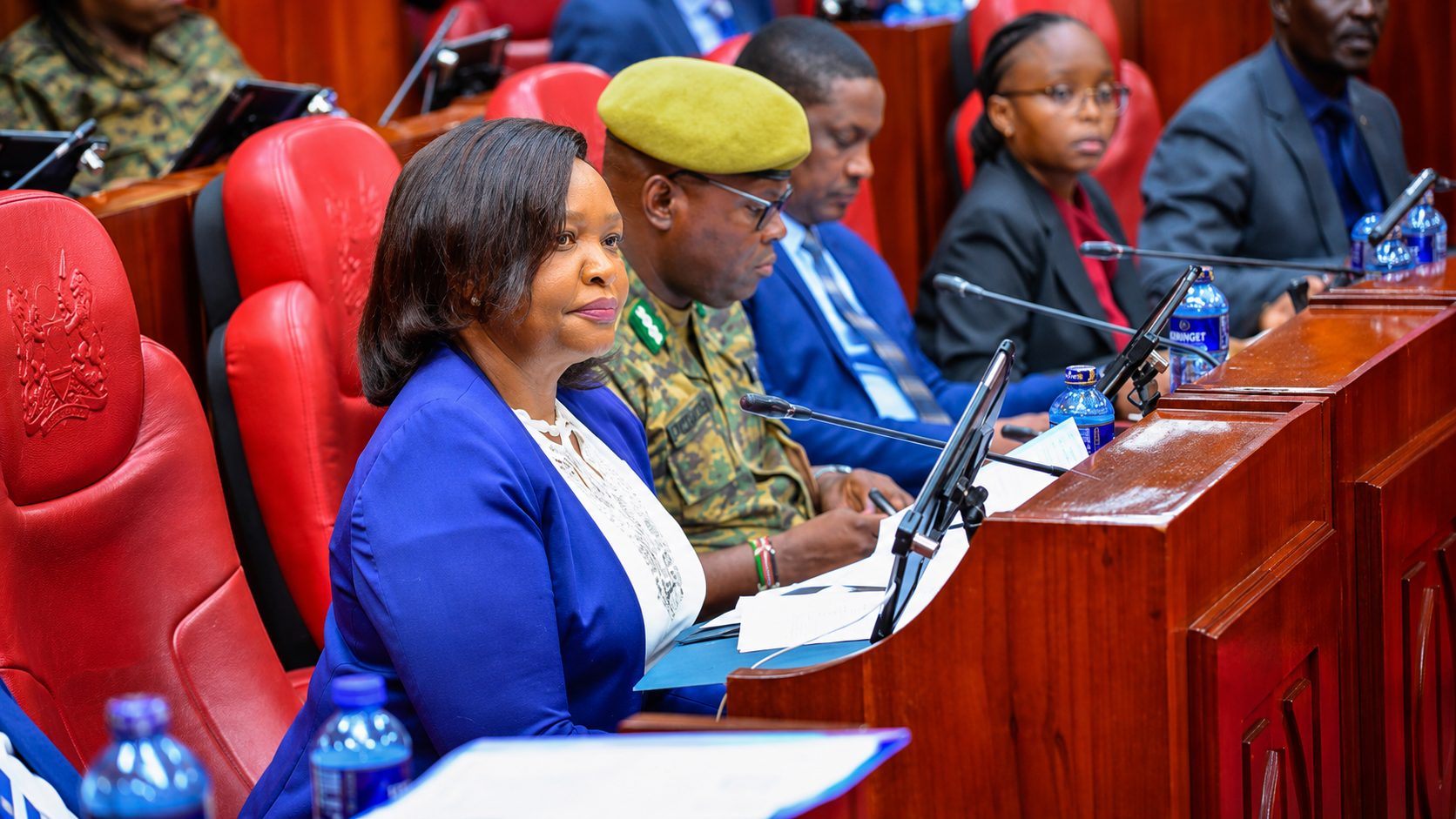
A high level parliamentary accountability session brought together the leadership of Kenya's key conservation and environmental agencies before the Senate Security Committee, with Cabinet Secretary Rebecca Miano appearing alongside the Director Generals of the Kenya Wildlife Service, the National Environment Management Authority, and the Kenya Fisheries Service, as well as officials from the Kenya National Commission on Human Rights, in an engagement that traversed the intersection of natural resource governance, community rights, and regulatory enforcement.
The committee's line of questioning, which CS Miano described as rigorous and balanced, reflects a growing legislative interest in how national conservation policy is being translated into measurable outcomes at the county level, where the gap between regulatory intent and grassroots implementation has historically been a source of tension between communities, agencies, and the broader governance framework.
Parliamentary committees that exercise genuine oversight over environmental and wildlife institutions perform a function that administrative structures alone cannot replicate, and the engagement signals a maturation of Kenya's legislative accountability architecture in the natural resources space.
The presence of KNCHR officials at the session added a human rights dimension to what might otherwise have been a narrowly technical briefing, an addition that reflects the increasingly prominent role that rights based frameworks play in conservation governance globally and within Kenya specifically, where conflicts between wildlife protection imperatives and the land and livelihood rights of communities living adjacent to protected areas remain an active and often contested policy terrain.
Aligning conservation outcomes with human rights obligations requires sustained institutional dialogue of precisely the kind that the Senate committee session represented.
CS Miano, in characterising the session's outcomes, pointed to the importance of marrying national regulatory expertise with localised community insights as the mechanism through which resource protection, rights observance, and equitable benefit distribution can be achieved simultaneously, a formulation that acknowledges the limits of top down conservation models and the necessity of community legitimacy for long-term environmental governance to hold.
The Ministry of Tourism and Wildlife, she affirmed, remains committed to protecting Kenya's natural heritage and upholding the legal frameworks that govern it.
The convening of KWS, NEMA, and Kenya Fisheries Service leadership within a single parliamentary session also points to an effort to present a coordinated interagency front on natural resource management, a posture that is notable given that the mandates of these agencies frequently overlap in coastal, freshwater, and terrestrial ecosystems where jurisdiction is shared and policy coherence is essential for effective enforcement.
Fragmented regulatory responses to poaching, illegal fishing, and environmental degradation have long been cited as a weakness in Kenya's conservation architecture, and a unified appearance before the Senate committee suggests a deliberate attempt to project institutional alignment.
Whether the accountability session produces binding legislative recommendations or results in enhanced oversight mechanisms will determine its lasting policy weight; parliamentary engagements of this nature derive their value not from the exchange itself but from the follow-through, in terms of committee reports, agency responses, and revised implementation frameworks, that convert oversight into structural improvement.
The Ministry's stated resolve to remain unyielding in its conservation mandate will ultimately be measured against the outcomes that communities, ecosystems, and enforcement records reflect in the months ahead.