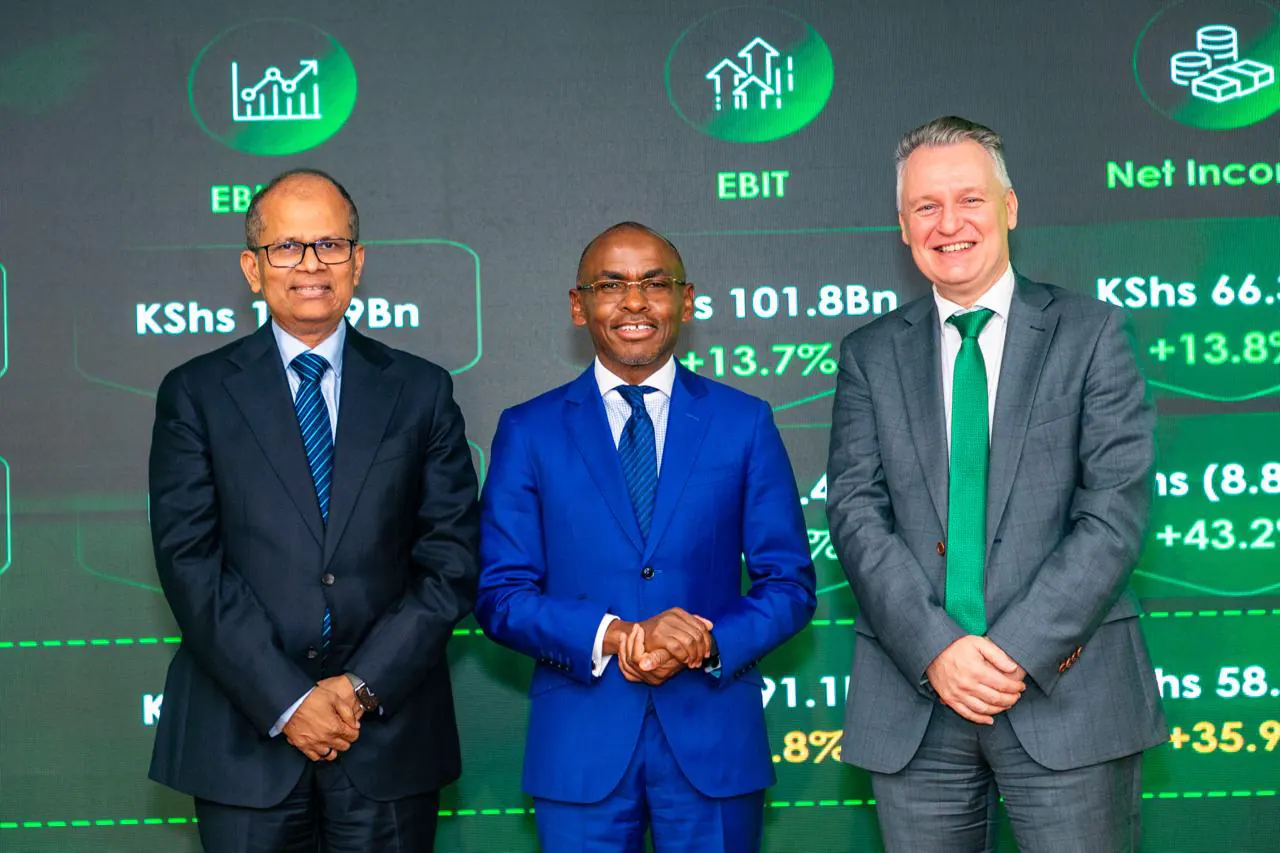
Safaricom Telecommunications Ethiopia PLC cut its EBITDA loss by 96.5 per cent to KSh0.4bn (KSh434.4m) in the six months to September 2026, moving the subsidiary nearer to the break-even target.
The loss before interest and tax fell 53.4 per cent to KSh11.4bn and the net loss narrowed 43.2 per cent to KSh8.8bn, the narrowest pre-tax loss since the unit was set up in 2022.
Service revenue rose 71.6 per cent year on year to KSh10.62bn, with mobile data accounting for 81.2 per cent of that revenue and voice contributing 9.1 per cent.
The number of 90-day active customers increased 38.4 per cent to 15.43 million, of which 12.15 million were actively using mobile data, and average data consumption per active user rose 14.8 per cent to 7.9 GB.
M-Pesa revenues grew 15.7 per cent to KSh0.01bn, messaging revenue stood at KSh0.13bn, and voice revenue rose 20.9 per cent to KSh1.66bn.
Wim Vanhelleputte, chief executive of Safaricom Ethiopia, said the revenue growth stemmed from more users, higher usage and a higher rate, each contributing roughly equally.
Vanhelleputte added that tight cost control and insourcing limited foreign-exchange exposure and helped keep the loss down.
Dilip Pal, chief financial officer, said the subsidiary’s funding now includes US$474 million of debt and that total funding closed at US$2.84 billion, up US$193 million since March 2026.
Pal noted that debt now represents 20.0 per cent of equity and that adding debt was intended to optimise the capital structure and support financing on the subsidiary’s own balance sheet.
He also said the heavy capital-spending phase in Ethiopia was ending, that spending on capacity would continue for a few years and that capital-spending guidance remained unchanged.
Peter Ndegwa, Safaricom group chief executive, said the company expects Ethiopia to break even at the EBITDA level by the end of the financial year in March 2027.
Ndegwa said regulator-led pricing action is needed to reflect the minimum cost of delivering service and that the Middle East conflict disrupted fuel supplies, raised transport costs, hurt customer affordability and slowed network rollout.
The regulator’s price-floor steps will depend on talks with Safaricom and on the change of government, according to Vanhelleputte.
Adil Khawanja, board chair, said the board remains committed to the Ethiopia investment, backs regulation that protects consumers and promotes fair competition, and set three priorities for the group: strengthen the Kenya business, accelerate growth in financial services and enterprise technology, and maintain financial and operational discipline.
Khawanja said success depends on understanding market needs, strengthening customer relationships and executing strategy, and that management must lead change rather than merely respond to it.
Safaricom’s half-year profit rose 35.9 per cent to KSh58.1bn, driven by a 12.5 per cent increase in Kenya sales to KSh223.3bn and higher M-Pesa revenues, while the Ethiopia loss reduction contributed to the group’s performance.
Ndegwa said the results reflect sustained growth in Kenya, lower startup costs in Ethiopia and disciplined strategy execution, moving the company closer to breakeven in Ethiopia.
Pal said the EBITDA break-even point is a key milestone, that cost structures are improving and that operating leverage at a 60 per cent contribution margin will eventually lead to profit at EBIT, cash-flow and net-income levels, though he would not give a specific timeline.
He reiterated that the dividend policy remains unchanged, with 80 per cent of consolidated net profit after tax, adjusted for minority interests, to be paid out to shareholders.
Ethiopia’s KSh8.8bn net loss is accounted for within the group’s KSh58.2bn net income, which rose 35.9 per cent in the half.
In Ethiopian birr, service revenue more than doubled to 13.1bn birr, according to Pal.
Vanhelleputte said that over the past three years US$100m of spending generated US$80m of assets, and that now 100 per cent of any funding goes straight to assets.