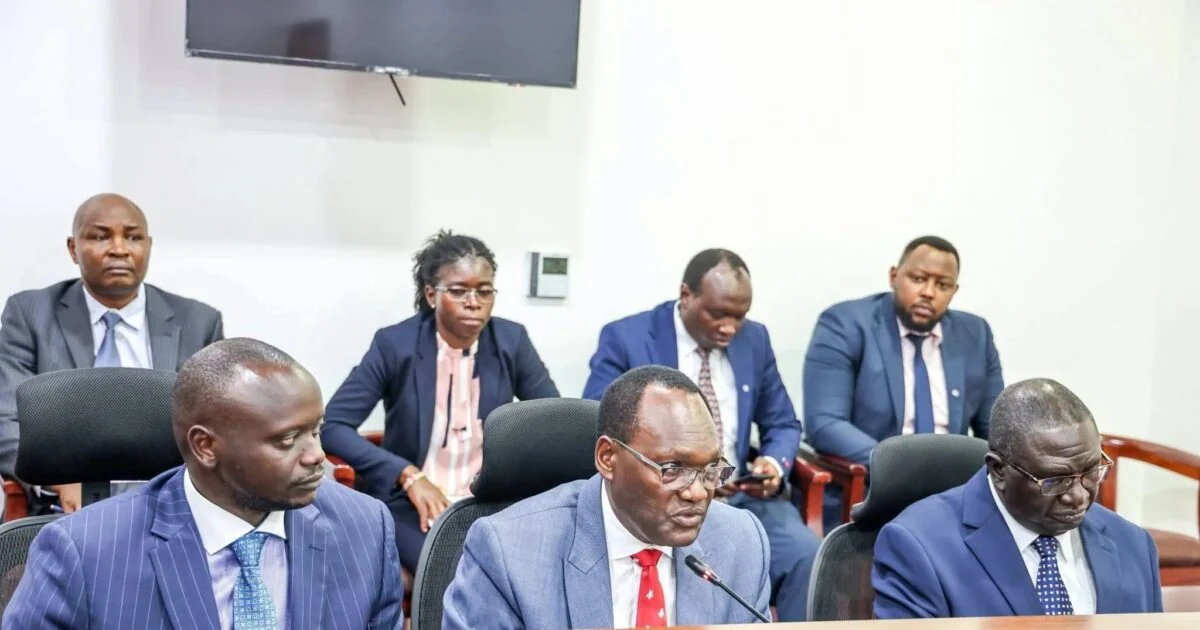
The Public Debt and Privatisation Committee of the National Assembly has pressed the Treasury for guarantees that the KSh103.54 billion raised from selling a 65 per cent stake in Kenya Pipeline Company will be directed to development projects.
Treasury Principal Secretary Chris Kiptoo told the Committee that the entire amount from the initial public offering, which involved the sale of about 11.81 billion shares at KSh9 each between January 19 and February 24, 2026, has been placed in the National Infrastructure Fund (NIF) account at the Central Bank of Kenya.
MPs raised doubts after a Treasury briefing suggested the proceeds might also be used to settle pending bills or manage liabilities, prompting Wajir East MP Aden Daudi to ask for clarification, saying “I am a bit confused. The presentation indicates that the proceeds will be utilised either for development expenditure, pending bills or liability management. I thought this money was going to the NIF, which was supposed to provide seed capital for development projects and help unlock more resources.”
Kiptoo responded that the KSh103.54 billion was transferred to the NIF in accordance with Section 49 of the National Infrastructure Fund Act, 2026, and has not been applied to any pending obligations; he added that the Fund, governed by an independent board and chief executive officer, has invested the cash in government securities yielding more than 10 per cent and that its capital has risen to KSh349 billion.
The Committee also highlighted that public debt stood at KSh13.532 trillion in September 2026, representing 72.6 per cent of GDP, with external debt of KSh5.748 trillion (42.5 per cent) and domestic debt of KSh7.785 trillion (57.5 per cent), and warned that the debt-to-GDP ratio is projected to stay above 62 per cent through 2030, above the statutory anchor of 55 per cent.
Chairperson Shurie Abdi Omar asked the Treasury to present a concrete strategy for bringing the debt ratio within the legal limit, and Kiptoo acknowledged that achieving the 55 per cent target would be challenging under current fiscal pressures.
The Treasury informed the Committee that the government has secured 13 new external loans and issued a dual-tranche sovereign bond worth US$2.2 billion between January and October 2026, generating a combined KSh651.24 billion for liability management and budget support.
Kinangop MP Zachary Kwenya called for a public revenue dashboard to allow real-time monitoring of collections, and Kiptoo said Kenya Revenue Authority’s monthly receipts have recently exceeded targets, welcomed the proposal, and noted the Treasury already monitors revenue daily.
The Treasury outlined plans to cut the budget deficit from 5.5 per cent to 3.6 per cent over the medium term and to increase reliance on public-private partnerships and the NIF for capital projects, while the Committee urged the Treasury to forward new external loan agreements to Parliament promptly for scrutiny.