NCBA Group PLC reported profit after tax of KSh18.8 billion for the third quarter of 2026, a 14.5 per cent increase from KSh16.4 billion in the same period a year earlier.
Operating income rose to KSh61.3 billion, up 14.7 per cent, while profit before tax climbed to KSh23.4 billion, up 14.6 per cent. Net interest income reached KSh38.4 billion, a 19.8 per cent rise supported by loan growth of 10.7 per cent. Non-funded income grew 7.2 per cent to KSh22.9 billion and operating expenses increased modestly 4.3 per cent to KSh29.1 billion. The group’s return on average equity stood at 19 per cent.
Provisions for credit losses were set at KSh8.0 billion, up from KSh5.1 billion a year earlier, while the non-performing loan ratio remained stable at 10.1 per cent. The total capital adequacy ratio was 21.4 per cent, well above the regulatory minimum of 14.5 per cent.
Digital loan disbursements through the group’s platforms totalled KSh1.3 trillion, a 27.2 per cent year-on-year increase. Customer deposits grew 13.5 per cent to KSh554 billion and total assets expanded 11.8 per cent to KSh744 billion.
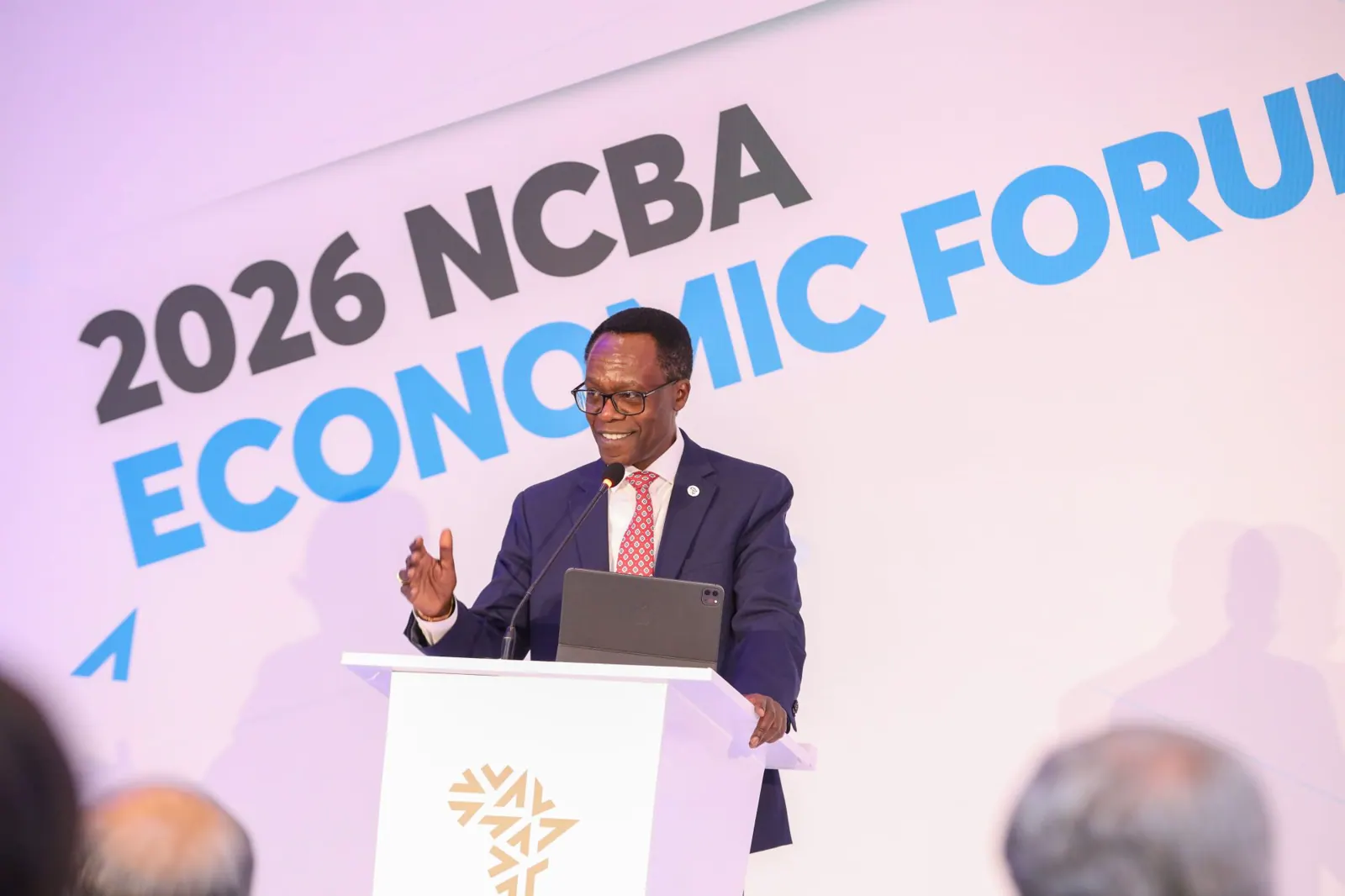
“Our operating income improved 15 per cent on the back of solid loan growth of 10.7 per cent, which lifted net interest income to KSh38.4 billion (a 19.8 per cent) and growth in non-funded income of KSh22.9 billion, up 7.2 per cent,” NCBA Group Managing Director and Chief Executive Officer John Gachora said.
NCBA Bank Kenya contributed 86 per cent of the group’s profit before tax. Regional subsidiaries in Uganda, Tanzania and Rwanda together generated KSh2.7 billion in profit before tax, while the non-banking businesses – investment banking, insurance, leasing and bancassurance – added KSh1.1 billion.
System uptime reached 99.7 per cent and service-level agreement performance was 92 per cent. The Digital Channels Net Promoter Score rose to 71 per cent and customer relationship management utilisation hit 93 per cent. The ConnectPlus corporate internet banking platform processed 91,000 transactions worth KSh44 billion, driving a 2.5-fold increase in transaction-banking fee income compared with the second quarter of 2026. The group also opened its 100th Kenyan branch at Nord Mall in Ruiru and launched Property Duka, described as East Africa’s first AI-native property ecosystem.
NCBA Investment Bank increased assets under management to KSh105 billion, a 12.3 per cent rise, and served 61,000 active customers. NCBA Insurance reported gross written premiums of KSh3.3 billion, up 10 per cent, while bancassurance premiums surged 86.2 per cent to KSh5.4 billion.
Loans to small and medium-sized enterprises grew 10 per cent to KSh58.2 billion. The group also expanded non-financial support through the AFAWA Women SME Acceleration Programme, an SME China Business Trip and a partnership with the HEVA Fund to develop financing for the creative economy.
Green financing disbursements reached KSh5.6 billion in 2026. Partnerships for electric-vehicle financing were signed with ePure Motion and BasiGo in Kenya and Kason Motors in Rwanda, and 37 per cent of the corporate vehicle fleet was converted to electric vehicles.
More than KSh90 million was deployed into community programmes, impacting over 850,000 livelihoods and engaging more than 13,000 participants through education scholarships, sports, music and environmental initiatives. Tree-planting efforts have resulted in over 490 million trees being planted.
South Africa’s Nedbank Group Limited completed the acquisition of a 66 per cent controlling stake in NCBA, announced on October 21 and settled on November 3. The transaction made NCBA a subsidiary of Nedbank while it remains listed on the Nairobi Securities Exchange, with the public retaining 34 per cent of the issued shares.
Gachora said East African gross domestic product growth is projected between 4.8 per cent and 7.4 per cent despite global headwinds and that the group is positioned to capture opportunities under its Ubuntu 2026-2030 Strategy. He noted that more than 4,000 staff are focused on delivering the first year of the strategy, emphasizing disciplined execution, deeper customer relationships and prudent risk management.