Agricultural technology took centre stage at the 2026 Young Scientists Kenya National Science and Technology Exhibition. Students presented technology based solutions targeting drought, crop diseases, harsh weather and food production challenges.
The exhibition followed the theme Shaping Kenya’s AI Future Using STEM, bringing students together to demonstrate practical science applications. Agriculture emerged as one of the strongest areas of innovation at this year’s national exhibition for young scientists.
Several student projects used artificial intelligence to address problems affecting farmers and food production. Their work connected classroom learning with practical challenges experienced within their communities and local agricultural settings.
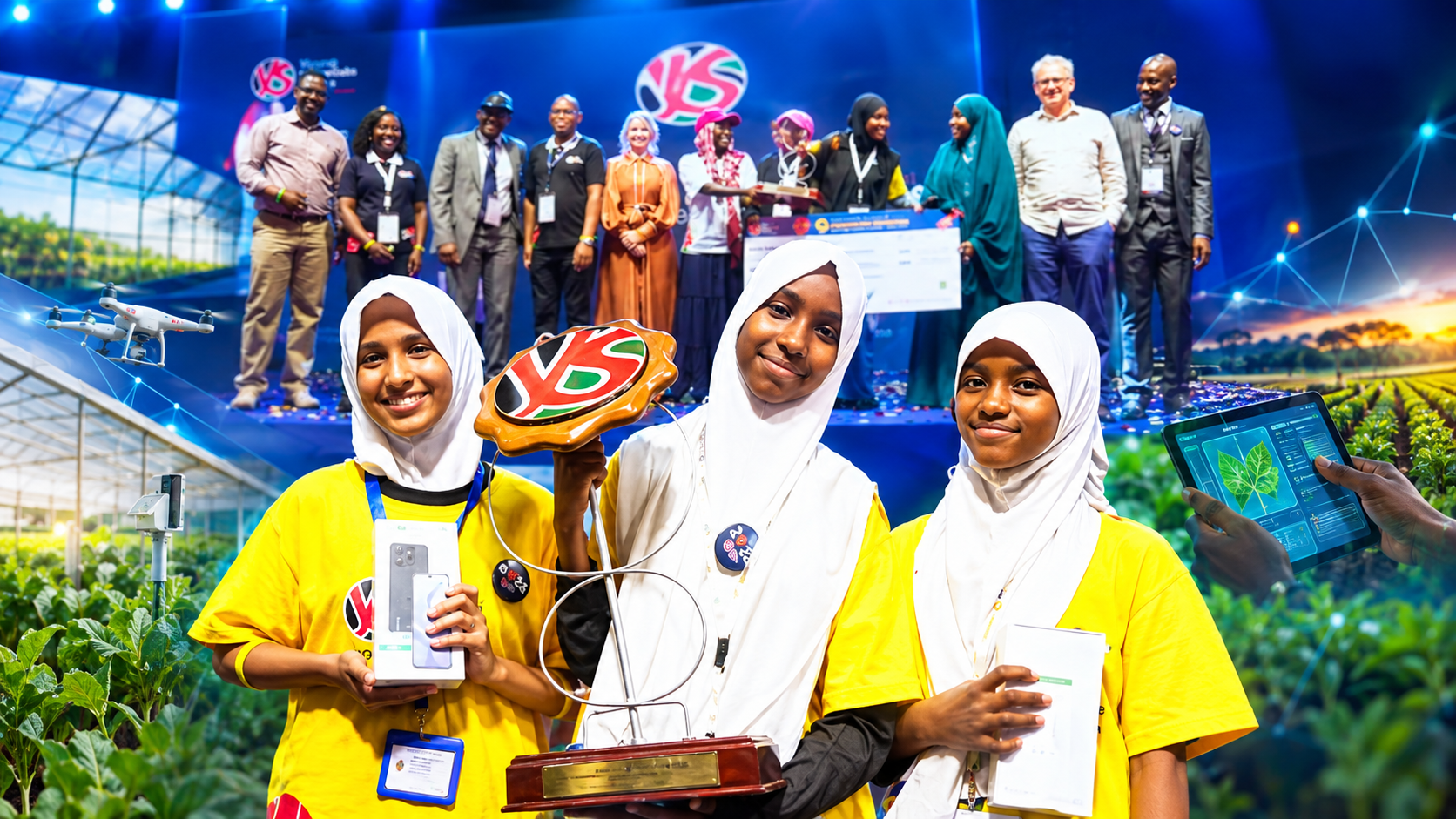
Hafsa Ibrahim and Sabrina Adan of Senior Chief Adano Girls’ Day Senior School won the overall exhibition prize. Their project focused on environmental monitoring and drought risk prediction using artificial intelligence.
The system was designed to provide early warnings before drought conditions become severe. The students developed it to address food shortages, reduced crop yields and wasted resources within their drought affected community.
“The future of agriculture is not only about working harder; it is about working smarter,” said Hafsa Ibrahim.
She said artificial intelligence could help protect the environment, support farmers and improve food security.
Hafsa also linked the technology to environmental sustainability and more efficient agricultural production. The students received Ksh 100,000, a trip to Dublin, Ireland, and Safaricom sponsored smartphones for their achievement.
Zad Muslim School in Marsabit emerged as the overall runner up with a project called EcoGuard. The automated smart greenhouse was designed to protect plants from harsh weather conditions.
“Our county faces many crop production challenges, and EcoGuard automatically protects plants...,” said Halima Aila, a Grade 8 learner.
The project reflects the students’ focus on practical agricultural problems within their county and surrounding communities.
Agriculture was also central to a project developed by Ahmed Khuso and Evans Alwei. The students from M PESA Foundation Academy created an AI enabled application for crop disease detection.
The application detects and predicts crop diseases, identifies their causes, provides treatments and offers practical prevention tips for farmers. It also contains a history function that records previous diagnoses for farmers.
The history feature can help farmers track diseases affecting their crops over time. A forum section also allows farmers to share ideas and discuss similar crop problems.
The students spent one year learning machine learning concepts before implementing their project. They then spent six months developing the application and testing its intended functions.
Access to local agricultural datasets presented a challenge during development. Farmers from different counties declined requests to provide crop images, so the students used a globally available dataset.
The students now want to expand their dataset and explore possible collaboration with KEPHIS for further development. They believe additional data could help them develop the application further.
Beyond agriculture, students presented projects addressing food security, smart homes, energy, security and healthcare. The range of projects showed how young innovators are applying technology to practical community needs.
“We’ve seen many amazing exhibitions,” said Nicholas Gachiri, Segment Marketing at Safaricom.
He said students were exploring technology across several areas affecting everyday life.
The exhibition demonstrated how STEM education can produce practical responses to challenges experienced by Kenyan communities across different sectors. Agriculture featured strongly because students connected digital tools with problems affecting food production.
The projects also showed the development process behind student innovation. Learners identified local challenges, studied relevant technologies and built systems around specific community needs.
The 2026 exhibition placed artificial intelligence within a wider discussion about practical STEM applications for Kenya’s future. Its agricultural projects focused on drought preparedness, crop protection and improved access to disease information.