More than Ksh 2.72 billion has been raised through the Rhino Charge conservation initiative since its inception, helping fund wildlife protection, forest conservation and community projects across Kenya, as the annual event continues to strengthen its position as one of the country's most influential conservation fundraising platforms.
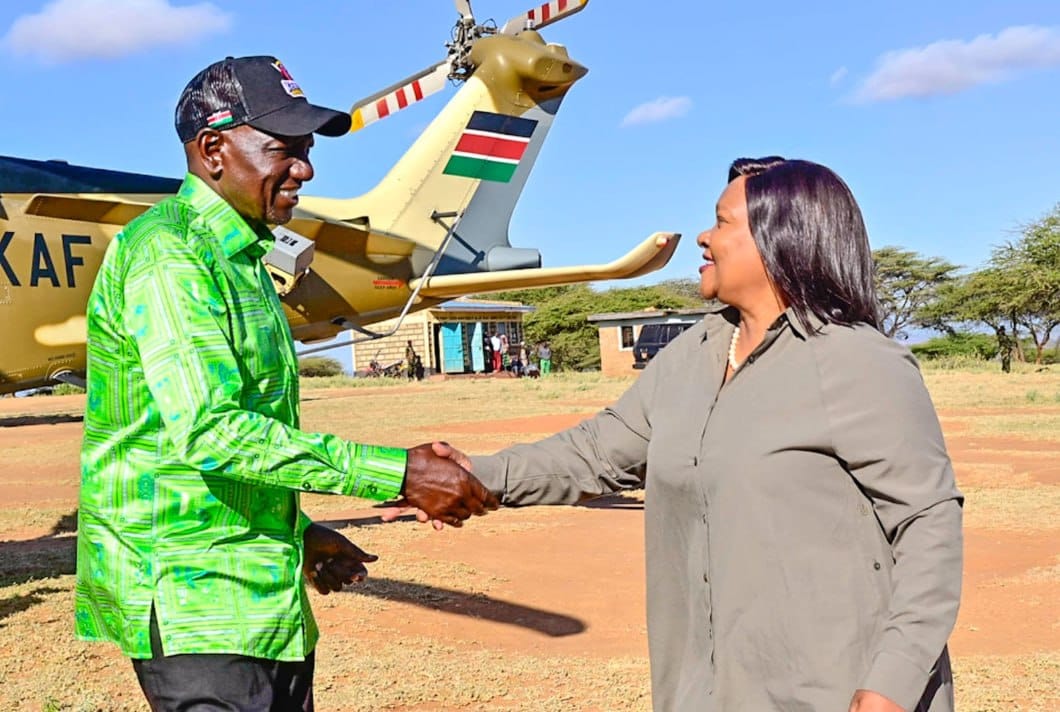
Tourism and Wildlife Cabinet Secretary Rebecca Miano joined President William Ruto and other conservation stakeholders at the 37th Rhino Charge held at Ngilai Community Wildlife Conservancy in Samburu County, where she reflected on the event's evolution from a modest fundraising effort into a nationally recognised conservation movement with measurable environmental and socio-economic outcomes.
“What began as a small fundraiser has evolved into one of our most powerful conservation platforms,” said Miano, Cabinet Secretary for Tourism and Wildlife. “To date, Rhino Charge teams have raised over Ksh 2.72 billion for Rhino Ark projects and over Ksh 88 million for host communities.”
The event, which brings together off-road driving teams, conservationists, corporate sponsors and local communities, has become a major source of funding for Rhino Ark’s environmental protection programmes. According to Miano, proceeds generated through the initiative have supported the construction of 853 kilometres of electric fencing designed to reduce human-wildlife conflict while safeguarding some of Kenya’s most important ecological assets.
“The real-world impact is undeniable,” said Miano. “Together, we have built 853 km of electric fencing to mitigate human-wildlife conflict, securing over 90,000 households and crops while protecting 652,000 hectares of critical water towers and forests.”
The conservation infrastructure has played a central role in protecting communities living near wildlife habitats, reducing crop destruction by wild animals and supporting the preservation of forest ecosystems that supply water to millions of Kenyans. The protected landscapes also support agriculture, tourism, energy generation and biodiversity conservation, placing them at the centre of Kenya’s environmental and economic sustainability agenda.
Miano said conservation should not be viewed solely as an environmental undertaking but also as an economic imperative that directly affects livelihoods and long-term national development. “Conservation is both an economic necessity and a shared national responsibility,” said Miano. “Every kilometre of fence helps keep elephants away from farms, blocks illegal logging, and ensures communities see conservation as an opportunity, not a burden.”
The 37th edition of the Rhino Charge comes at a time when conservation-linked sporting events are increasingly being recognised as effective tools for environmental stewardship and community engagement. President Ruto, who attended the event’s prize-giving ceremony, described the competition as an example of how sport can be harnessed to support national priorities, noting that each kilometre conquered by participants contributes to the protection of forests and critical ecosystems.
As this year's event concluded in Samburu County, Miano thanked local communities, partners, volunteers and competitors for supporting an initiative that continues to combine adventure, environmental protection and community development, reinforcing the role of conservation as both a national responsibility and a driver of sustainable economic value.