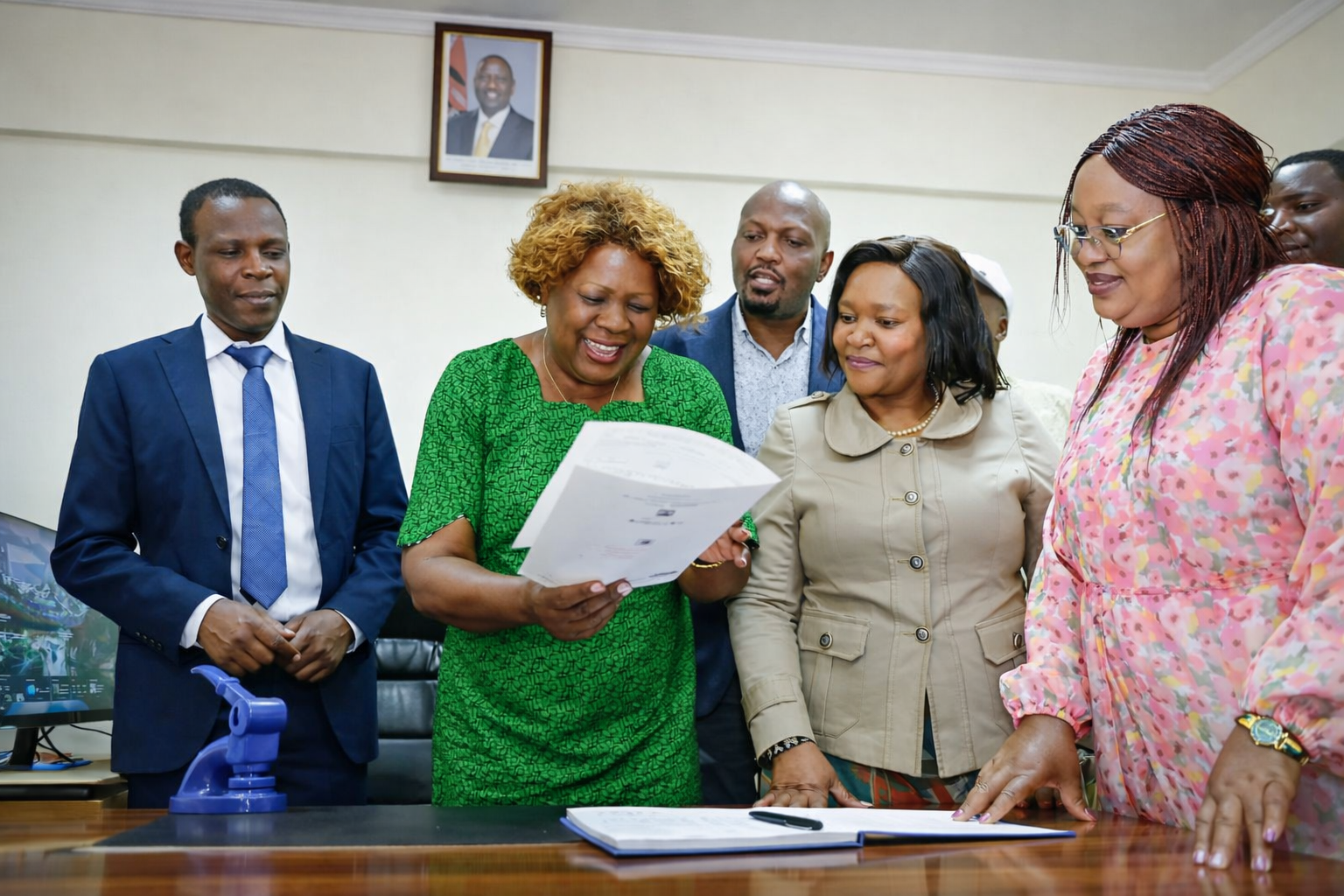
A new government registry officially opened in Ol Kalou, marking the first such facility in Nyandarua County and representing a concrete step in the national administration's drive to bring civil registration and documentation services closer to citizens who have historically travelled long distances to access them.
Cabinet Secretary Rebecca Miano announced the opening, framing it as part of the government's stated commitment to decentralise public services and reduce the logistical burden that remote and rural populations bear when fulfilling routine administrative requirements.
The Ol Kalou registry, situated in Nyandarua County's main town, is intended to serve residents who previously had no local access point for services tied to civil documentation, meaning that obtaining or processing paperwork required time away from work, transport expenditure, and long waits at facilities in neighbouring counties.
Its establishment addresses a gap that has persisted in a county whose geography and population distribution have historically placed residents at a disadvantage relative to urban centres with denser government service infrastructure.
Decentralisation of registry services carries practical and economic weight beyond mere convenience; for smallholder farmers, informal sector workers, and low income households, the cost of travelling to a distant facility, whether measured in fare, lost working hours, or childcare arrangements, can be prohibitive enough to delay or entirely deter engagement with formal documentation processes.
A locally accessible registry lowers that threshold, and by doing so, it has the potential to lift registration rates for births, deaths, identity documents, and other civil records that underpin access to social services, financial inclusion, and legal protection.
Nyandarua County, a largely agricultural highland county, has a population spread across a wide rural catchment, and the concentration of government services in distant urban centres has long been cited as a structural barrier to equitable service delivery in such areas.
The opening of the Ol Kalou facility fits within the broader Huduma Mashinani framework, through which the national government has been rolling out service delivery points in underserved counties, bringing multiple agencies under accessible local arrangements rather than requiring citizens to navigate separate institutional channels in different locations.
CS Miano, in communicating the opening, drew attention to the time savings, reduction in travel costs, and elimination of lengthy queues as the tangible benefits residents should expect from the new facility, a framing that positions the registry not as an abstract administrative expansion but as a direct improvement to the daily lived experience of county residents.
The emphasis on accessibility and efficiency reflects a government communication posture that is increasingly focused on visible, measurable service delivery outcomes rather than policy announcements alone.
Whether the Ol Kalou registry achieves its intended impact will depend on staffing levels, system reliability, and awareness campaigns that inform residents across Nyandarua's dispersed communities that the facility exists and what services it provides, factors that determine whether a newly opened public service point translates into genuine uptake or remains underutilised in its early months of operation.
Its launch nonetheless establishes a baseline of physical infrastructure that the county previously lacked, and its performance over time will offer a measure of how effectively the decentralisation agenda is being implemented beyond the ceremonial opening.