Mars Wrigley Kenya has begun a community tree-planting programme that will see a total of 1,000 trees established across three Kenyan counties.
The initial phase comprises 300 mangrove seedlings at Junda Creek in Mombasa County, 600 indigenous tree seedlings at Ngong Hills Forest in Kajiado County, and 100 fruit trees at Kyemutheke Secondary School in Machakos County.
The effort is being delivered in partnership with the environmental restoration organisation Tree Niches and will involve local residents and school stakeholders.
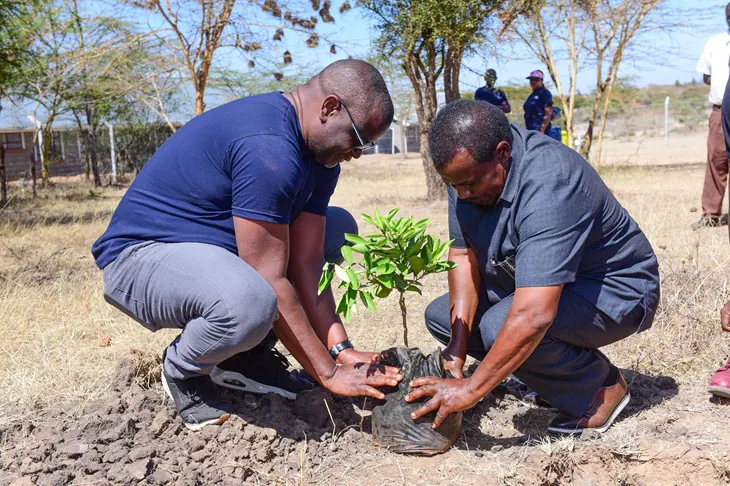
At a launch ceremony held at Kyemutheke Secondary School, Ismael Bello, General Manager for Sub-Saharan Africa at Mars Wrigley, and Chief Principal Ndunda Wambua Kituu planted pawpaw, avocado, mango and orange trees.
Bello said the project reflects the company’s commitment to environmental conservation and to creating positive impact for communities, adding “Trees play a vital role in supporting healthy ecosystems and thriving communities.”
He also noted, “Through this initiative, we are contributing to restoration efforts in diverse environments while creating opportunities for learners and local communities to actively participate in protecting and caring for their surroundings.”
The mangrove planting is intended to strengthen coastal ecosystems, support marine biodiversity and enhance natural climate resilience, while the indigenous trees at Ngong Hills aim to protect soil quality, improve water catchments and promote biodiversity.
The orchard at Kyemutheke Secondary School will act as a living classroom for sustainable agriculture and is expected to eventually supplement the school’s nutritional needs.
The launch coincided with World Food Day and featured the provision of 480 breakfast meals to pupils through the company’s school feeding programme.
Mars Wrigley Kenya will continue to work with Tree Niches, local communities and school officials to provide ongoing care, protection and monitoring of the seedlings.