KenGen shareholders approved a first and final dividend of KSh0.75 per share at the annual general meeting in Nairobi on Thursday, October 29, 2026, down from KSh0.90 per share the previous year, while the company spent KSh15.5 billion on power plants and equipment in the year to June 30, 2026.
Capital spending rose 14.3 per cent to KSh15.5 billion, borrowings fell by KSh12.2 billion to KSh97.1 billion, and the dividend bill was about KSh4.946 billion, representing a forward yield of 6.0 per cent at a share price of KSh12.55.
Revenue increased 6.4 per cent to KSh59.7 billion and operating profit rose 4.1 per cent to KSh14.2 billion, but profit after tax slipped 1.2 per cent to KSh10.35 billion, mainly because finance income fell 30.4 per cent to KSh2.86 billion as cash was deployed into capital projects; finance costs fell 12.1 per cent to KSh1.98 billion.
The company supplied 8,975 gigawatt hours of electricity to the national grid, accounting for 57.2 per cent of national demand, and more than 90 per cent of the electricity dispatched came from renewable sources.
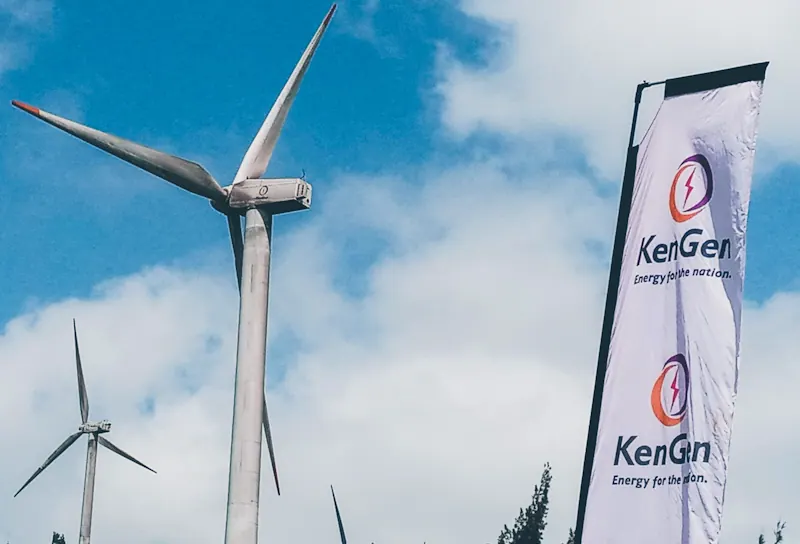
KenGen’s installed capacity stands at 1,786 megawatts, comprising 826 megawatts of hydro, 754 megawatts of geothermal, 25.5 megawatts of wind and the balance from thermal plants, and the reserve margin narrowed to 3.34 per cent in June.
Peak electricity demand reached 2,549 megawatts, matching Kenya Power data and exceeding the 2,514.28 megawatts recorded on June 29, 2026, an 8.55 per cent rise on the previous year and the largest annual increase in five years; Kenya Power plans to lift imports from Ethiopia to 400 megawatts at peak from December.
The rehabilitation of the Olkaria I geothermal station was completed, raising its rating from 45 megawatts to 63 megawatts and bringing total installed capacity to 1,848 megawatts once the upgrade is commissioned, and the company also announced a proposed 42.5-megawatt Seven Forks solar plant, redevelopment of the Gogo hydropower station, battery storage and a plan to raise Masinga Dam.
KenGen’s Green Energy Park in Olkaria, Naivasha, received special economic zone status and customs-controlled area designation on June 5, 2026, and investors are being targeted in data centres, green fertiliser, electric mobility, steel fabrication, logistics and manufacturing; the firm is also expanding consultancy services in geothermal drilling, resource assessment, engineering and plant operation and maintenance, with engagements in Tanzania, Djibouti, Eswatini and Bhutan.
Ronoh Kibet Charles, currently general manager for commercial services, will succeed Peter Njenga as managing director and chief executive on February 1, 2027.
Board chairman Frank Konuche said “We recognise the importance of dividends to our shareholders,” and added “We also have to invest in the assets that will generate future earnings. Balancing shareholder returns, investment and debt reduction is essential to the long-term strength of the business.” Managing director and chief executive Peter Njenga said “Kenya’s growing economy needs dependable electricity. Our investment is focused on keeping existing plants reliable while developing the generation capacity needed to support businesses, households and future growth.” He also said “Geothermal energy can do more than supply electricity to the grid,” and “At Olkaria, we are bringing together energy, steam and industrial land to attract businesses that can create jobs and strengthen Kenya’s manufacturing base.”