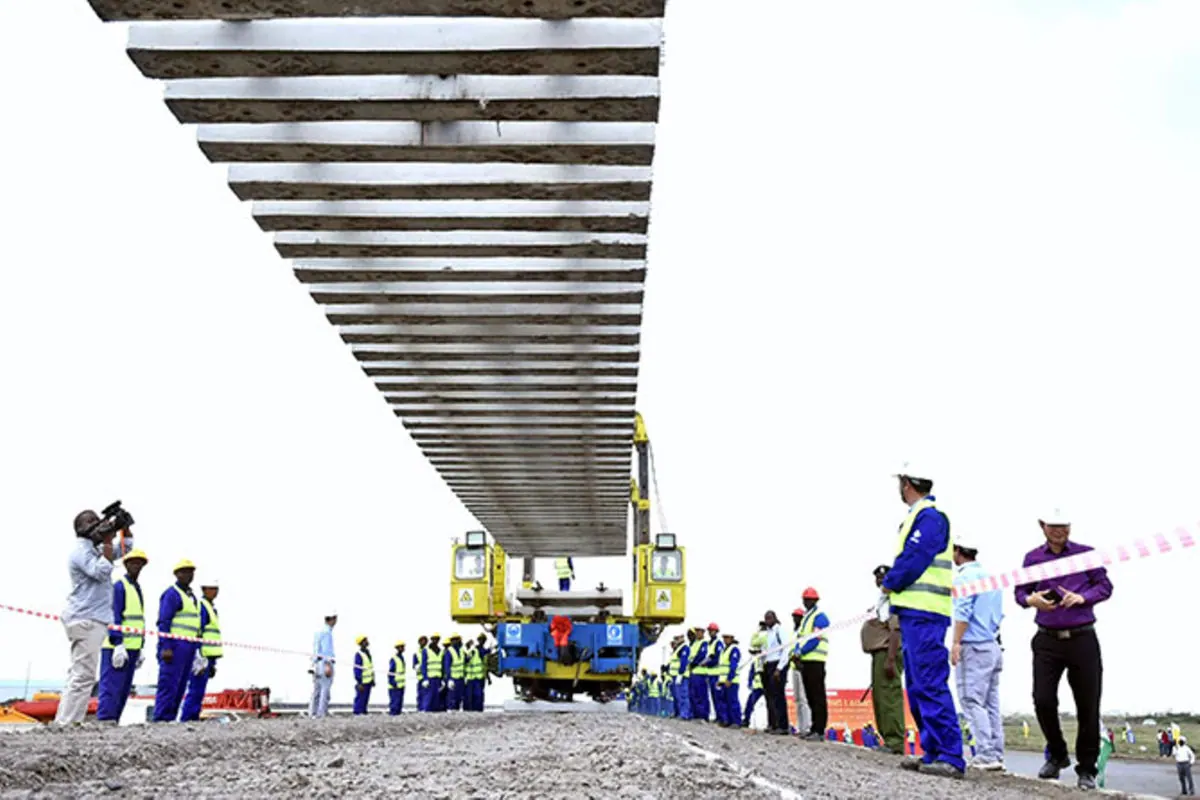
The World Bank has estimated that Kenya overpaid up to KSh117 billion for the construction of the Mombasa-Naivasha Standard Gauge Railway (SGR) because of land-compensation fraud and an uncompetitive contract award.
The bank’s report states that using the same cost metric as Tanzania’s electrified line could have saved Kenya up to $900 million (KSh117 billion) in initial construction costs.
It attributes at least 30 per cent of the excess cost to governance challenges, including direct contracting, land speculation and fraud in tilting, valuation and compensation payments.
The analysis shows the diesel-powered Kenyan line cost KSh988 million ($7.6 million) per kilometre, compared with KSh740.8 million ($5.7 million) per kilometre for Tanzania’s electrified Dar es Salaam-Dodoma line and KSh689 million ($5.3 million) per kilometre for the Djibouti-Addis Ababa line.
The World Bank notes that Kenya’s line is the only non-electrified single line among the three, and that land acquisition costs were higher in Kenya despite Tanzania building its line later and to a higher specification.
The initial SGR phase was financed by three loans totalling KSh649.9 billion ($5 billion) from the China Exim Bank in 2014 and 2015, undertaken by the China Road and Bridge Corporation (CRBC) with approval from the Kenya Railways Corporation (KRC).
A Court of Appeal decision in May rejected the State’s bid to keep the loan and construction agreements secret, although the government continues to cite secrecy clauses and national security for limited disclosure.
Treasury Cabinet Secretary John Mbadi declined to provide further details on the recent restructuring of the Chinese loans, which were extended to 2040 and converted into yuan, reportedly saving Kenya about $215 million (KSh27.9 billion) a year.
Kenya is now seeking to fund the extension of the SGR from Naivasha to Malaba through Kisumu by raising bonds backed by collections from the securitised railway development levy, without Chinese financing.