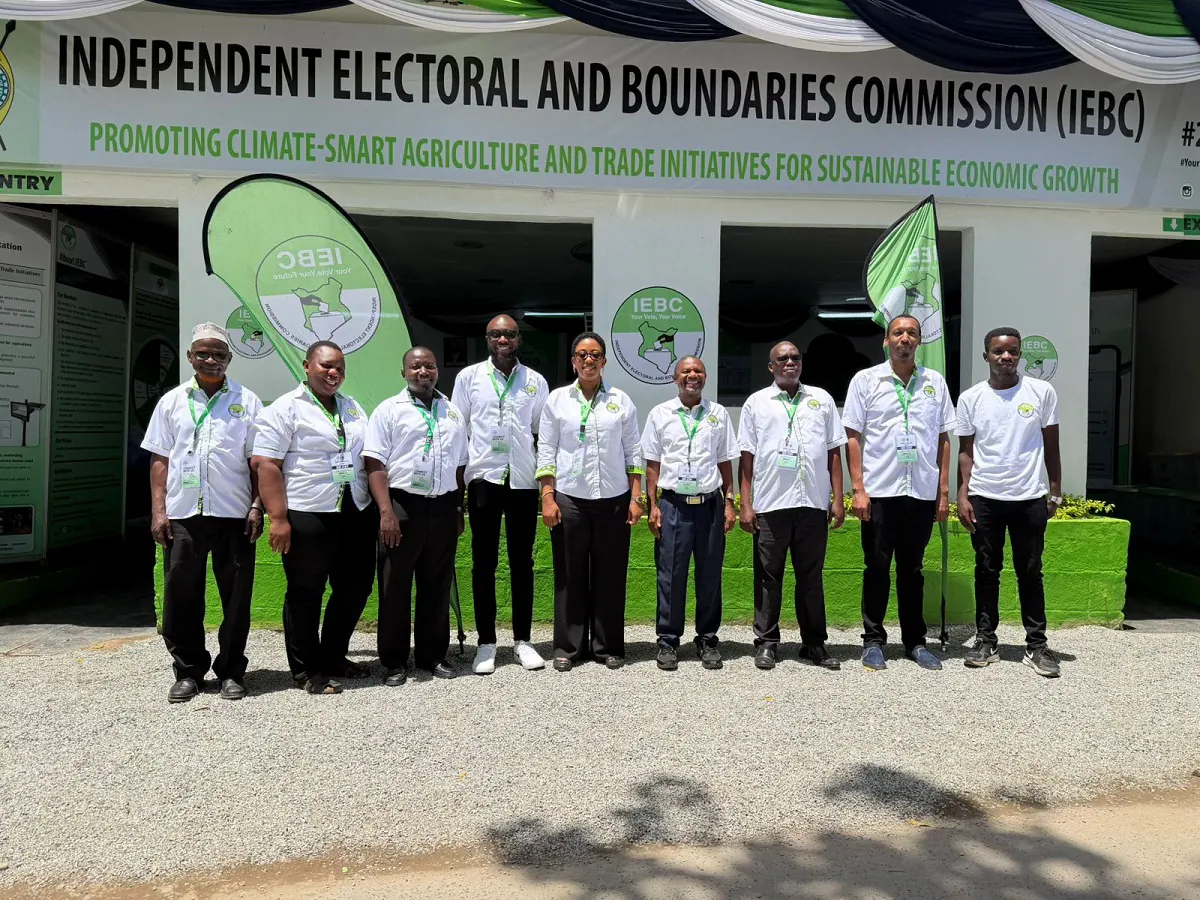
The Independent Electoral and Boundaries Commission (IEBC) has announced a shortfall of KSh11.02 billion for the 2027 general election, a claim critics say lacks verifiable evidence and is driven by costly hardware replacement.
Deputy Chief Executive Officer Obadia Keitany, speaking on behalf of acting Chief Executive Officer Ruth Kulundu, presented the figures to the National Assembly Justice and Legal Affairs Committee on Monday.
Keitany said the deficit covers both election-specific activities and the commission’s routine operations.
The commission divided the gap into KSh3.51 billion for election preparations and KSh7.52 billion for normal institutional functions.
For the election component, IEBC estimates a total need of KSh27.02 billion against an allocated KSh23.515 billion.
The shortfall includes an extra KSh1.6 billion beyond the KSh10.4 billion already set aside to pay more than 600,000 temporary election officials.
An additional KSh471.21 million is required over the KSh3.04 billion earmarked for transporting ballot papers, strategic materials and personnel.
The commission also listed KSh198.83 million for public election media campaigns.
A further KSh188.2 million is needed for obligations under the Work Injury Benefits Act, together with funds for county security, extra warehouse space and system maintenance.
Operationally, IEBC seeks KSh3.41 billion for voter education, stakeholder engagement and public communication.
It also requests KSh1.8 billion for office renovations, furniture, computers, fuel and vehicle upkeep.
Continuous voter registration is budgeted at KSh1.1 billion.
The commission plans to spend KSh547.92 million on new vehicles.
Regional partnership meetings, constituency engagements and commissioner capacity building are allocated KSh172.8 million.
The largest single line item is technology, with a demand of at least KSh10.7 billion to acquire 60,000 new Kenya Integrated Election Management System kits for biometric verification and electronic result transmission.
The original plan called for 45,000 new kits and the reuse of 15,000 units bought in 2021 for the 2022 polls.
Vice Chairperson Fahima Abdalla told the committee that an audit by the state ICT Authority deemed the older devices unsuitable for reuse, stating, “The technology had an end of life, which is five years. So having procured the kits in 2021 for the 2022 general election, there are high chances that they will not operate perfectly for the 2027 general election.”
IEBC links the expanded procurement to an expected rise in registered voters to 28.5 million, which would raise the number of polling stations from 46,229 in 2022 to 55,393 in 2027.
Governance watchdogs and critics have dismissed the large-scale purchase as wasteful and say the commission has not provided technical proof that existing kits cannot be repaired or upgraded.
They argue that the ruggedised Android tablets can be serviced or that cheaper, unbranded replacements could be bought for units beyond repair.
IEBC Chairperson Erastus Ethekon previously argued that live-streaming from roughly 50,000 polling stations would add significant cost and require extra cameras, training and operators.
Opponents counter that each KIEMS kit already includes an internet-connected camera capable of scanning result forms and transmitting data, making additional video equipment unnecessary.
Observers warn that invoking unverified fiscal constraints to avoid real-time data streaming undermines the core pillars of a free, fair and transparent election.
Some civil society groups have called for a 30-year prison term for any IEBC official caught tampering with results, together with immediate nullification of manipulated tallies and a fresh count.
Lawmakers have highlighted that IEBC’s budget projections have shifted repeatedly, moving from KSh57 billion to KSh61 billion, then KSh63.9 billion and later KSh74.8 billion.
Budget documents show the commission originally requested KSh74.8 billion, received KSh41.3 billion, leaving a KSh33.5 billion gap that was later revised down to KSh11.02 billion.
JLAC Chair and Tharaka MP Gitonga Murugara urged the commission to focus on essential spending while noting the high public expectation for a credible election, saying, “One thing we have to stress here is that the upcoming election has drawn immense interest among Kenyans and there is a very high expectation on you to deliver a free, fair and credible election.”
The committee also pointed out inconsistencies in the commission’s pending bills, with its own figures showing outstanding debts of KSh4.99 billion (KSh4.27 billion legal claims and KSh717.7 million goods and services) versus the KSh1.71 billion listed by Keitany (KSh1.02 billion legal fees and KSh685.74 million goods and services).
IEBC warned that unresolved historic election debts could increase liabilities and hamper its operations.
The House Committee on Constitutional Implementation Oversight has called on the National Treasury to address the funding shortfall and publish a clear disbursement timetable to avoid delays in election preparedness.