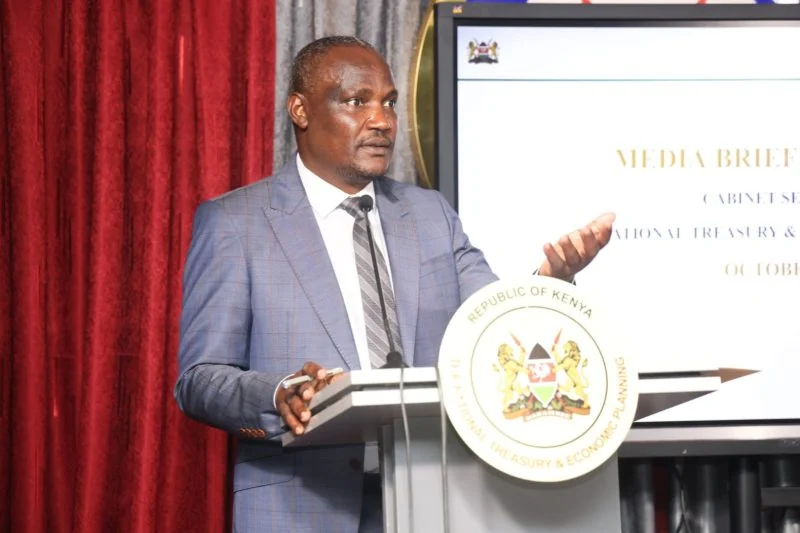
Treasury Cabinet Secretary John Mbadi said the National Treasury is preparing the second Medium-Term Revenue Strategy for the 2027/28 financial year, with a view to widening Kenya’s tax base and enhancing compliance.
Mbadi explained that the new strategy will build on lessons from the current revenue framework, aim to bring more taxpayers into the system and lessen the heavy reliance on individuals and businesses already operating in the formal economy.
At a stakeholder workshop in Nairobi organised by the Government of Kenya and the African Economic Research Consortium, technical teams presented 14 research papers covering personal income tax, petroleum excise, corporate tax, Value Added Tax, electronic invoicing through eTIMS, informal payments, cross-border trade and the Financial Inclusion Fund.
The research examines the distribution of personal income tax across income groups, the impact of existing exemptions and reliefs, and overall tax incidence and income inequality to assess whether obligations match ability to pay.
Mbadi said improving tax administration and closing compliance gaps are essential to strengthen domestic revenue mobilisation without adding pressure on current taxpayers.
He also addressed public concerns over the use of collected taxes, stating “Taxpayers are entitled to ask what they receive for their contribution.”
Mbadi directed technical teams to consolidate the workshop recommendations into a policy review matrix that will identify proposals requiring legislative changes and those that can be implemented through administrative improvements.
The Treasury intends to use the matrix and the research findings to shape the Finance Bill 2027 and the second Medium-Term Revenue Strategy.