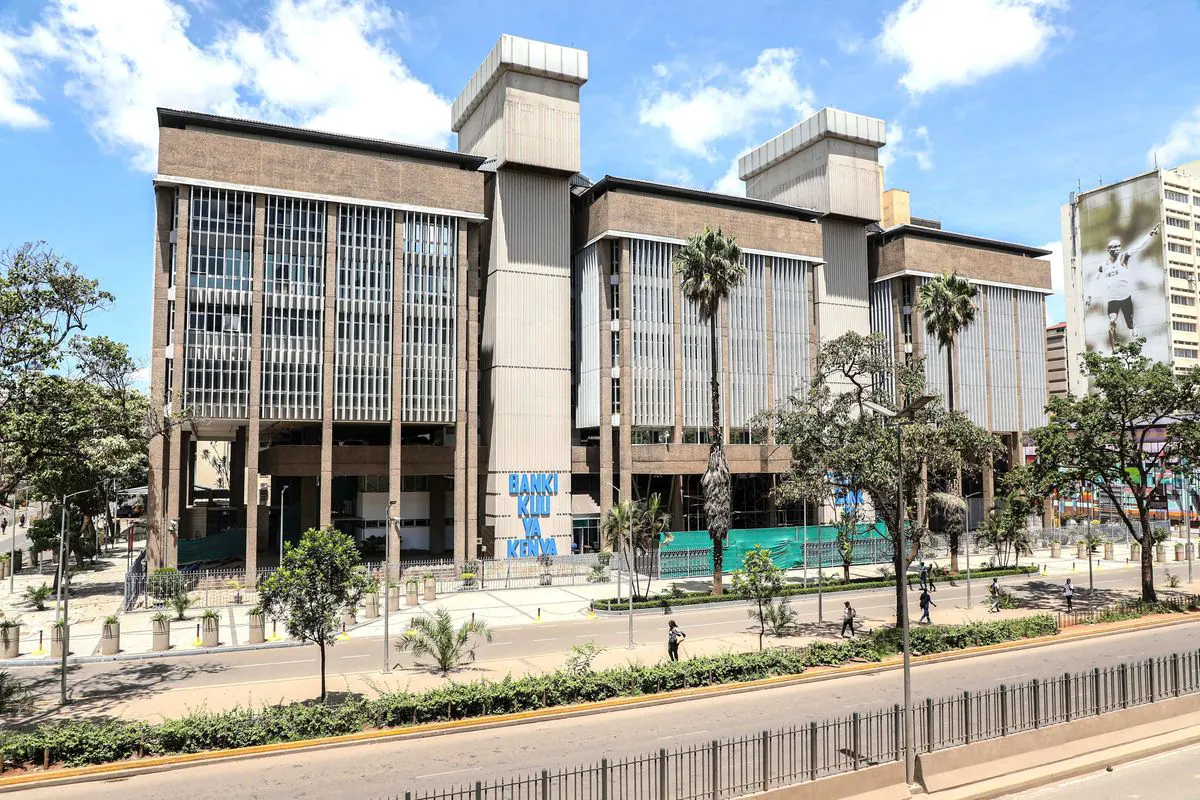
Wealthy Kenyan households and companies have amassed a record KSh1.52 trillion in foreign-currency deposits at commercial banks.
Kenya National Bureau of Statistics data show that deposits in dollars, euros and the British pound rose by KSh240.57 billion over the past year, the biggest annual jump in years.
The growth is seen as a defensive move by affluent savers and firms to protect value and hedge against economic uncertainty rather than to fund new investments.
Melodie Ndanu, a research analyst at SIB, said both corporate and retail deposit holders are adopting defensive strategies because of Middle East shocks, rising inflation and the upcoming 2027 General Election, adding that corporates are likely beefing up buffers for operational cash flows while households treat forex deposits as a wealth-preservation shield.
She also noted that firms are taking a “wait-and-see” approach, preserving balance sheets and postponing expansion until policy directions become clearer, and warned that higher US interest rates could increase demand for the dollar, prompting businesses to prepare.
Ken Gichinga, chief economist at Mentoria Economics, explained that companies hold foreign currency mainly to settle supplier invoices denominated in dollars and cautioned that rising global rates could trigger capital flight and a weaker shilling.
Nahashon Mungai, executive director, global markets at SIB, said there is no return advantage in holding foreign currency; corporate customers keep it for cash-flow matching and dividend accumulation, especially money-remittance firms, the agricultural sector, travel and tourism, foreign-owned companies and public entities that bill in dollars.
Central Bank of Kenya data up to December 2025 show corporates account for KSh957 billion of the deposits, or 71.3 per cent, while households hold KSh386 billion, or 28.7 per cent.
Kenya’s foreign-exchange reserves have risen to more than $15 billion, providing a buffer against issues linked to the Middle East conflict, slower export growth, lower remittances and reduced tourism receipts.
Remittance inflows reached $451.8 million (KSh58.69 billion) in August 2026, up six per cent from $426.1 million (KSh55.35 billion) a year earlier, although total remittances over the 12 months to August fell 1.3 per cent to $5.01 billion (KSh650.8 billion) from $5.08 billion (KSh659.9 billion).
Analysts say the surge in foreign-currency deposits reflects businesses’ need to fund imports of fuel, machinery, industrial inputs and other goods, while investors argue the cash could be deployed for growth or returned to shareholders.