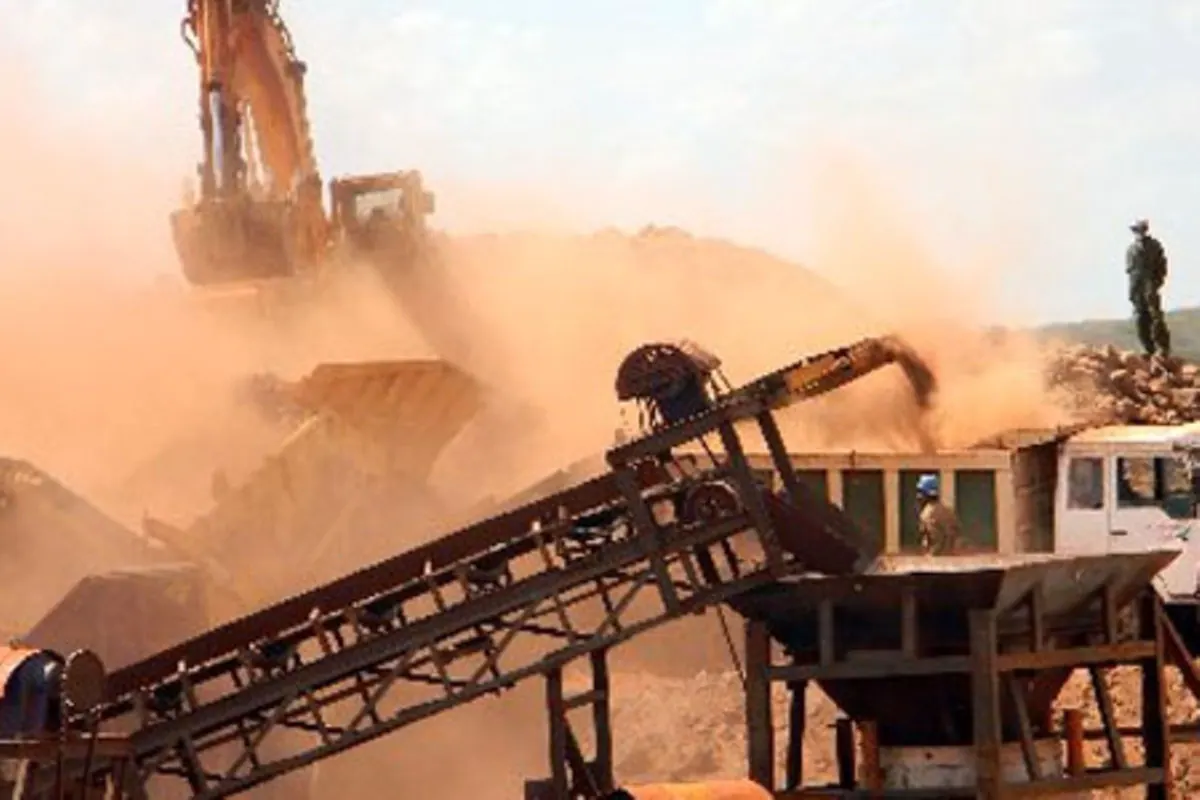
Mining Cabinet Secretary Hassan Joho announced on Thursday that Frontier Minerals Consortium, a group of four American firms, has been awarded the KSh8 trillion tender to develop the Mrima Hill niobium, rare earth and other mineral project in Kwale County.
The consortium is made up of Frontier Minerals LLC, Bunker Hill Mining Corp, ReElement Technologies and American Resources Corporation, each bringing complementary expertise in mining, critical-minerals supply chains and advanced refining.
“An award at the end of a tender process is not a licence to immediately break ground; rather, it is the gateway to meaningful local partnership and strict regulatory compliance,” Joho said in a statement.
Kenya’s mining ministry said preliminary indicators suggest the deposit contains over KSh6 trillion worth of rare-earth minerals and niobium.
Seven bidders were shortlisted in July, including two Chinese firms, two US consortia, a US-affiliated consortium, an Australian consortium and a Kenyan-British joint venture; the Chinese firms later withdrew.
Other successful bidders include the joint venture of Fangda Special Steel Technology Co. Ltd and Sinohydro Corporation, which will develop chromite and copper projects elsewhere in the country.
The US consortium said it will focus on building processing and refining capacity in Kenya, in line with the government’s insistence on local value addition rather than exporting raw concentrates.
The ministry added that the consortium must now engage with the local community and obtain prospecting licences before formal consent processes begin.
ReElement Technologies has secured a US Department of Defense investment of $25 million announced in July 2026 to support equipment for its planned refining facility in Indiana, part of Washington’s effort to reduce reliance on China for strategic minerals.
US officials have described Mrima Hill as a key target in the Trump administration’s campaign to increase American access to critical minerals, a sector dominated by China.
The award is seen as a strategic win for the United States in the geopolitical race for rare-earths needed for electric vehicles, semiconductors, wind turbines, advanced electronics, weapons systems and artificial intelligence.
For Kenya, the project offers a chance to diversify an economy long anchored in agriculture, create new industries and boost mining earnings, which fell from KSh35 billion in 2022 to KSh20.3 billion last year after the closure of titanium ore mines in Kwale.
Critics note that the 390-acre forest at Mrima Hill houses sacred Digo shrines and supports farming for a community where more than half live in extreme poverty, raising concerns about displacement and benefit sharing.
An Australian bidder, RareX, announced it would challenge the decision, alleging irregularities in the bidding process, while a legal advocacy group sued the government earlier this year over lack of transparency and public consultation.
US interim ambassador Marc Dillard visited Mrima Hill in mid-2025, and Chinese nationals were turned away a few months later, according to locals.
The award follows Kenya’s 2013 creation of a mining ministry and recent reforms that lifted a 2019 ban on new licences, offering tax breaks and improved transparency to raise the sector’s contribution from 0.8 per cent of GDP to 10 per cent by 2030.