Kenya’s listed REIT market, with a capitalisation of $247.6 million, remains one of the smallest in Africa despite attracting subscriptions above fundraising targets for some new trusts.
By comparison, South Africa’s REIT market is valued at $18.9 billion, Morocco at $667.4 million and Zimbabwe at $270.9 million, placing Kenya behind even Zimbabwe which introduced its market later.
The Capital Markets Authority (CMA) is considering rule changes aimed at widening institutional participation and lowering entry barriers for large investors.
One proposal would cut the minimum public-ownership requirement from 25 per cent to 15 per cent, arguing that pension funds and insurers prefer larger stakes for efficiency and control.
The CMA also plans to reduce the minimum REIT subscription amount from KSh5 million to KSh100,000 and lower conversion fees from KSh7.5 million to KSh150,000, while permitting REIT managers to provide loan guarantees for associated projects.
Institutional allocations highlight the gap: Kenyan pension funds had allocated about $100 million to REITs as of 2025, whereas South African pension funds had allocated more than $11.3 billion, accounting for over 60 per cent of that market’s capitalisation.
Kenya’s six listed REITs contrast with South Africa’s 36 listed REITs, three of which are foreign-listed.
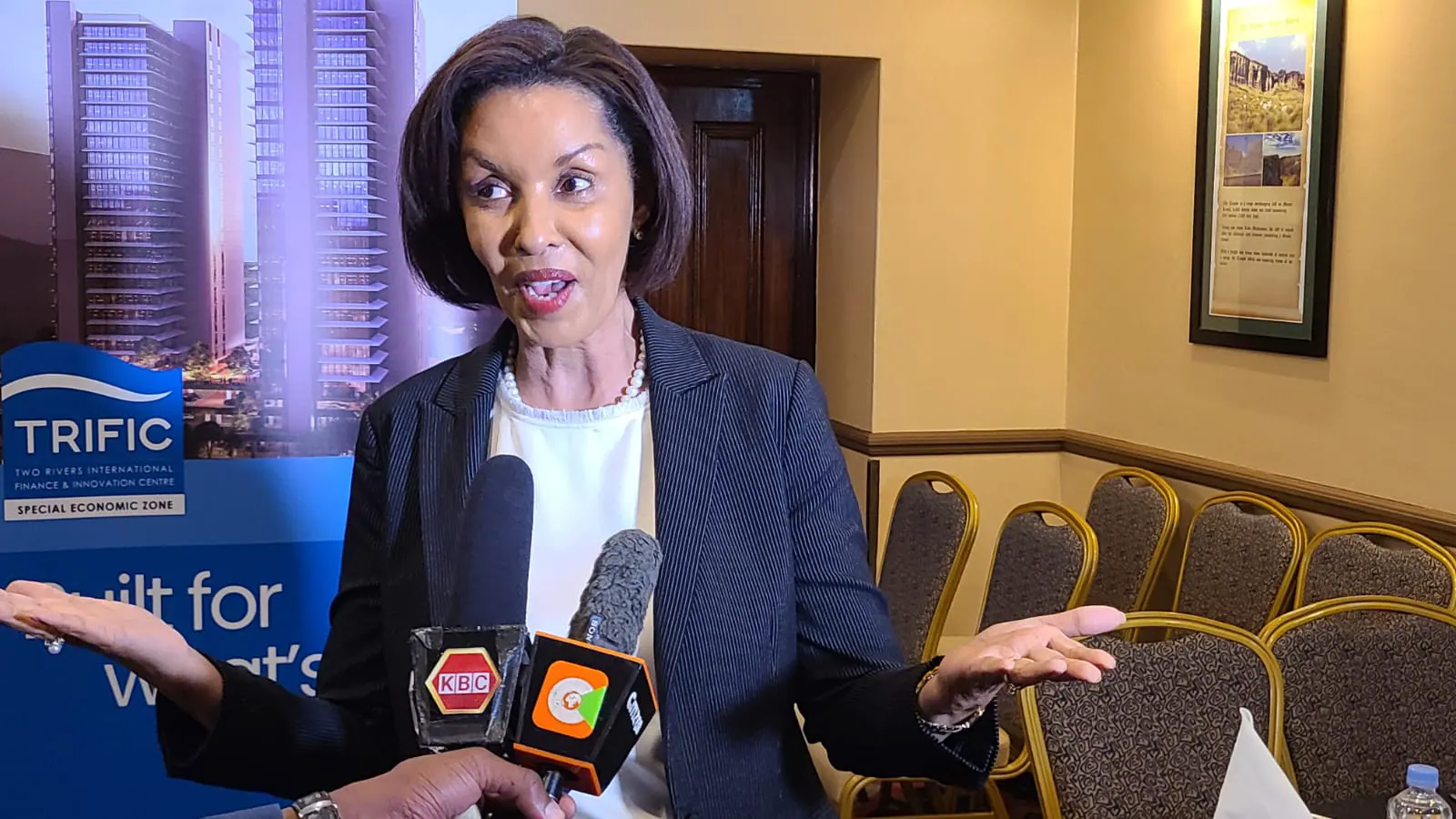
Fundraising activity shows investor interest; the TRIFIC Green USD I-REIT’s June 2026 offer attracted $30.82 million, 103.3 per cent of its $29.83 million target, and it was marketed with an 8 per cent annual yield and a market-making arrangement to support post-listing trading.
ALP Investment REIT also recorded subscriptions equal to 115 per cent of its target, demonstrating strong demand for specific property-backed products.
Average REIT returns in Kenya were 6.7 per cent in 2025, compared with roughly 13 per cent from Treasury bonds, a disparity cited as a deterrent for institutional investors.
The CMA reported collective investment scheme assets of KSh948.7 billion as of June 30, 2026, with money-market funds accounting for 49 per cent, special funds 27 per cent and fixed-income funds 24 per cent.
Digital platforms are expanding distribution; Safaricom’s Ziidi Trader processed 268,936 of the NSE’s 433,498 share-purchase orders between February 5 and March 10, 2026, with an average purchase value of KSh2,621, and accounted for about 60 per cent of applications in Quickmart’s KSh15 billion IPO.
Industry voices such as Peter Waiyaki of Mboya Wangong’u & Waiyaki Advocates have called for broader asset eligibility, including telecommunications towers, fibre and data centres, to widen REIT investment opportunities.
Fortren & Company said, “Deepening institutional participation in African REITs requires policy support, such as mandatory pension fund allocations to listed real estate,” and added, “Regulators need to deepen the asset class through enabling frameworks, including potential mandates for pension funds and insurers to allocate a minimum share of assets under management to REITs, alongside consistent tax treatment and improved disclosure standards”.
The CMA warned that large investors may be forced to sell part of their holdings to meet public-ownership rules, stating, “If a few large investors already own most of the REIT, they are forced to adjust, they may have to sell part of their investment to the public, even if they don’t want to; not because they need money but just to meet the rule resulting in dilution of ownership and weaker decision making”.
The market’s evolution will be measured by whether the proposed regulatory adjustments translate into greater institutional capital and sustained secondary-market liquidity for Kenyan REITs.