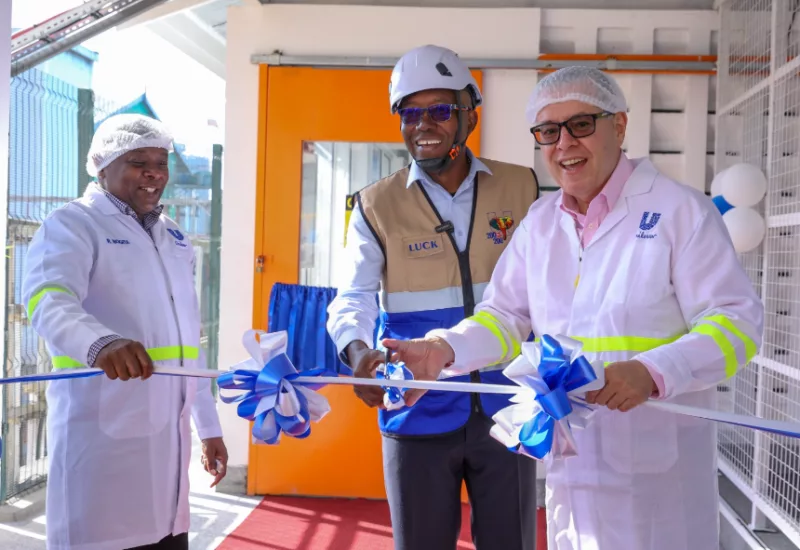
Unilever has spent KSh70 million on an 800 kW solar power system at its Nairobi manufacturing plant, aiming to supply roughly 30 per cent of the factory’s electricity.
The company expects the installation to cut annual energy expenses by about KSh30 million and to lower its monthly electricity bill from around KSh12 million to between KSh7 million and KSh8 million, while also reducing its heavy-fuel-oil spend of roughly KSh8 million per month.
Unilever says the solar array, together with the earlier conversion of its boilers from heavy fuel oil to biomass, has cut the plant’s carbon emissions by about 40 per cent relative to the 2023 baseline.
João Ribeiro, Unilever’s 1UL supply-chain head, said the investment makes operations more resilient and competitive, and Elodie Kouassi, head of supply-chain for East Africa excluding Ethiopia, added that sustainability and strong business performance can advance together.
Luck Ochieng, managing director for Unilever East Africa, noted that the project demonstrates how local action can support the company’s wider climate ambitions and benefit consumers through cheaper products.
The move follows a broader shift among Kenyan manufacturers, with firms such as Bamburi Cement, Mabati Rolling, Unilever Tea Kenya, Bidco Africa, British American Tobacco and Carbacid Investments also installing solar capacity.
Kenya Power reported that new-customer electricity sales fell by KSh1.07 billion in the year to June 2026, new-user consumption dropped 20 per cent to 161.7 GWh, and revenue from new connections declined 26.41 per cent to KSh4.05 billion.
In the first half of 2026, businesses added 72.8 MW of solar capacity, raising total commercial and industrial self-generation to 676.6 MW, a trend that could reduce demand from Kenya Power’s most valuable customers.
Industrial electricity tariffs in Kenya are estimated at $0.18-$0.23 per kWh (approximately KSh23.3-KSh29.8), higher than rates in neighbouring countries such as Uganda, Tanzania, Ethiopia, Egypt and South Africa, prompting manufacturers to seek captive power solutions.
Unilever projects the solar system will achieve a simple payback in about 2.3 years, based on the expected annual savings of KSh30 million.