Kenya has cleared Circle Gas, the UK parent of M-Gas cooking-gas service, to apply for a Letter of Authorisation that would allow the sale of carbon credits abroad.
The letter would enable the company to sell credits at a value higher than the current voluntary market price, but clearance to apply does not guarantee the letter and the 2025 accounts filed on September 30, 2026 do not indicate whether Circle Gas has submitted an application.
The accounts also omit any projected revenue from the authorisation, and Circle Gas still requires about USD 28 million from external investors to continue expanding.
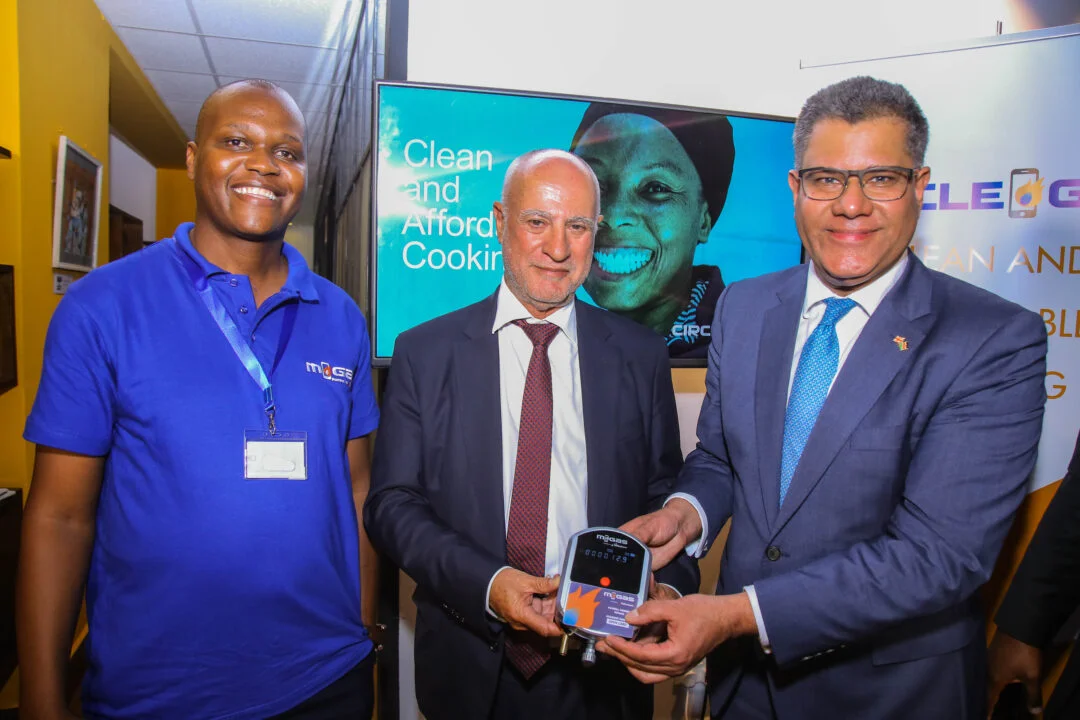
M-Gas provides LPG on a pay-as-you-cook basis, with customers paying small amounts via M-Pesa and smart meters cutting supply when the paid balance is exhausted; Safaricom has invested in Circle Gas, which also operates in Tanzania.
Circle Gas ended 2025 with 391,139 customers, 6 per cent fewer than the 417,629 recorded a year earlier after it removed customers who used little gas.
Under Kenya’s carbon-market rules each carbon credit represents one tonne of CO₂ avoided when households switch from charcoal or other polluting fuels to gas, and such credits are currently sold on the voluntary market.
An authorised credit can be used towards a buyer country’s Paris Agreement target or the CORSIA scheme for international flights, and Kenya charges the shilling equivalent of USD 4, about KSh520, for each authorised unit.
Kenya caps authorised international transfers at 10 million tonnes CO₂e through 2030 and limits annual allocations to 1.67 million tonnes, a ceiling that led to the refusal of a Letter of Authorisation to bio-ethanol cooker Koko Networks, which shut down at the end of January 2026.
Trade Cabinet Secretary Lee Kinyanjui said approving Koko’s full request would have exhausted the amount Kenya could authorise.
Circle Gas reported an operating loss of USD 25.5 million (about KSh3.3 billion) in 2025, but cash inflows included USD 29.1 million (about KSh3.8 billion) from presales of carbon credits.
The company also has future presold credits valued at roughly USD 57.0 million (about KSh7.4 billion) and projects a net cash outflow of USD 53.0 million (about KSh6.9 billion) for the period January 2026 to March 2027.
If the required external funding does not materialise, Circle Gas plans to limit growth, scale back operations in Tanzania and reduce smart-meter spending in Kenya, lowering its funding need to about USD 25.0 million (about KSh3.2 billion).
The directors maintain a going-concern assumption based on the reduced plan, and the auditor’s report found no material uncertainty about the company’s ability to continue.
The directors also point to a record of investor interest and advanced talks with a “sovereign clean cooking initiative”, though the accounts give no detail.
The forecast does not include any benefit from the authorisation, which the accounts describe as “expected to be significant”, and the 2024 accounts had estimated that an authorisation could raise at least USD 9 million (about KSh1.2 billion).