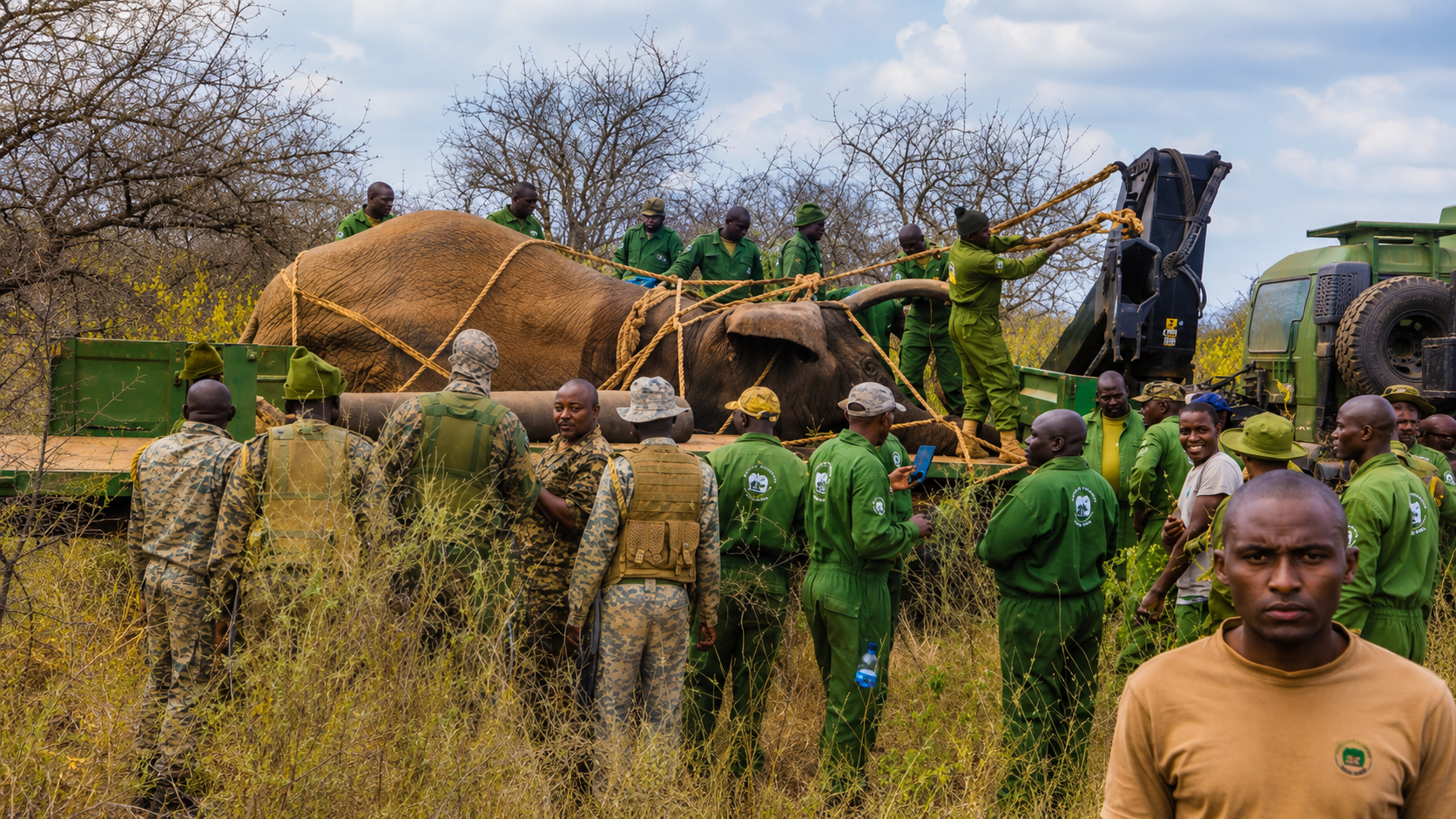
The relocation of two rogue elephants from Makueni County to Tsavo West National Park marks the latest intervention by wildlife authorities to contain mounting human-wildlife conflict, following a series of fatal attacks that have reignited concerns over the safety of communities living along wildlife dispersal and migratory corridors.
The operation, undertaken by the Kenya Wildlife Service (KWS), saw the two elephants moved from the Kamboo area of Makindu after residents linked the animals to at least three deaths and threatened retaliatory action.
Tourism and Wildlife Cabinet Secretary Rebecca Miano has repeatedly identified human-wildlife conflict as one of the sector’s most pressing operational challenges, particularly in regions bordering protected conservation areas where growing human settlement increasingly intersects with wildlife movement patterns.
KWS officials reported that the relocation was completed without incident, bringing temporary relief to residents who had endured months of uncertainty as the animals moved through farms and settlements.
Authorities believe the elephants had strayed from Tsavo West National Park, one of Kenya’s largest conservation landscapes, before establishing a presence in populated areas where encounters with residents became more frequent and increasingly dangerous.
The latest fatal incident occurred on June 15 in Kiboko, Makueni County, when a nine-month-old child was killed and her mother injured during an elephant attack.
According to police reports, the woman, aged 29, was heading to work on a farm while accompanied by her daughter when the attack occurred.
KWS personnel and security officers who visited the scene confirmed the incident, while local residents rushed the injured woman and another child to Makindu Sub-County Hospital for treatment.
Tensions rose shortly after the incident as residents gathered at the scene in protest, delaying efforts by security officers to retrieve the child’s body.
Intervention by local administrators and the Sub-County Security Team eventually restored calm, allowing crime scene investigators to document the area before transferring the body to Makindu Sub-County Hospital Mortuary.
The episode reflects the deep frustration that often emerges in communities where recurring wildlife encounters carry severe human costs and disrupt livelihoods dependent on farming and rural economic activity.
The incident also draws attention to broader questions surrounding wildlife management in Kenya, where conservation success has contributed to growing wildlife populations while expanding human settlement has narrowed traditional migration routes.
Areas surrounding Kiboko and other settlements bordering Tsavo ecosystems have frequently recorded encounters involving elephants, placing pressure on authorities to balance conservation objectives with public safety and economic stability for affected households.
In response to recurring attacks, the government has expanded compensation and mitigation efforts through the third phase of the Human-Wildlife Conflict Compensation Programme launched in May 2025.
During the launch at Meru National Park, President William Ruto unveiled the Wildlife Conservation Card, a financing mechanism developed in partnership with KCB Bank that channels Ksh 10, Ksh 5 and Ksh 3 from transactions made through its Platinum, Gold and Silver tiers respectively into the Wildlife Conservation Trust Fund.
“Compensation is justice, but prevention is progress,” said Ruto, President of Kenya.
“Through the Conservation Card, fencing, and community-led tourism, we are turning conflict into opportunity,” said Ruto.
The programme reflects a growing policy shift toward combining compensation, conservation financing and preventive measures in an effort to reduce conflict while safeguarding both rural livelihoods and Kenya’s globally important wildlife heritage.