The Treasury estimates that ending the 30-year contract for the Rironi–Mau Summit highway could create a liability of up to KSh180.73 billion for the state.
The draft 2027 Budget Policy Statement breaks the exposure down into KSh93.38 billion for the Rironi–Naivasha–Gilgil and Rironi–Mai Mahiu–Naivasha sections and KSh87.35 billion for the Gilgil–Nakuru–Mau Summit phase.
Officials stress that these amounts represent the maximum possible exposure and not a forecasted bill, adding that “the likelihood, value and timing of termination payments cannot be determined with certainty in advance, and it is unlikely that all projects would be terminated at the same time.”
The risk follows a 2025 decision to terminate a contract awarded to a French consortium led by Vinci Highways for the Nairobi–Nakuru–Mau Summit expansion, for which the government paid KSh7.3 billion to settle the dispute.
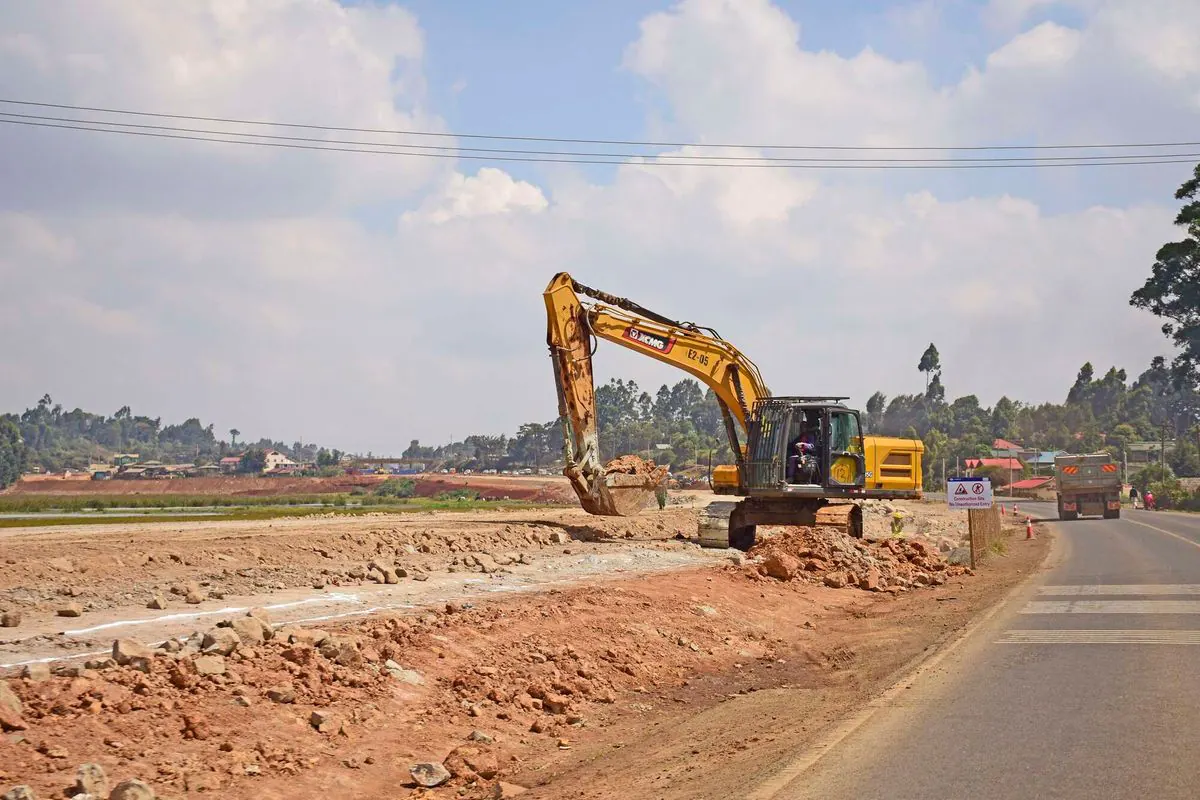
After that cancellation, China Road and Bridge Corporation, together with the National Social Security Fund, took on the Rironi–Naivasha–Gilgil and Rironi–Mai Mahiu–Naivasha sections, a combined project valued at KSh96.382 billion under a 30-year term.
The Gilgil–Nakuru–Mau Summit segment is being built by Shandong Road and Bridge International at a cost of KSh86.346 billion, also on a 30-year contract, with construction underway but financial close still pending.
Together the two phases account for roughly 43.7 per cent of the KSh413.805 billion total maximum exposure for existing and advanced public-private partnership projects in the 2027/28 financial year.
The Nairobi Expressway, operated under a 30-year concession, is the next-largest single exposure at KSh72.040 billion for the upcoming financial year, after exposures of KSh103.76 billion in the year to June 2025 and KSh87.58 billion the previous June.
Other notable potential liabilities include the smart driving licences programme, which carries a KSh50.220 billion exposure against a KSh45 billion project value, and the Africa50-PowerGrid transmission-lines project with a KSh41.049 billion exposure.