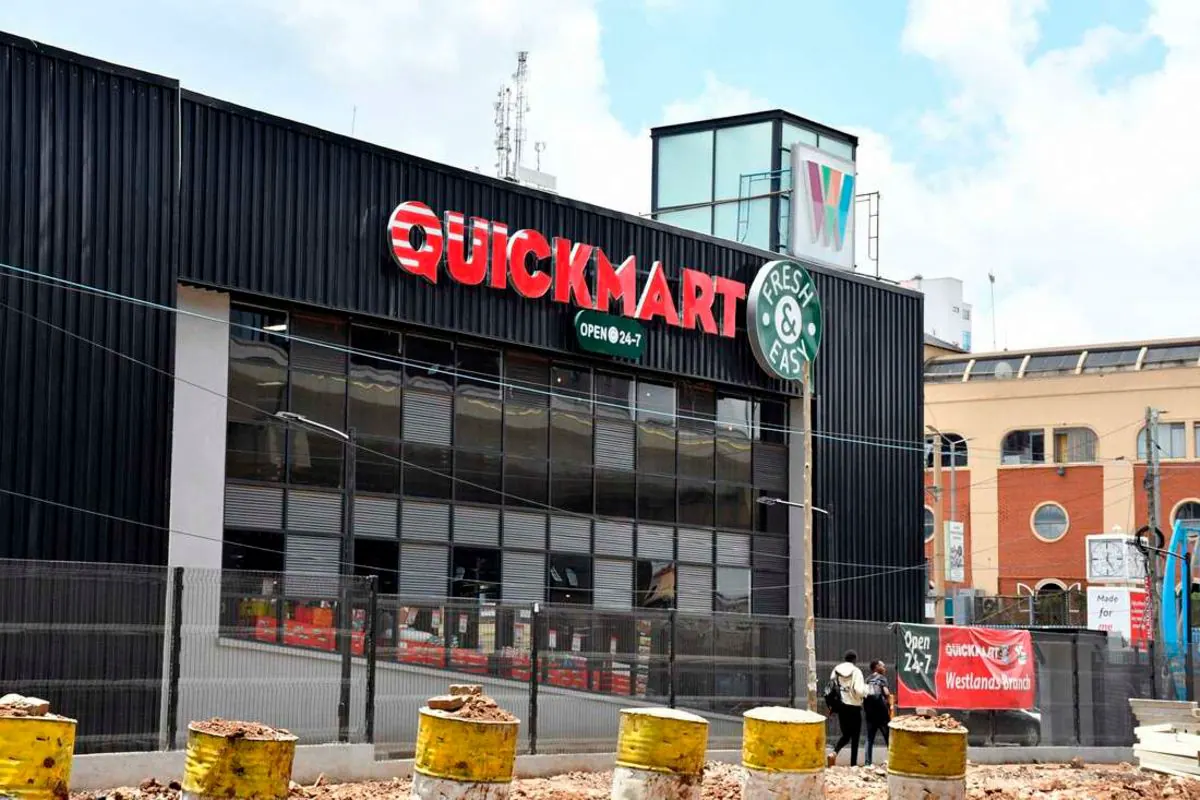
Sagaci Research data cited in Quickmart PLC’s listing memorandum show that three operators together generate roughly 60 per cent of sales in Kenya’s modern grocery sector. Naivas accounts for 31 per cent, Quickmart for 15 per cent and Carrefour for 14 per cent of 2025 revenue.
The modern market comprises roughly 500 stores spread across about 20 chains, with outlet numbers rising from 339 in 2020 to 520 in 2025.
Naivas, the largest chain, reached a milestone of 110 outlets in February 2025 and recorded KSh114 billion in sales for the year ended June 2025, a rise of 21.6 per cent.
Quickmart reported revenue of KSh50.4 billion for FY2025, up from KSh25.7 billion in FY2021, and operates 72 stores in 16 counties. As of June 30, 2026, 41 of its 68 stores were located in the Nairobi metropolitan area, and its Fresh & Easy format, launched in 2019, dedicates about 30 per cent of floor space to fresh foods, which represent roughly 12 per cent of its overall mix.
Carrefour holds a 14 per cent share and was fined a record $8.5 million in 2023 by the Competition Authority for supplier discount issues.
Magunas and Foodplus hold 6 per cent and 4 per cent respectively, while the remaining operators together account for about 29 per cent of the market, the figures rounding to 99 per cent.
Former leaders Nakumatt and Tuskys, once operating 65 and 64 stores, exited the market along with Shoprite and Choppies; the memorandum attributes their collapse to weak governance, rapid expansion and inadequate cost control.
Informal trade still dominates grocery spending, capturing about 87 per cent of expenditure in 2025, whereas modern trade penetration stood at 24 per cent, according to Euromonitor.
Total retail outlays reached USD 22.9 billion in 2025, of which modern retail contributed USD 2.8 billion and online retail USD 0.2 billion.
Sagaci forecasts modern retail to grow to USD 4.4 billion by 2030, implying an annual growth rate of 9.5 per cent and a rise in its share of total retail spending to 16 per cent, compared with 2.8 per cent growth for informal retail.
Agriculture made up 23.2 per cent of Kenya’s GDP in 2025 and wholesale and retail trade 7.8 per cent, with supermarkets acting as a conduit between farms and consumers.
Quickmart works with more than 600 suppliers, sources produce from over 14,000 farmers, lists over 700 suppliers on its IPO site, and operates a fleet of 48 vehicles to move stock between branches.
The International Finance Corporation plans a training programme for smallholder farmers and aggregators covering post-harvest handling and traceability, and also intends to assess food loss across sourcing, storage and retail.
Formal retail is estimated to handle 10-15 per cent of domestic fresh-produce sales, while smallholders produce 70-80 per cent of the country’s fruit and vegetables; industry studies suggest 30-40 per cent of fresh produce is lost between farm and market.
Section 24A of the Competition Act prohibits abuse of buyer power, and the Retail Trade Code of Practice, gazetted on June 11, 2021, regulates written supply agreements, payment terms, cost shifting and shelf-space charges.
ATNi’s analysis places Quickmart’s share of modern food retail at 9-11 per cent, lower than the company’s claim of 15 per cent, and estimates the combined share of the three leading chains at 36-42 per cent, contrasting with Sagaci’s 60 per cent figure.
Sokoni Retail Kenya is offering 2 billion existing shares, representing 50 per cent of Quickmart’s issued capital, at a fixed price of KSh7.50 per share; the transaction involves a sale of existing shares, so Quickmart will not receive any proceeds.
Because listed chains disclose their results, details such as supplier payment periods, shrinkage and fresh-food sales will become publicly available each reporting cycle.