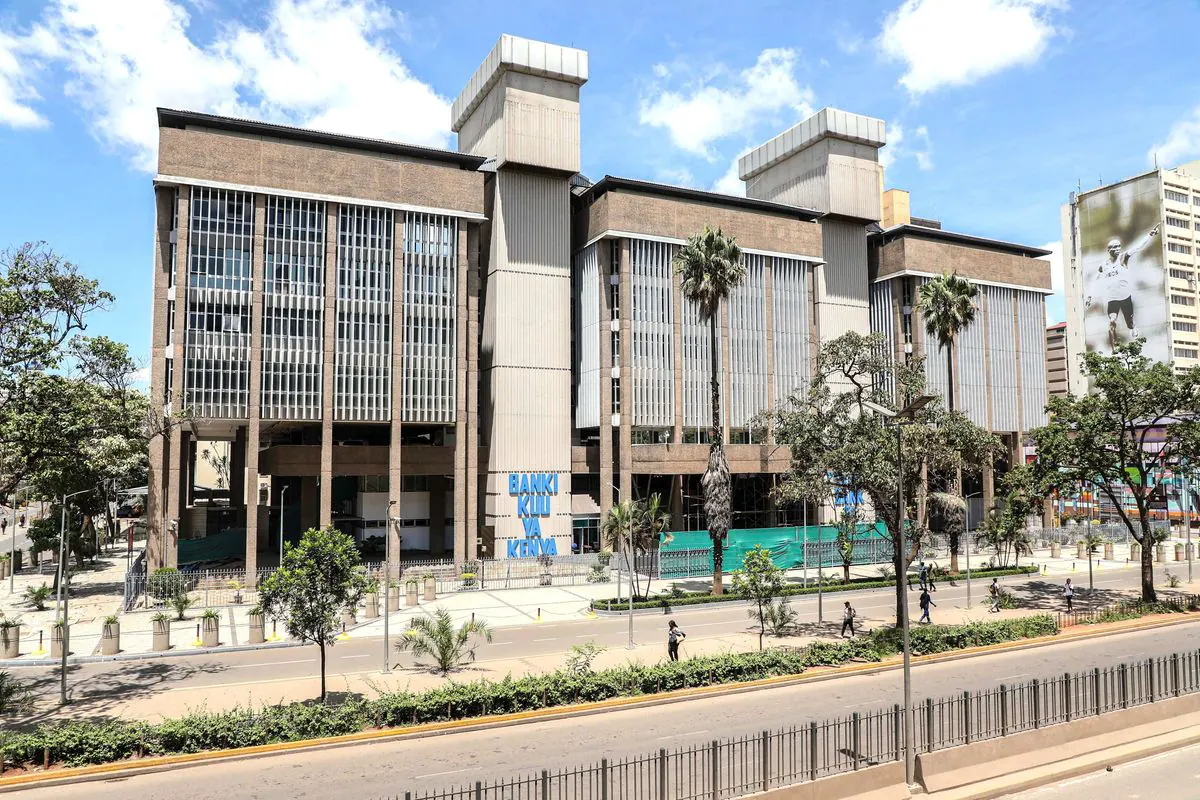
Commercial banks in Kenya expect borrowing costs to continue falling even though the Central Bank of Kenya (CBK) is widely expected to keep the benchmark Central Bank Rate (CBR) unchanged at 8.75 per cent at its Monetary Policy Committee (MPC) meeting on October 7, 2026.
The expectation follows a month-on-month decline in the average commercial-bank lending rate to 14.34 per cent in August 2026, down from 14.78 per cent in February, indicating transmission of earlier rate cuts.
The Kenya Bankers Association (KBA) said falling Treasury bill yields and a government-securities yield curve pointing to lower funding costs signal a less restrictive interest-rate environment, which should lower expectations of higher funding and benchmark pricing costs.
KBA added that the resulting scope for further declines in lending rates could improve credit affordability and reinforce the recovery in private-sector credit growth.
Banks have already passed on lower borrowing costs to businesses and households, helping private-sector lending reach double-digit growth rates of 10.6 per cent in June and 10.2 per cent in July 2026.
CBK’s likely hold of the CBR at 8.75 per cent reflects a “wait-and-see” stance prompted by the Middle East conflict, which has lifted fuel prices and nudged inflation to 6.8 per cent in September 2026 from 6.6 per cent in August, still within the 2.5-7.5 per cent target range.
CBK Governor Kamau Thugge told a central bank governors symposium that the revised risk-based loan pricing framework was not used because the Middle East crisis intervened, leaving the bank in a wait-and-see situation.
The shilling has remained stable between 129 and 130 units to the dollar, and the 364-day Treasury bill peaked at 9.0397 per cent last week, up from 8.7893 per cent at the end of February 2026.
In a research note published on October 1, KBA urged the MPC to keep the CBR at 8.75 per cent, citing inflation within target, exchange-rate stability, favourable interest differentials and rising private-sector credit as reasons.
The note also warned that headline inflation is edging toward the upper limit of the target, that external developments and projected El Niño rains could threaten growth, and that prolonged oil-price pressure raises external-sector risks.
Cytonn Investments expects inflation to stay above the 5 per cent midpoint in the short-to-medium term but believes the CBK’s prudent stance and exchange-rate stability will keep inflation within the target range, and it expects the MPC to remain cautious.
The MPC’s decision will need to balance rising inflation against the risk of slower credit growth and weaker economic activity.