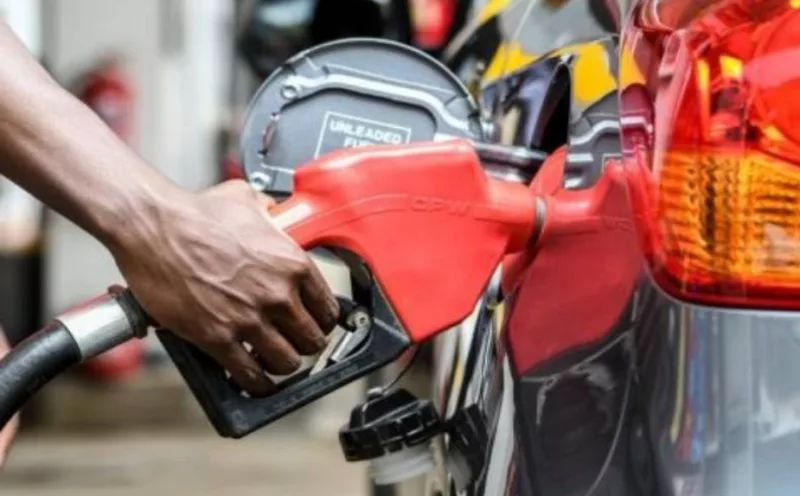
Stakeholders are urging the Kenyan government to adopt fuel-efficiency standards for imported vehicles and machinery in order to curb rising fuel costs and protect foreign-exchange reserves.
They point out that petroleum imports are a major drain on the country’s FX reserves and that transport consumes about three-quarters of all petroleum used domestically.
E-Mobility Association president Hezbon Mose said Kenya’s reliance on imported refined petroleum makes the economy vulnerable to global price swings and that demand has lifted petroleum consumption by 8.3 per cent between 2023 and 2025. “Fuel is our biggest import and our biggest forex exchange. The pressure is being compounded by growing demand,” he said.
A panel of experts in Nairobi warned that, without efficiency measures, the annual fuel import bill could rise from $783 million (KSh101.8 billion) in 2025 to $1.3 billion (KSh133.5 billion) by 2040.
They note that more than 80 per cent of Kenya’s vehicle imports come from Japan and that the lack of domestic fuel-efficiency rules allows relatively high-consumption models to enter the market, especially in the second-hand sector.
GIZ Kenya technical adviser Robert Njoroge said improving vehicle efficiency would ease the economic strain caused by rising petroleum demand. “When so many vehicles will burn so much fuel, you’ll notice that every spike that is recorded, it goes straight to transport costs. And from there into what we pay for food, for what we pay for fare and what we pay for goods. And we know this is pretty much not sustainable for the country,” he said.
Njoroge added that standards would give importers and local assemblers clearer guidance on the types of vehicles required, potentially reducing fuel spend and providing market certainty. “Standards could reduce fuel expenditure while giving importers and local assemblers greater certainty about the vehicles the market will require,” he said.
The government launched a national e-mobility policy in February and technical working groups are now examining how to implement efficiency standards.
Kenya’s power grid is largely renewable, offering an avenue to replace some petrol and diesel use with locally generated electricity, although high upfront EV costs, financing gaps and charging infrastructure remain obstacles.
Data from the E-Mobility Association show about 33,800 electric vehicles were registered by the end of 2025, with motorcycles accounting for 95 per cent of that total, and registrations rose from 5,294 in 2024 to 24,754 in 2025.
Drivers have been paying KSh226.96 per litre for petrol and KSh227.76 per litre for diesel since October 15, roughly 13 per cent and 22 per cent higher than a year earlier.
Presenters at the “Kenya’s Cars, Fuel Costs & the Future of Mobility” session linked the price surge to global oil markets, noting Brent crude averaged $95.34 (KSh12,394) per barrel in 2026, up from $69.14 (KSh8,988) per barrel in 2025 before refining costs.
The proposed regulation would assess the average fuel efficiency of a manufacturer’s or importer’s fleet rather than imposing a uniform target on each model, allowing a mix of efficient petrol, diesel, hybrid and electric vehicles.
The rule would not ban petrol or diesel cars nor require owners to replace existing vehicles, but would apply to all new market entries, including used imports.
Comparisons were drawn with New Zealand’s efficiency requirements and Chile’s experience, where 88 per cent of importers adjusted supply within 18 months of adopting standards, and EV prices fell 17 per cent while model variety tripled.
Similar standards are already in force in 13 jurisdictions covering about 85 per cent of the global light-duty vehicle market.
Supporters argue that predictable standards could boost Kenya’s vehicle assembly sector, which is operating at less than 30 per cent of its 46,000-vehicle annual capacity.
The discussion also raised concerns about future road-maintenance funding as the fleet gradually shifts away from fossil fuels, with suggestions such as distance-based charges, tolls or electricity-related taxes, though fuel revenue is expected to stay steady in the short term.
No timeline for adopting the efficiency regulation was set, and its impact will depend on the final targets, implementation schedule and vehicle affordability.