Safaricom told journalists that its forthcoming 15th Sustainable Business Report will incorporate a double-materiality approach and replace the long-used True Value framework with the Value Balancing Alliance method.
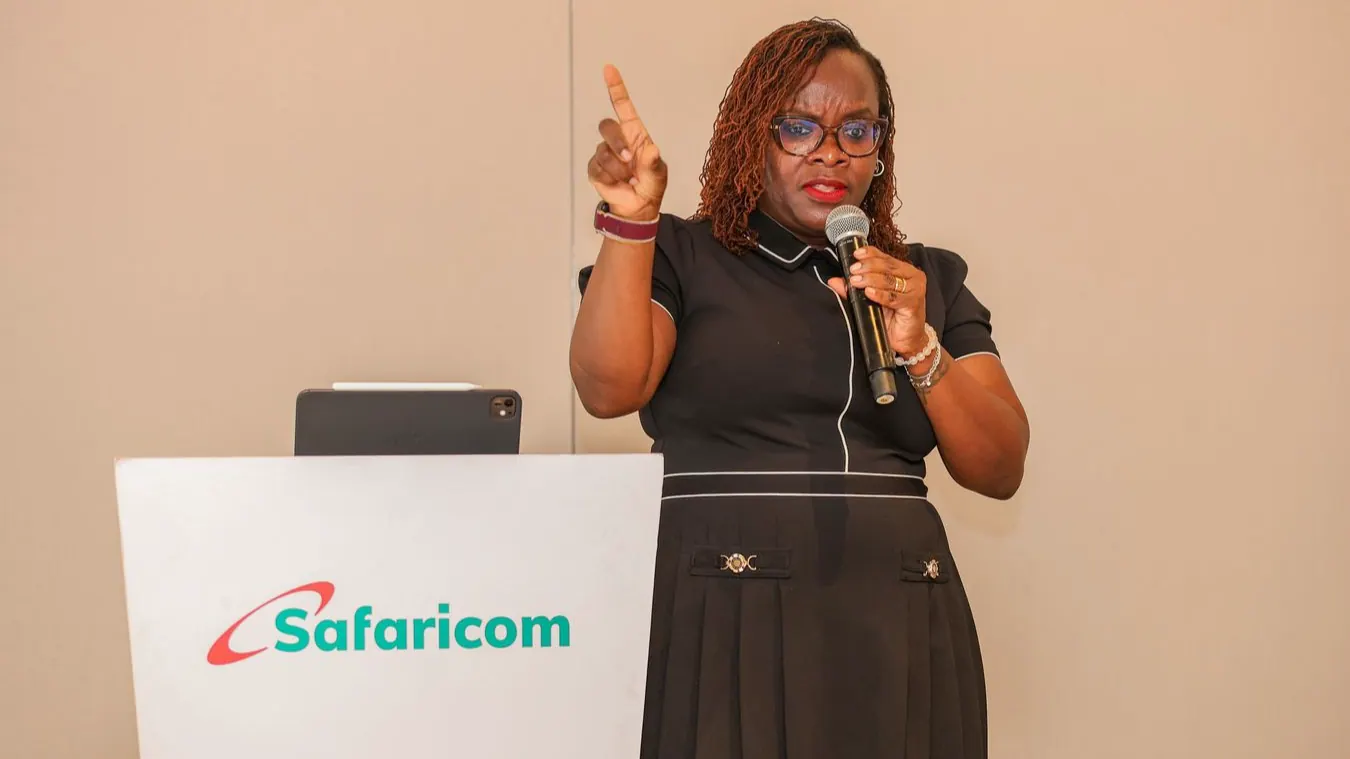
The briefing was led by Karen Basiye, Director of Sustainable Business, Social Impact and M-PESA Foundation, and was attended by senior manager Samson Kanae and sustainability officer Agnes Kariuki; Basiye joined the firm in October 2008 after working at the National Environment Management Authority.
Double materiality will require the company to assess how sustainability issues impact its own operations as well as how its activities affect external stakeholders, while the new impact method, already employed by European pharmaceutical and technology firms, will keep existing metrics but increase transparency and enable benchmarking.
Safaricom also noted that Kenyan public-interest entities, including those listed on the Nairobi Securities Exchange, must publish IFRS S1 and S2 disclosures for accounting periods starting on or after January 1, 2027, a requirement the firm has already embraced as an early adopter.
The company’s inaugural green bond raised KSh20 billion in its first tranche and attracted applications worth KSh41.4 billion, a 175 per cent oversubscription, with individual investors accounting for 96 per cent of the demand; proceeds will fund the 5G rollout, solarisation of network sites and replacement of legacy technology.
Safaricom’s sustainability agenda now sits within corporate strategy, with the firm targeting net-zero emissions by 2050 and pursuing an interim goal of 2035; it added 570 solar-powered sites in FY26, bringing the total to 2,002 against a 5,000-site target for 2030, and aims to plant five million trees, having recorded 2.3 million in its 2025 report.
Women now hold about 44 per cent of leadership positions, up from 24 per cent when CEO Peter Ndegwa took office, with a target of 50 per cent by 2030; women also comprise 49.5 per cent of the overall workforce and spend with women-led firms is being raised from roughly 5 per cent toward a 10 per cent goal.
The M-PESA Foundation committed roughly KSh30 billion over five years to upgrade more than 600 institutions and award over 10,000 scholarships, with 400 secondary-school scholarships granted this year and a target of 100 schools built or refurbished annually.
Additional initiatives include the use of artificial-intelligence tools to detect fraud, the conversion of electronic waste into school bags, and the planned second phase of the “Capture the Good” storytelling programme for young content creators.