
Parliamentary committees reviewing Sessional Paper No. 3 of 2025 heard on Monday that the proposed reduction of the government’s stake in Kenya’s leading telecommunications company will not affect its governance, regulatory oversight, or operational control.
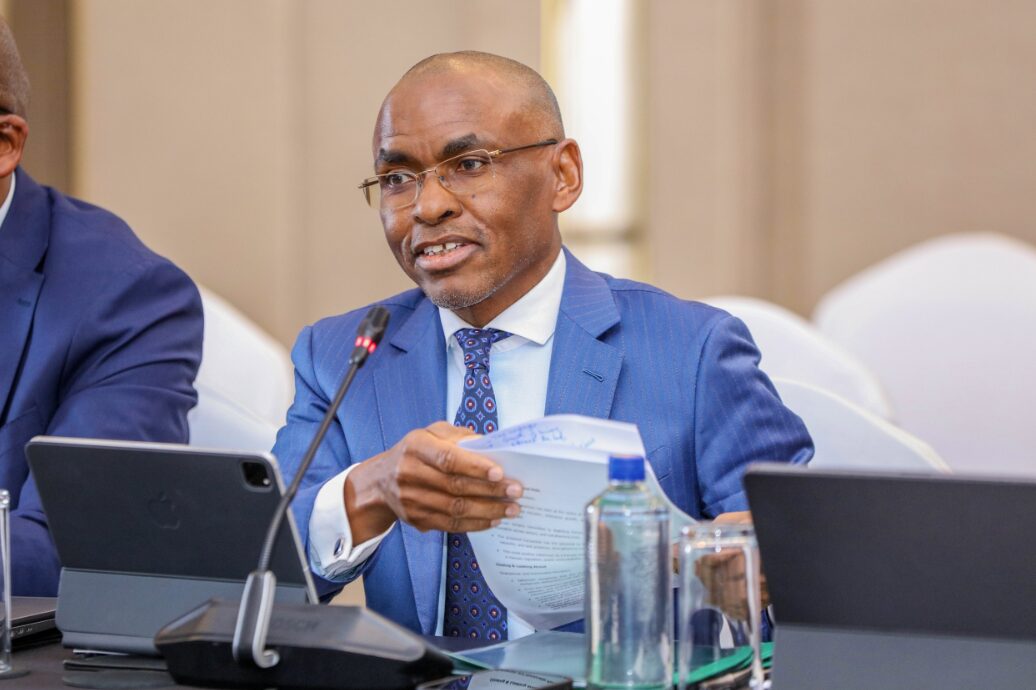
Safaricom, Kenya’s largest mobile operator, confirmed through chief executive officer Peter Ndegwa that the planned shareholder restructuring involves only a transfer of shares between the Government of Kenya and Vodacom Group and does not entail any operational changes.
Speaking before the joint Committees on Finance and National Planning, and on Public Debt and Privatisation, Ndegwa clarified that the company will continue to operate fully under Kenyan law, remaining licensed, supervised, and regulated by the Communications Authority of Kenya, the Central Bank, the Capital Markets Authority, and the Competition Authority of Kenya.
He added that Safaricom remains listed on the Nairobi Securities Exchange and accountable to domestic enforcement mechanisms, dismissing fears that foreign ownership would compromise national oversight.
Ndegwa emphasised that the divestiture constitutes a shareholder-to-shareholder transaction, with the government reducing its ownership from 35 per cent to 20 per cent, and that Safaricom itself is not a direct counterparty to the sale.
“There is no transfer of operational control, no dilution of regulatory authority, and no weakening of governance standards arising from this transaction,” he said, noting that the company’s board, management structure, and decision-making frameworks remain intact.
The CEO highlighted that Vodacom is a long-standing strategic investor, with board representation spanning more than two decades and a track record of contributing technical expertise, regional expansion experience, and long-term investment capacity.
According to Ndegwa, the increased shareholding by Vodacom reinforces continuity in strategic direction rather than signaling any shift in control or priorities.
Parliamentarians raised questions about the implications for Safaricom’s Kenyan identity, with committee members querying whether local focus on pricing, culture, and national development would remain intact.
Ndegwa responded that the company will continue to project a Kenyan brand, operating under existing frameworks that have guided it for over 25 years, and that elements such as branding, color scheme, and customer engagement will remain unchanged.
He also assured that existing agreements with Safaricom dealers and partners, which support millions of livelihoods across the country, will continue unaffected, emphasizing that contracts are legally binding and will be upheld.
The CEO further noted that Safaricom’s regional operations, including activities in Ethiopia, will continue alongside domestic expansion, with the company maintaining compliance with all relevant Kenyan regulations and oversight bodies.
He underlined that the transaction is designed to preserve stability, governance integrity, and accountability while allowing for the partial divestment of government shares without altering the telco’s operational or regulatory framework.
Safaricom currently serves over 60 million customers across Kenya and Ethiopia, providing mobile, financial, and enterprise services that underpin household, business, and institutional activity nationwide.
Ndegwa concluded by affirming the company’s commitment to supporting Kenya’s economic, digital, and social transformation, stating that parliamentary oversight of the proposed divestiture will continue to ensure that public interest and national priorities are maintained.
The joint committees are expected to provide recommendations on the long-term impact of the share sale, with Safaricom maintaining transparency and adherence to Kenyan legal and regulatory obligations throughout the process.
Kenyan Business Feed is the top Kenyan Business Blog. We share news from Kenya and across the region. To contact us with any alert, please email us to [email protected]