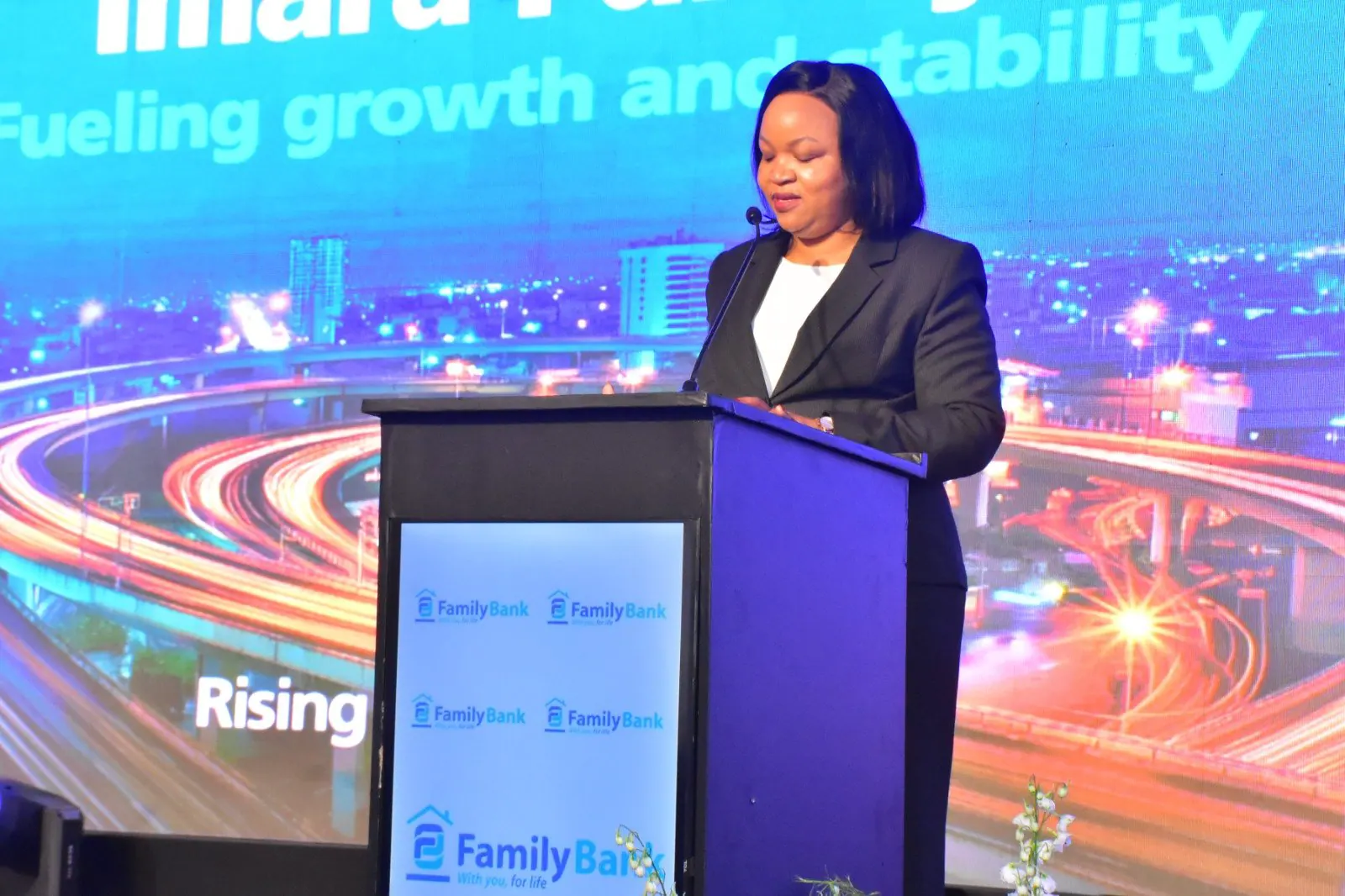
Bilha Ngaruiya, Country Manager of ONErpm Kenya, announced that the firm now facilitates about $1.2 million (KSh156 million) in royalty payouts each year.
The payouts average roughly $100,000 (KSh13 million) per month and represent more than half of the KSh300 million that collective management organisations such as MCSK, PRISK and KAMP distribute in a good year.
Ngaruiya has held the country manager role since ONErpm entered Kenya in 2022, when the international music distribution, publishing and label services company opened its Kenyan office.
She told Business Daily Africa, “If that isn’t some success story, then I don’t know what is,” referring to the growth achieved.
Ngaruiya said she did not complete a college degree and instead learned through apprenticeship, stating, “I didn’t finish college, so I didn’t have the traditional credentials many people consider essential. Instead, I learned through apprenticeship.”
She began working at about ten years old in her mother’s entrepreneurial ventures, handling tasks from selling shoes to delivering supplies.
Her career progressed through an internship at Homeboyz, a stint at Zikki Media, and the co-founding of Premier Talent Agency, which has supported more than 80 artistes and facilitated over KSh12 million in funding.
She added that she has personally invested in 50 artistes using her own money and in-kind services.
ONErpm offers advances to fund music projects, recouped in instalments after release; Ngaruiya recalled a case where an artiste received a KSh4 million tax-free advance and subsequently released music that built a lasting catalogue.
The company now hosts more than 10,000 Kenyan artiste accounts and over 25,000 accounts across East Africa, including Uganda, Rwanda, Burundi, Tanzania and the Democratic Republic of Congo.
Its first Kenyan partnership was with rapper Boutross on the track “Angela,” which the platform promoted until it achieved 50 million streams globally.
Unlike many distributors that charge a flat subscription fee, ONErpm operates on a commission basis, taking between five and 20 per cent of an artiste’s earnings depending on the contract and services provided.
Ngaruiya noted that in 2022 few local artistes had proper distribution and that the Covid pandemic boosted streaming, while Spotify’s entry into Kenya and Boomplay’s activity further accelerated growth.
Monthly streams across the Kenyan catalogue have risen from one million to more than 34 million.
She said most Kenyan musicians earn only KSh20,000 to KSh50,000 a month from streaming revenue, making reinvestment difficult.
One artiste on her roster earns about $7,000 (KSh910,000) a month, largely from listeners in the United States, illustrating the impact of higher CPM rates abroad.
Ngaruiya explained that Kenya’s CPM is the highest in the region but low by international standards, citing IShowSpeed’s record-breaking African tour views that nevertheless caused a revenue dip because of low African CPM.
She warned that releasing a video before the audio can cut potential revenue by roughly 30 per cent, as it allows pirates to upload the track.
Partnering with global multi-channel networks such as VEVO or Studio71 can generate four revenue streams—music, video, publishing and content ID—though such networks typically retain about 30 per cent.
Ngaruiya recommends continuous promotion through listening parties, behind-the-scenes content, acoustic versions, visualisers, reaction videos and sponsored posts to keep algorithms engaged.
She cited Diamond Platnumz, whose YouTube channel is the top music channel on the platform and who reportedly earns at least $2.7 million (KSh300 million) a year from it.
Ngaruiya concluded that the Kenyan music industry remains far from its potential and that the low value of African streams will continue to be a major challenge.