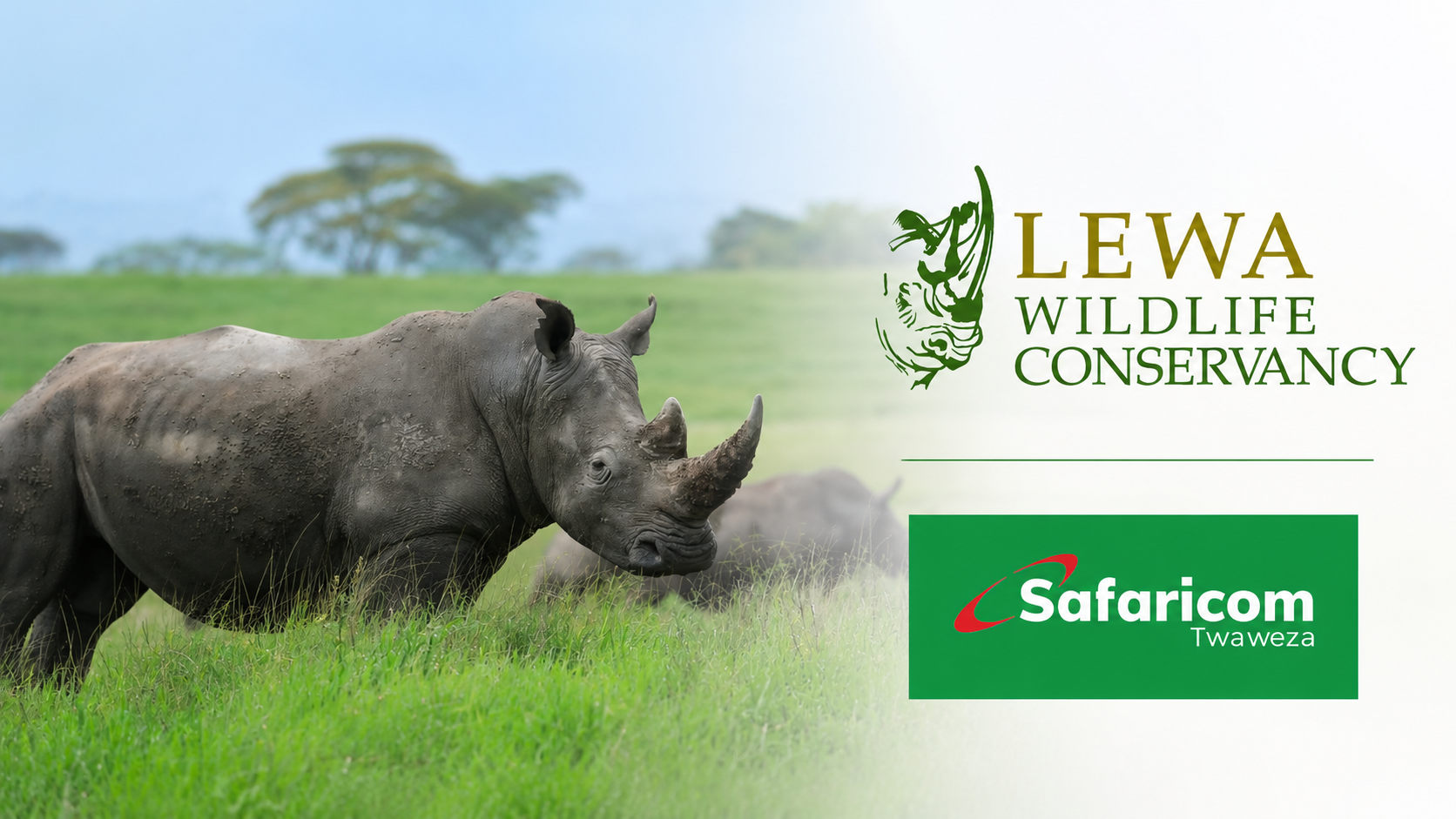
Technology is becoming an increasingly important pillar of wildlife conservation at Lewa Wildlife Conservancy, where integrated digital monitoring systems are helping safeguard endangered species, coordinate ranger operations, and reduce conflict between wildlife and surrounding communities.
Spread across approximately 62,000 acres in northern Kenya, the conservancy supports around 10 percent of the country's black rhino population, 20 percent of the world's remaining Grevy's zebra population, and several members of the Big Five, making continuous monitoring a critical component of its conservation strategy.
At the heart of Lewa's operations is EarthRanger, a real time software platform that consolidates information from rangers, GPS enabled wildlife collars, and communications infrastructure into a single operational dashboard.
The system enables personnel in the conservancy's operations room to monitor activities across the landscape, record wildlife sightings, coordinate patrols, and respond rapidly to incidents such as illegal grazing, trespassing, injured wildlife, or other security threats.
The centralised approach allows conservation teams to maintain constant situational awareness while improving operational efficiency across the expansive protected area.
“Most of the alerts we get here at the ops room are from the rangers. When a ranger sights an animal in the field, they report to the ops room immediately, and we record that information in real time,” said Purity Wamuyu, Security Radio Communications Officer at Lewa Wildlife Conservancy.
“The EarthRanger has really helped us because we are able to track our assets in real time. We can also see where our rangers are at any given time and know they are safe.” Wamuyu added that the operations room also receives reports on criminal activities such as trespassing and illegal grazing, enabling rapid coordination of field responses.
Reliable internet connectivity and Safaricom's communications infrastructure support the platform by keeping rangers and operations staff connected throughout the conservancy.
Wildlife monitoring has also become more precise through GPS enabled collars fitted on elephants and rhinos, allowing conservation teams to follow their movements continuously. The collars transmit location data at regular intervals and automatically generate alerts whenever an animal remains stationary for an unusually long period. “If the collar stays in one place for about four hours without moving, we are able to know that the elephant may be injured or that the collar has dropped.
We then get the GPS location and send a team to find out what is wrong,” said Wamuyu. The same tracking capability enables rangers to identify animals that move beyond protected areas, allowing early intervention before they encounter potential threats.
The technology also supports efforts to reduce human wildlife conflict, an increasingly important priority as wildlife populations recover while neighbouring communities continue to expand. EarthRanger enables conservation teams to monitor the movements of elephants approaching farms and settlements, allowing officers to intervene before crop destruction or dangerous encounters occur.
Lewa also works with a network of ten community ambassadors who use the EarthRanger mobile application to record incidents, helping operations teams identify recurring conflict hotspots and coordinate mitigation measures with the Kenya Wildlife Service. Residents can report emergencies through a dedicated 911 hotline, allowing response teams to reach affected areas quickly.
Technology is equally improving ranger safety by providing continuous visibility of personnel deployed in the field. Every ranger carries a GPS enabled radio linked to EarthRanger, allowing the operations room to monitor patrol routes and receive wildlife sightings in real time.
Should a ranger sustain an injury or encounter a life threatening situation, the radio's emergency alert function immediately transmits their location, enabling rescue teams to respond without delay. As conservation becomes more data driven, Lewa Wildlife Conservancy is demonstrating how digital tools can strengthen wildlife protection, improve operational decision making, and foster safer coexistence between people and nature.