The formal recognition of a wildlife conservancy inside Kenya’s flagship smart city project has introduced an environmental planning dimension rarely associated with large-scale technology cities, placing conservation policy at the centre of a development model traditionally driven by infrastructure, digital investment and industrial expansion.
Tourism and Wildlife Cabinet Secretary Rebecca Miano said the provisional registration granted by the Kenya Wildlife Service creates a structured conservation framework within Konza Technopolis, where planners have increasingly attempted to balance urban growth with ecological preservation as the city expands into one of Kenya’s fastest-growing innovation corridors.
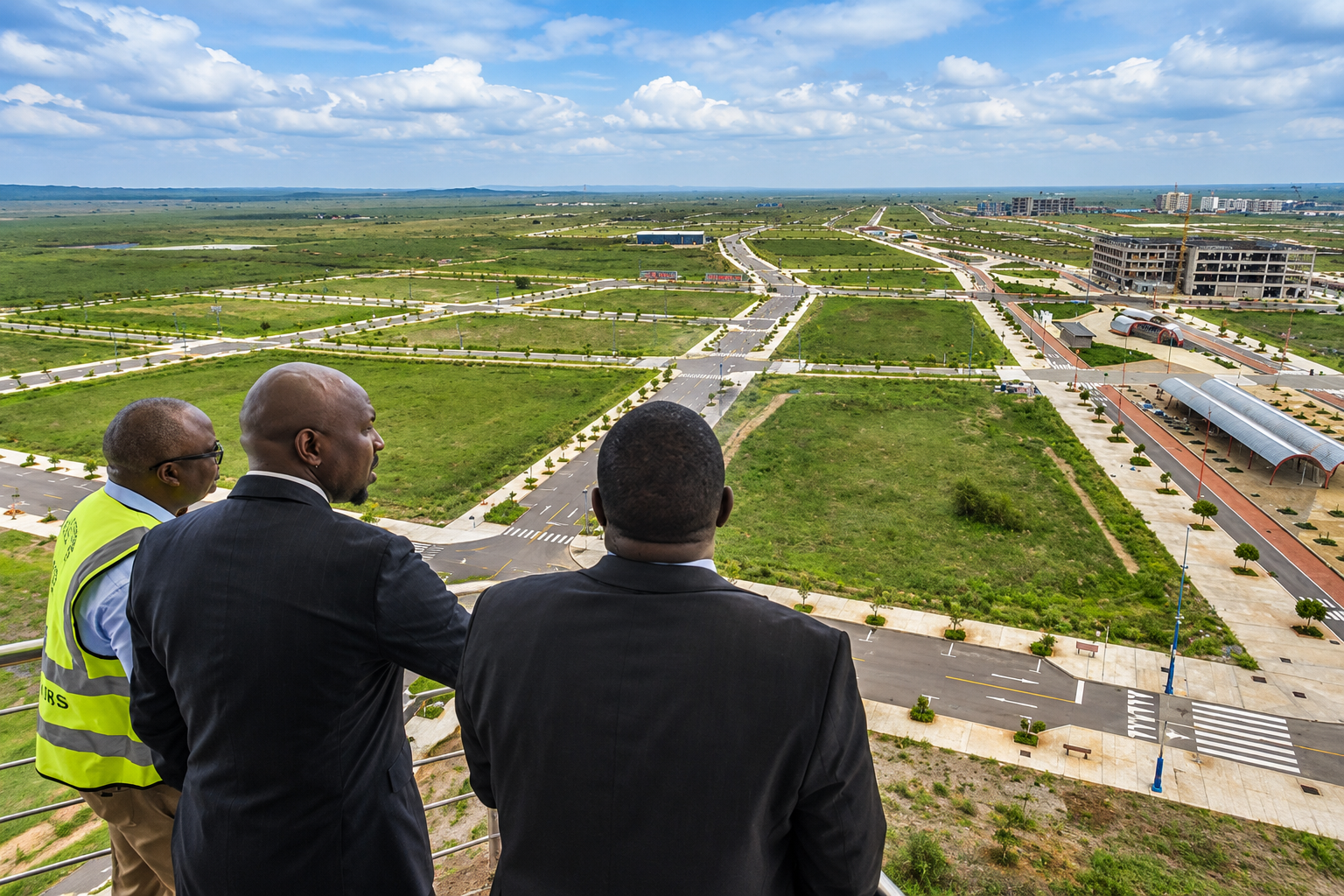
The newly registered Konza Technopolis Wildlife Conservancy will cover about 404 hectares carved out of the smart city’s wider 5,000-acre master plan, with nearly 1,000 acres reserved as protected wildlife passage zones intended to maintain migratory movement across sections of the Athi-Kapiti ecosystem.
Urban planners attached to the project view the corridor as a long-term buffer against habitat fragmentation, a problem that has steadily intensified around rapidly urbanising areas near Nairobi and neighbouring counties where commercial construction and transport infrastructure continue displacing natural ecosystems.
“In a landmark achievement for sustainable urban development in Africa, the Kenya Wildlife Service has officially granted provisional registration of the Konza Technopolis Wildlife Conservancy,” said the Konza Technopolis Development Authority.
The conservancy introduces an unusual planning model in which wildlife protection mechanisms are embedded directly into a technology and investment hub expected to host research institutions, residential districts, data infrastructure and manufacturing facilities over the coming years.
Conservation experts note that while protected land allocations are common around tourism circuits and national parks, few emerging smart cities globally have integrated formally recognised wildlife spaces into their foundational planning frameworks from the outset.
Wildlife recorded within the broader ecosystem includes Maasai giraffes, zebras, gazelles, ostriches and several bird species classified as ecologically sensitive, among them the Grey Crowned Crane and endangered vulture populations whose habitats have increasingly come under pressure from land conversion and changing settlement patterns.
Authorities stated that the conservancy will operate under a dedicated management framework for at least 15 years, with ecological monitoring, habitat restoration and biodiversity protection forming part of the regulatory obligations attached to the registration.
“The protected corridor allows biodiversity conservation to coexist with urban technology and future-focused infrastructure,” said the authority.
The registration also opens a potential commercial layer around the smart city’s environmental positioning, with planners now linking the conservation zone to future eco-tourism activity, climate-finance initiatives, biodiversity research and carbon-credit investment structures that continue attracting institutional capital across emerging markets.
Investors increasingly evaluating Environmental, Social and Governance benchmarks have pushed governments and developers to integrate measurable sustainability targets into large infrastructure projects, particularly those marketed as next-generation urban centres.
Located roughly 65 kilometres southeast of Nairobi, Konza Technopolis remains one of the flagship projects under Kenya’s Vision 2030 economic transformation agenda and has been positioned as a future regional centre for technology, digital services and knowledge-based industries.
The addition of a KWS-recognised conservancy now broadens that ambition beyond smart infrastructure alone, introducing an environmental planning template that could shape how future African cities approach the relationship between ecological protection and urban expansion.