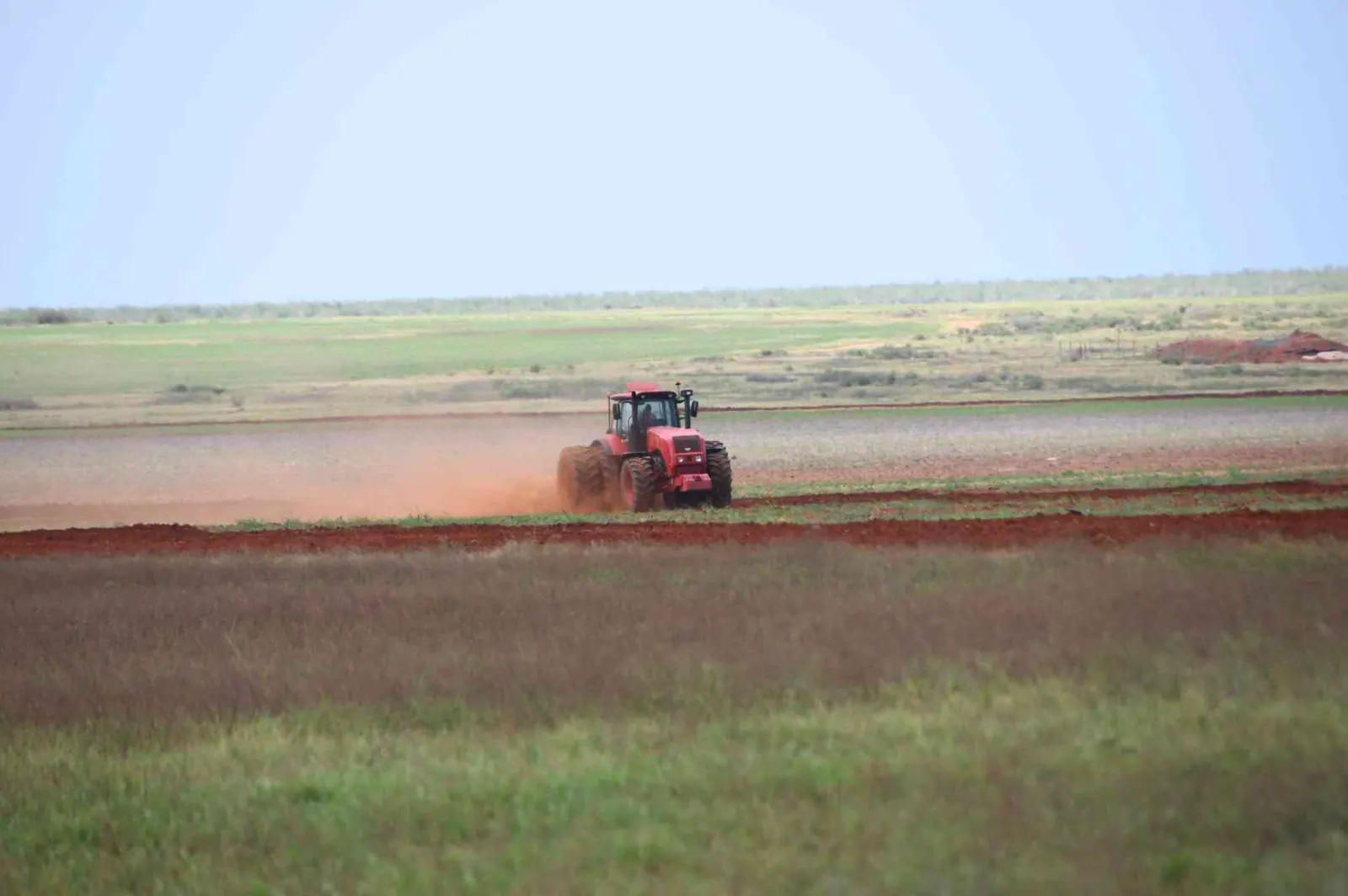
The Kenyan government has announced a target of irrigating 1.5 million acres to boost domestic food output and lessen reliance on imports.
Principal Secretary for Irrigation Ephantus Kimotho explained that the plan will roll out in stages, beginning with an initial 500,000 acres, as part of a broader move away from rain-fed farming.
During a tour of the Galana-Kulalu Food Security Project, Kimotho, accompanied by Chief of Staff Felix Koskei and 32 other principal secretaries, detailed investments in water infrastructure and commercial agriculture aimed at arid and semi-arid zones.
At Galana-Kulalu, the state has poured roughly KSh520 million into water works, creating capacity for 10,000 acres, while private growers are already cultivating about 6,000 acres with maize and soya beans, and an additional 4,000 acres are slated for the next season.
The programme also includes the planned 350-million-cubic-metre Galana-Athi Dam, which is projected to enable irrigation on roughly 200,000 acres.
Other components of the expansion involve the 165,000-acre Bura Irrigation Scheme and new investments in water storage, road networks and electricity to support large-scale farming.
Under public-private partnerships launched by President William Ruto in January 2023, the government aims to draw private capital into extensive agricultural projects.
Selu Limited is currently farming 2,000 acres of seed maize at Galana-Kulalu and intends to scale up to 20,000 acres within three years, while Pwani Farms has established 2,000 acres each of soya beans and maize, backed by a milling facility and solar-powered irrigation.
The increase in soya production is expected to feed local edible-oil and animal-feed markets, thereby cutting import dependence and supplying raw material for Kenya’s livestock, dairy and meat sectors.
Beyond crop yields, the initiatives are projected to generate employment, stimulate local processing and create business opportunities for surrounding communities.
Chief of Staff Felix Koskei stressed that sustained investment in irrigation, water storage, transport and power infrastructure is essential for transforming Kenya’s dry regions, noting that unpredictable weather and prolonged droughts have made reliance on rain-fed agriculture untenable.
The government is also prioritising further water-storage projects such as the proposed Thwake Dam, contributing to an overarching goal of constructing close to 200 dams for irrigation and other productive uses.
Kenya currently spends an estimated KSh560 billion each year on food imports, and the irrigation programme is designed to expand local supplies of maize, rice, wheat, sugar and edible oils, create jobs, strengthen value chains and eventually enable export of surplus produce.