Kenya's export earnings crossed the KSh1 trillion mark for the first time in the January-to-September period, with total exports rising 19.8 per cent to KSh1.008 trillion from KSh841.84 billion a year earlier, according to provisional trade data from the Kenya National Bureau of Statistics (KNBS).
Imports increased 24.3 per cent to KSh2.56 trillion in the same nine-month span, adding KSh499.7 billion to the import bill compared with an additional KSh166.5 billion generated from exports, pushing the trade deficit up 27.4 per cent to KSh1.55 trillion from KSh1.22 trillion.
The export recovery was driven by stronger earnings from coffee, cut flowers and vegetables.
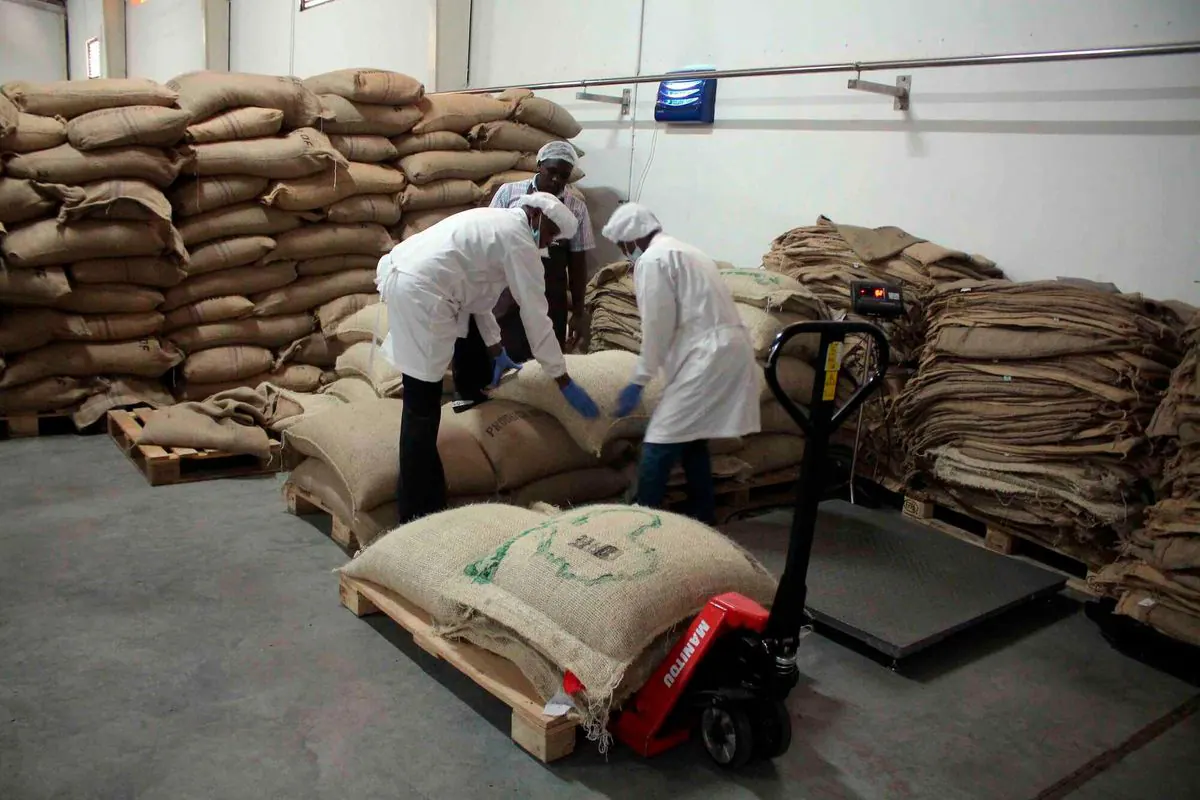
Coffee earnings rose 16.9 per cent to KSh50.69 billion as volumes grew 12.3 per cent to 50,821 tonnes.
Cut-flower earnings increased 20.5 per cent to KSh74.14 billion, with volumes up 7.2 per cent to 106,495 tonnes.
Vegetable earnings jumped 66.2 per cent to KSh18.87 billion following a 63.7 per cent rise in volumes to 78,304 tonnes, the fastest growth among the listed agricultural commodities.
Fruit exports saw volumes decline 12.8 per cent to 180,812 tonnes while earnings rose 6.4 per cent to KSh37.23 billion, and tea shipments fell to 472.9 thousand metric tonnes from 479.5 thousand tonnes, but the value of tea exports increased from KSh134.9 billion to KSh140.7 billion, KNBS analysts wrote.
The United States overtook Uganda as Kenya's largest export market, with exports to the US more than doubling to KSh116.09 billion in the nine months, up from KSh57.52 billion a year earlier, lifting its share of total exports to approximately 13.7 per cent.
Uganda's purchases rose 5.8 per cent to KSh103 billion, Pakistan's imports grew 10.6 per cent to KSh60.32 billion, Egypt's exports increased 34.6 per cent to KSh26.65 billion and Rwanda's rose 22.6 per cent to KSh31.55 billion.
KNBS said shipments to the US were valued at KSh27.9 billion in September, to Uganda at KSh13.2 billion and to Pakistan at KSh6.4 billion, and noted that exports to the US more than doubled from KSh12.0 billion recorded in August 2026.
Tobias Alando, chief executive of the Kenya Association of Manufacturers, said exporters endured approximately six months of uncertainty after the African Growth and Opportunity Act (Agoa) expired in September 2025, when Kenyan goods were subject to full import duties in the US.
He added that a March 2026 extension allowed reimbursement of duties paid on eligible Kenyan products exported during the intervening period and that the decision to renew Agoa from January 2027 through December 2028 has restored confidence among exporters and investors.
American buyers have resumed sourcing Kenyan apparel, including cotton trousers, overalls, breeches and shorts for brands such as H&M, Levi’s, JCPenney and Wrangler, while synthetic-fibre clothing, macadamia nuts, tea, coffee and fresh produce also flow to the US market.
Despite the export gains, Kenya's import bill continued to expand, with China supplying KSh113.2 billion, India KSh51.8 billion and the US KSh21.9 billion, according to KNBS.