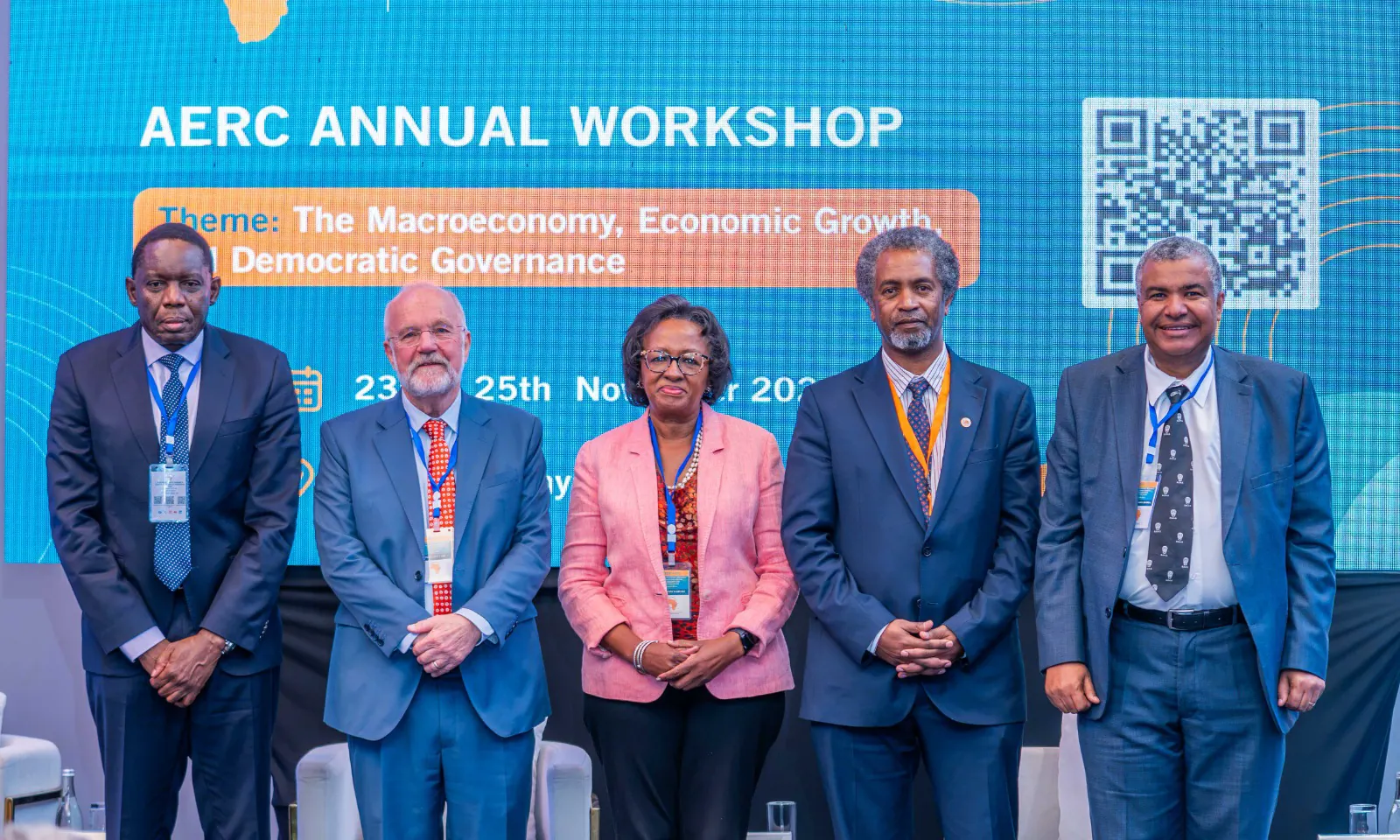
The African Economic Research Consortium (AERC) opened its 2026 Annual Workshop in Nairobi, where Central Bank of Kenya Governor Dr Kamau Thugge called for policies grounded in research to help African economies absorb external shocks.
The three-day event has attracted 2,969 registered participants representing 68 countries and is organised under the theme “The Macroeconomy, Economic Growth, and Democratic Governance”.
Opening remarks were delivered by Dr Adelaide Matlanyane, Lesotho’s Minister of Finance and Development Planning and an AERC board member, who noted that the International Monetary Fund projects sub-Saharan Africa’s growth at 4.5 per cent for both 2026 and 2027.
She outlined Lesotho’s 2026/2027 budget focus on economic resilience, including repositioning the state to enable private-sector-led growth, improving public financial management and expanding domestic resource mobilisation.
Matlanyane posed the question, “How can countries with limited fiscal space protect development priorities during climate shocks?” to frame the workshop’s broader discussions.
Governor Thugge, acting as Guest of Honour, stressed that macroeconomic stability is a prerequisite for sustained growth and highlighted Kenya’s average growth of about 5 per cent between 2022 and 2025 despite prevailing headwinds.
He praised AERC’s role in strengthening research capacity, noting that many Central Bank staff have benefited from the consortium’s programmes.
Acting Executive Director Dr Abbi Kedir outlined AERC’s strategic agenda, which includes new programmes to boost central-bank capacity, explore artificial intelligence in economics and deepen partnerships with the African Capacity Building Foundation, the World Bank and the African Development Bank.
The opening technical session featured a presentation by Prof Finn Tarp of the University of Copenhagen titled “Navigating Africa’s Development Challenges”, chaired by Mukami Kariuki, Regional Hub Manager for the World Bank Group’s Africa Eastern and Southern Region.
Participants examined six interlinked policy areas – foreign aid and development financing, jobs and industrial policy, climate change and macro-economic management, domestic resource mobilisation, tax reform and democratic governance – and discussed how research can inform practical policy responses.
Organisers said the workshop aims to tighten the link between economic research, public policy and institutional practice to promote inclusive and sustainable growth across the continent.