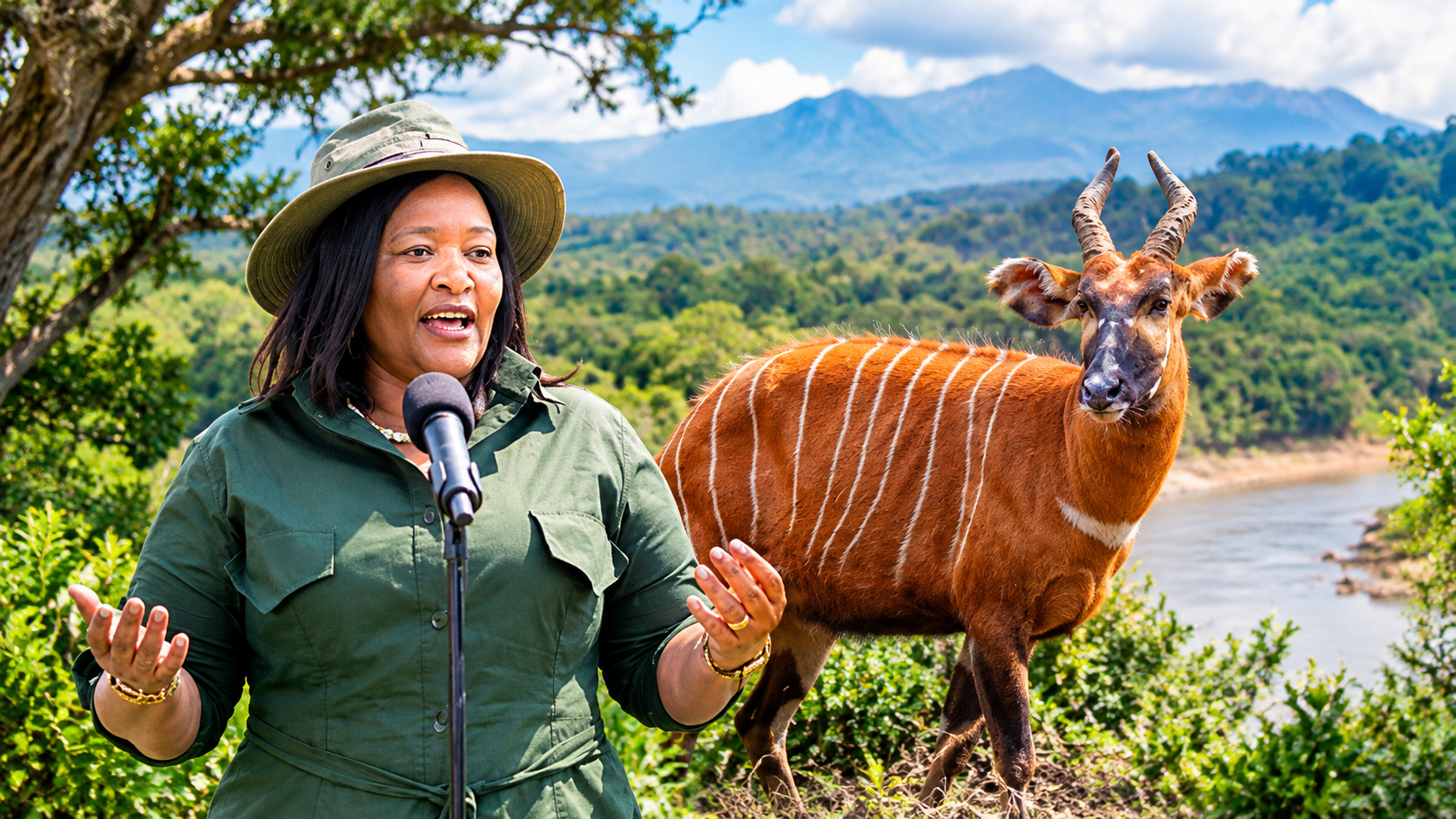
Kenya has begun a five year programme to rebuild its mountain bongo population through breeding, habitat restoration and closer wildlife monitoring. The plan targets a 50 per cent population increase by 2030, according to the Tourism and Wildlife Ministry.
The National Recovery and Action Plan for the Mountain Bongo 2026 to 2030 was launched Wednesday in Nanyuki. The programme brings together government agencies, conservation groups, scientists and communities to coordinate recovery work.
The mountain bongo remains among Kenya’s most threatened mammals, with only about 66 to 100 animals surviving in the wild. Its remaining populations occur within fragmented forest habitats around Mount Kenya, the Aberdares and the Mau Forest Complex.
The small wild population creates challenges for natural recovery and genetic diversity. Habitat loss and fragmentation have also reduced the forest areas available for movement, feeding and breeding.
The new plan therefore links captive breeding with efforts to restore and protect suitable forest habitats. Its longer term goal is to establish a self sustaining wild population of 750 animals by 2075.
“Our target is to increase the national population by 50 per cent by 2030,” said Rebecca Miano, Cabinet Secretary for Tourism and Wildlife. She said the programme would support Kenya’s longer term effort to restore viable wild populations.
Conservation breeding already provides an important part of Kenya’s recovery programme. The Mount Kenya Wildlife Conservancy has operated a mountain bongo breeding programme since 2004.
Kenya has also expanded the breeding population through transfers from overseas conservation programmes. Seventeen mountain bongos arrived from the United States in February 2025 for Kenya’s breeding and rewilding programme.
The group comprised 12 females and five males, strengthening the breeding base available to Kenyan conservation teams. Four genetically valuable males later arrived from Europe in 2026, according to conservation officials.
The transfers are intended to improve genetic diversity while supporting future population growth. Breeding alone, though, cannot restore the species without suitable forest habitats for eventual release.
Technology will support decisions about population movements, habitat use and future releases under the new recovery programme. Conservation teams will use artificial intelligence cameras, GPS tracking and conventional camera traps.
The resulting information will help researchers identify suitable habitats and monitor animals after release. It will also provide data on survival, movement and reproduction within restored forest areas.
Community participation forms another part of the recovery strategy, particularly around forests where the species historically occurred. Local residents will have roles in habitat restoration, monitoring and activities linked to forest protection.
“This calls for our mountain forest communities to partner in implementing the same,” said Miano, Cabinet Secretary for Tourism and Wildlife. She said forest recovery should also create green jobs and generate value for surrounding communities.
The conservation effort also has wider implications because mountain forests support water catchments and local economic activity. Protecting these ecosystems can therefore deliver benefits beyond the recovery of one endangered species.
The 2030 target will depend on whether breeding gains can translate into stronger wild populations. That will require secure habitats, careful releases, sustained monitoring and continued cooperation among conservation partners.
Kenya’s longer term objective is more ambitious than increasing numbers within managed facilities. The central test will be restoring mountain bongos as a viable wild species across suitable Kenyan forests.