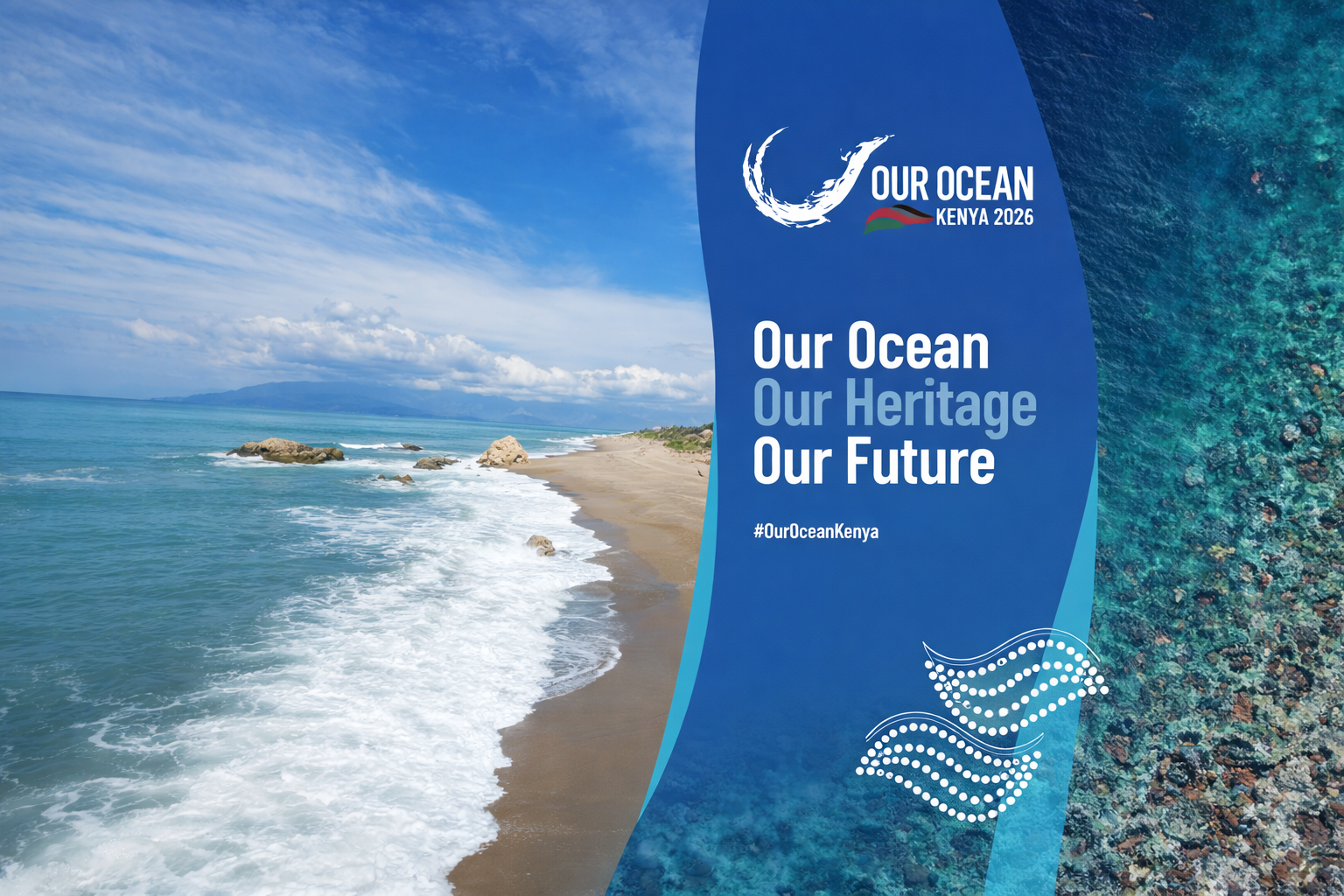
The Swahili Coast has this week become the stage for a historic milestone as Kenya hosted the 11th Our Ocean Conference (OOC11) in Mombasa, marking the first time the prestigious global summit has been convened on African soil.
Under the theme “Our Ocean, Our Heritage, Our Future,” the gathering has drawn global leaders, scientists, and investors to deliberate on marine conservation, sustainable resource management, and the economic potential of the Blue Economy.
Tourism Cabinet Secretary Rebecca Miano underscored the centrality of healthy oceans to Kenya’s coastal tourism, noting that the country’s leadership in marine protection is inseparable from its long-term competitiveness in ecotourism.
The policy context of OOC11 reflects Kenya’s ambition to position itself as a continental leader in ocean governance, with commitments to expand Marine Protected Areas (MPAs), strengthen enforcement against illegal fishing, and accelerate measures to curb plastic pollution.
Delegates have emphasized that the health of marine ecosystems is not only an environmental imperative but also an economic necessity, given the reliance of coastal communities on fisheries, tourism, and related livelihoods.
The Ministry of Tourism has framed these initiatives as part of a broader strategy to align conservation with sustainable growth, ensuring that biodiversity protection translates into tangible benefits for local economies.
“Our oceans are the bedrock of our future prosperity, and we must act decisively to safeguard them,” said Miano, Cabinet Secretary for Tourism and Wildlife.
She added that Kenya’s stewardship of marine resources is designed to secure both ecological resilience and economic opportunity, particularly for communities whose livelihoods depend on coastal tourism and fisheries.
The Cabinet Secretary’s remarks reinforced the government’s view that conservation is not a peripheral agenda but a core pillar of national development policy.
Operationally, the expansion of MPAs is expected to create new frameworks for managing marine biodiversity, with direct implications for tourism operators who rely on pristine coastal environments to attract international visitors.
The government has indicated that investments in marine conservation will be matched by efforts to promote sustainable tourism models, integrating local communities into value chains that extend from hospitality to artisanal fisheries.
Analysts note that this approach could enhance Kenya’s competitiveness as a destination for ecotourism, diversifying its tourism portfolio beyond traditional safari circuits.
The economic stakes are considerable. Coastal tourism contributes substantially to Kenya’s foreign exchange earnings, with Mombasa and the wider Swahili Coast serving as gateways for both regional and international visitors.
By embedding conservation into tourism policy, Kenya aims to secure long-term revenue streams while mitigating risks associated with environmental degradation.
The conference has also opened avenues for investment in marine research, renewable energy, and waste management, sectors that intersect directly with the Blue Economy and offer opportunities for public-private partnerships.
Community relevance has been a recurring theme at OOC11, with discussions highlighting the role of local coastal populations in sustaining conservation efforts.
Delegates have stressed that policies must be designed to empower communities through education, financial inclusion, and access to sustainable livelihoods.
“True conservation preserves our world-class marine life and supports local livelihoods,” said Miano, reinforcing the view that Kenya’s ocean agenda is inseparable from its social development objectives. The integration of community voices into marine policy is expected to strengthen resilience against climate change while ensuring equitable distribution of tourism benefits.
By hosting OOC11, Kenya has not only elevated its profile in global ocean governance but also signaled its determination to anchor tourism growth in sustainability.
The convergence of international expertise and local commitment in Mombasa has underscored the country’s ambition to transform its coastal economy into a model of conservation-driven prosperity.
The outcomes of the summit are likely to shape both national policy and regional collaboration, positioning Kenya as a reference point for African states seeking to harness the Blue Economy while safeguarding marine heritage.