

A surge of more than 300,000 visits to Kenya’s national parks and wildlife reserves during the December 2025 festive period has reinforced the role of domestic tourism as a stabilising force within the conservation and tourism economy, while also signalling sustained recovery in travel demand across protected areas.
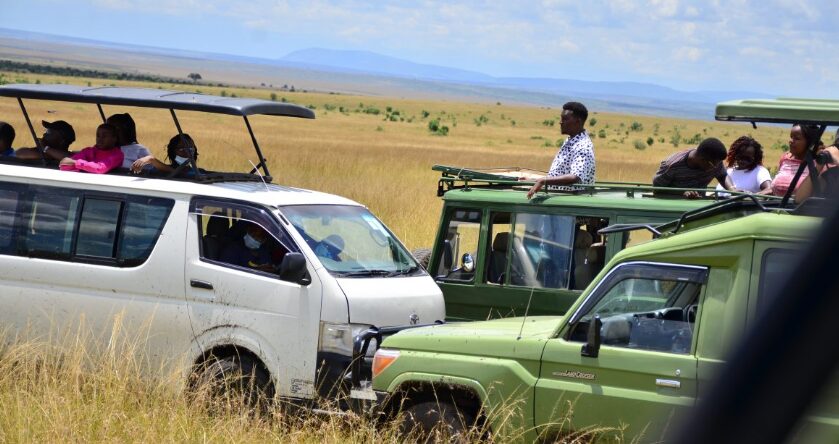
The performance comes as the Ministry of Tourism and Wildlife, under Tourism Cabinet Secretary Rebecca Miano, continues to align conservation agencies with a broader target of lifting annual visitor numbers toward 5 million by 2028 through coordinated pricing, access and product strategies.
Data released by the Kenya Wildlife Service (KWS) shows that approximately 231,000 of the festive season visitors were Kenyan citizens and residents, compared with about 82,500 non-resident visitors drawn from international markets, a distribution that reflects a growing reliance on local travel to sustain park revenues during peak holiday windows.
Sector analysts view the figures as confirmation that domestic tourism has moved from a supplementary role to a core demand pillar, offering predictability in visitor flows and buffering conservation financing against global travel volatility.
Within government, the festive turnout is being read as validation of policy choices that prioritise affordability and access for local travellers, while maintaining the international appeal of flagship wildlife destinations.
Tourism officials have increasingly framed domestic visitors as central to long-term sector resilience, not only through gate fees but also through downstream spending on transport, accommodation and ancillary services linked to park-based tourism.
Operationally, the December numbers were supported by a set of limited-time promotional offers rolled out by KWS around Boxing Day, aimed at lowering cost barriers for families and organised groups during the holiday period.
These incentives were structured around group travel dynamics common among Kenyan households, allowing free entry for selected children or adults based on vehicle size and group composition, while extending accommodation offers that rewarded longer stays within park lodges.
From an economic perspective, such pricing mechanisms are designed to smooth demand across peak dates while maximising occupancy and utilisation of park facilities, a strategy that has gained traction as conservation agencies seek to balance revenue generation with inclusivity.
While KWS did not disclose revenue figures from the festive period, tourism economists note that higher domestic footfall tends to translate into steadier cash flows across park services, even where per-visitor spend remains lower than that of international tourists.
The festive performance also feeds into a wider policy narrative around sustainable tourism, where conservation outcomes, visitor experience and financial viability are increasingly treated as interlinked objectives.
KWS has maintained that continued investment in park infrastructure, visitor management systems and ecosystem protection remains central to preserving Kenya’s competitiveness as a wildlife destination, particularly as regional peers expand their own conservation tourism offerings.
At community level, stronger domestic visitation carries implications for employment and enterprise around protected areas, where holiday traffic supports guides, transport operators, accommodation providers and small traders whose livelihoods are tied to seasonal travel patterns.
County governments adjacent to major parks have viewed the December surge as evidence that targeted incentives can stimulate local economic activity without relying solely on international arrivals.
As Kenya advances toward its medium-term tourism targets, the 2025 festive season turnout now serves as a reference point for policymakers assessing the effectiveness of demand-side interventions within conservation tourism.
For KWS and the Ministry of Tourism and Wildlife, the figures reinforce a strategic shift that places Kenyan travellers at the centre of park sustainability, while still positioning wildlife tourism as a globally competitive asset within the national economy.
Kenyan Business Feed is the top Kenyan Business Blog. We share news from Kenya and across the region. To contact us with any alert, please email us to [email protected]