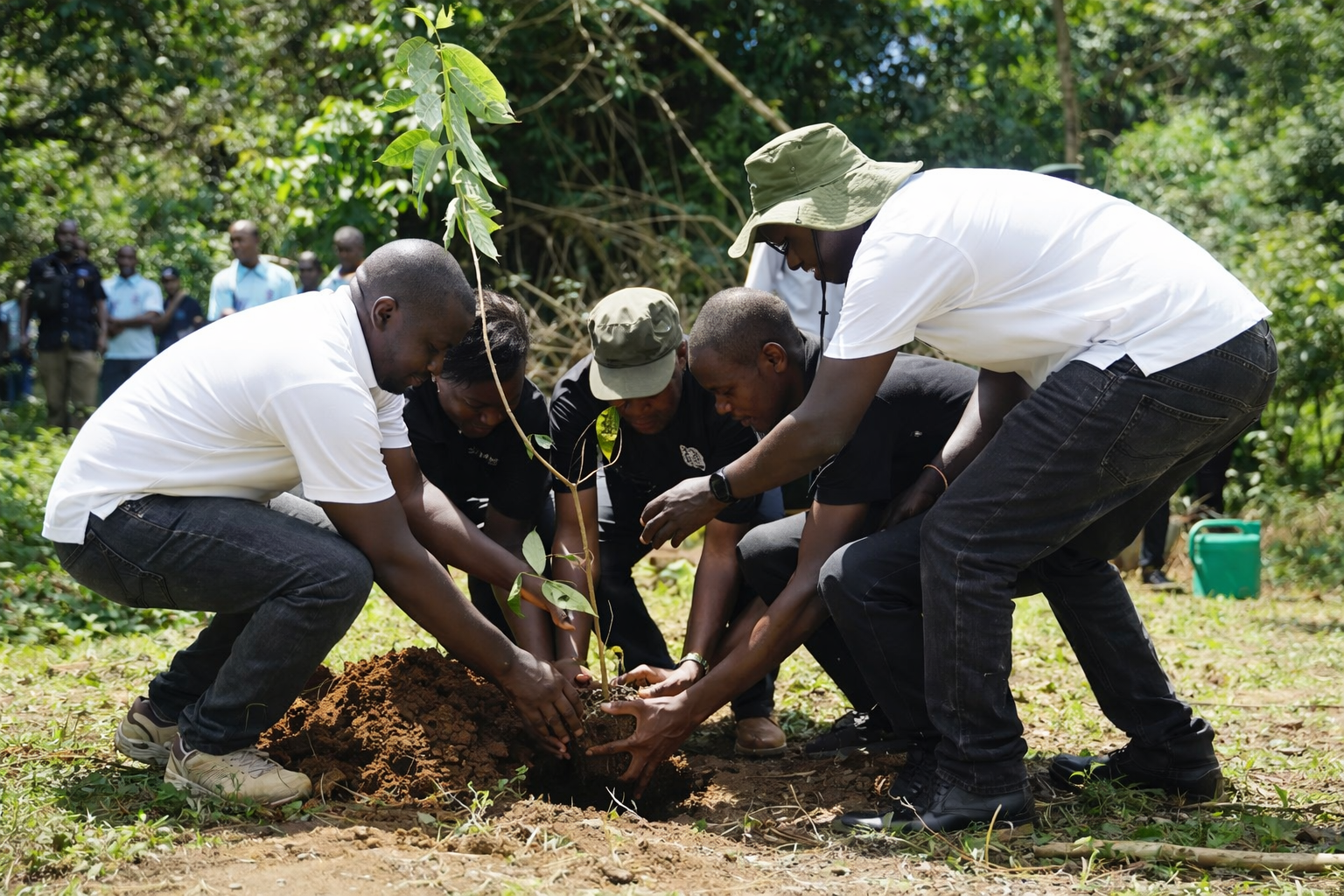
The rehabilitation of Kakamega Forest, Kenya's only Guinea-Congolian rainforest and one of the most ecologically irreplaceable natural assets in East Africa, has gained a structured private sector commitment, with Co-op Bank Kenya formalising a five-year land adoption programme that will see the institution take on five acres of degraded forest annually, translating into a cumulative footprint of 25 acres of restored indigenous woodland by the programme's conclusion.
The initiative, executed in partnership with the Kakamega Forest Heritage Foundation and the Kenya Forest Service, represents one of the more operationally defined corporate conservation commitments in Kenya's banking sector, moving beyond tree-planting pledges into a time-bound, acreage-specific rehabilitation model with institutional co-signatories accountable for delivery.
Kakamega Forest carries an ecological weight that extends well beyond its physical boundaries; as the easternmost remnant of the great Guinea-Congolian rainforest belt that once stretched across equatorial Africa, it harbours species of flora and fauna found nowhere else on the continent, making its degradation a biodiversity loss event with regional and global consequences rather than a purely local conservation matter.
Decades of encroachment, illegal logging, and land pressure from surrounding communities have reduced the forest's viable cover, creating a rehabilitation backlog that neither the Kenya Forest Service nor community-based organisations can address at the required scale without sustained private sector financing and long-term land stewardship commitments of precisely the kind Co-op Bank has now structured.
The bank's adoption model, which commits to five acres per year over five years rather than a one-off intervention, is analytically important because forest rehabilitation is not an event but a process; indigenous tree planting requires sustained monitoring, gap-filling, and protection from human and livestock encroachment across multiple growing seasons before canopy closure can be achieved and biodiversity recovery can begin in earnest.
By anchoring the commitment to annual acreage targets within a five-year framework, Co-op Bank and its partners have created a measurable ESG accountability structure that can be tracked, reported, and independently verified, a standard that Kenya's financial sector has historically struggled to meet in its environmental commitments.
The partnership with the Kakamega Forest Heritage Foundation brings in an organisation with on-the-ground operational knowledge of the forest's degradation patterns, community dynamics, and species-appropriate planting protocols, complementing Co-op Bank's financing capacity and the Kenya Forest Service's regulatory and land management authority.
This three-way institutional architecture reduces the risk of the initiative becoming a reputational exercise disconnected from ecological outcomes, since each partner brings a distinct and non-duplicable function to the restoration chain, from community liaison and indigenous seedling sourcing through to legal land protection and corporate resource mobilisation.
For Kenya's banking sector, which operates under growing pressure from regulators, investors, and civil society to demonstrate credible ESG performance rather than declaratory sustainability commitments, the Kakamega initiative offers a template worth examining.
The model ties corporate environmental responsibility to a specific ecosystem, a defined land area, a named institutional partner, and a multi-year delivery horizon.
Whether it can be replicated across other degraded forest ecosystems in Kenya's water towers and biodiversity corridors will depend on the rigour with which Co-op Bank documents, publishes, and submits this programme's outcomes to independent review, a discipline that will ultimately determine whether this commitment registers as conservation leadership or corporate communication.