A two-week residential induction programme for the 2026 cohort of university scholarship beneficiaries is underway at the Co-operative Bank of Kenya's Leadership and Management Centre in Karen, marking another annual milestone in what has grown into one of Kenya's most expansive privately funded education initiatives, one that has reached over 11,800 bright but financially constrained students since its inception.
The Co-op Bank Foundation, which administers the fully funded scholarship scheme, designed the induction to bridge the gap between secondary school achievement and university readiness, equipping scholars with life skills, financial literacy frameworks, and personal branding competencies that the bank argues are as critical to long-term success as academic performance itself.
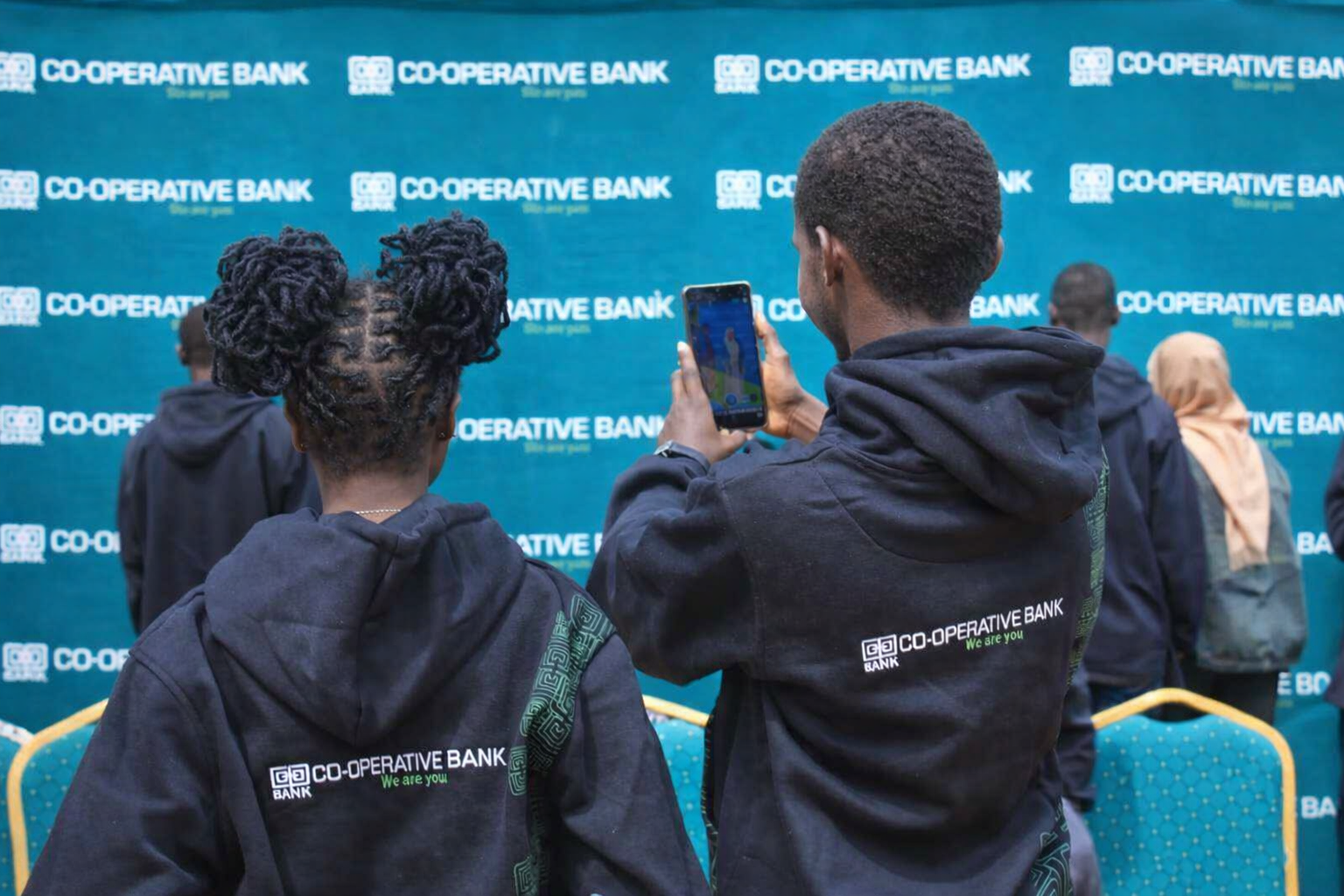
The programme targets top performing students from the bank's secondary school scholarship pool, young people who have demonstrated academic merit but whose socioeconomic circumstances would otherwise foreclose access to university education.
The bank absorbs the full cost of the programme, charging beneficiaries nothing across both the induction and the broader education scholarship.
Speaking at the presentation ceremony, Co-op Bank's Company Secretary Mr. Samuel Kibugi conferred the scholarships on behalf of Group Managing Director and Chief Executive Dr. Gideon Muriuki, whose office has championed the Foundation's education mandate as a strategic pillar of the bank's corporate social investment architecture.

"This programme is about more than fees; it is about preparing young Kenyans to thrive in university and in life," said Kibugi, Company Secretary, Co-operative Bank of Kenya.
The occasion brought together Head of the Co-op Bank Foundation Mr. Nicholas Shiateya and Programmes and Projects Manager Ms. Betty Maina, whose offices coordinate the logistics, mentorship structures, and curriculum delivery that underpin the induction's two-week schedule.
The Foundation's scholarship model stands out within Kenya's corporate social responsibility landscape for its scope and its zero cost design, an architecture that removes financial barriers entirely rather than offering partial bursary relief.
With over 11,800 cumulative beneficiaries, the programme has achieved a scale that places it among the most impactful privately funded education interventions in the country, operating across economic cycles and market pressures without reduction in its commitment to full funding.
The Karen centre, which serves as the induction venue, lends the programme a structured, immersive character, separating it from ceremonial scholarship handovers and positioning it as a substantive preparatory investment in each scholar's transition.
For Co-op Bank, the Foundation's education work carries both social and institutional weight; the bank's cooperative heritage, rooted in collective uplift and member welfare, finds direct expression in a programme that returns value to communities from which much of its deposit base and customer loyalty are drawn.
As Kenya's university pipeline grapples with access gaps shaped by income inequality and uneven secondary school funding, the Foundation's annual induction offers a model worth examining for replication, one in which a financial institution treats education investment not as philanthropy at the margins but as a core expression of its institutional identity and long-term stake in national human capital.