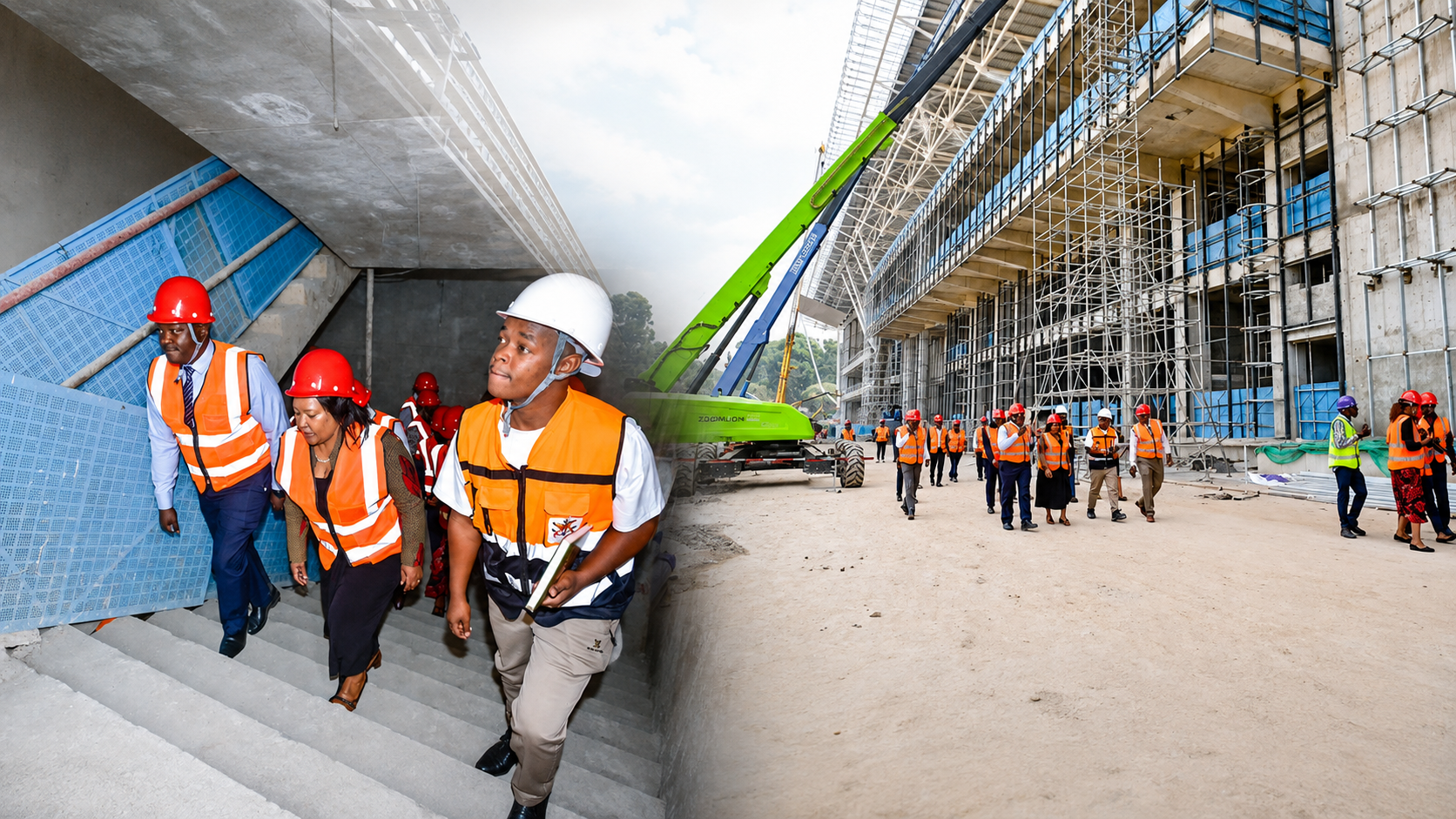
Tourism and Wildlife Cabinet Secretary Rebecca Miano has inspected construction at the Bomas International Convention Complex in Nairobi. The visit focused on ongoing works and key project milestones as Kenya expands its capacity for major international events.
The development is central to the government’s strategy for strengthening Meetings, Incentives, Conferences and Exhibitions activity.The BICC is designed to accommodate up to 11,000 delegates across 35 meeting rooms.
The complex will also provide large conference and exhibition spaces, supported by modern audiovisual and hybrid conferencing systems. A presidential pavilion will cater for high level diplomatic engagements and other international meetings requiring specialised protocol facilities.
The project is being developed at the Bomas of Kenya site, linking a modern events facility with the institution’s established cultural setting. This combination gives the venue a distinctive proposition for international delegates seeking business facilities alongside Kenyan cultural experiences.
The complex is expected to broaden the range and scale of events that Nairobi can accommodate. It could also support exhibitions, banquets and cultural programmes alongside formal conferences. That flexibility matters because event venues depend on varied bookings to maintain strong utilisation throughout the year.
Miano said the facility could generate activity well beyond the convention grounds once it becomes operational. Large conferences typically create demand for accommodation, transport, catering, logistics, entertainment and other visitor services. That wider spending pattern gives the project relevance to businesses across the tourism and hospitality supply chain.
The expected impact also extends to local suppliers and young workers. International events require services ranging from food provision and transport to event production and technical support. A sustained calendar of conferences could therefore create commercial opportunities for enterprises that participate in these supporting activities.
The investment comes as Kenya seeks to strengthen Nairobi’s position in the international meetings market. The BICC adds capacity to the city’s existing conference infrastructure and provides larger spaces for events that require several meeting formats at once.
Its ability to attract major gatherings will depend on the quality of operations, event marketing and supporting infrastructure after completion.The project has also faced changes to its delivery timetable. Earlier government plans targeted completion in April 2026, while subsequent reporting placed the revised completion date in September after construction delays.
This makes the current inspection relevant not only for assessing physical progress, but also for determining how effectively the remaining works are being brought toward completion.The economic test will begin once the facility can host events consistently.
Kenya will need to secure a strong pipeline of international conferences while ensuring reliable transport, accommodation, security and event services. If those elements operate together, the BICC could strengthen Nairobi’s competitiveness and spread conference related spending across a wider group of businesses.