WWF-Kenya announced a strategic partnership with KCB Group to channel climate finance through the bank’s KSh10 billion Green Climate Fund, a move aimed at attracting more investment from Kenyan businesses.
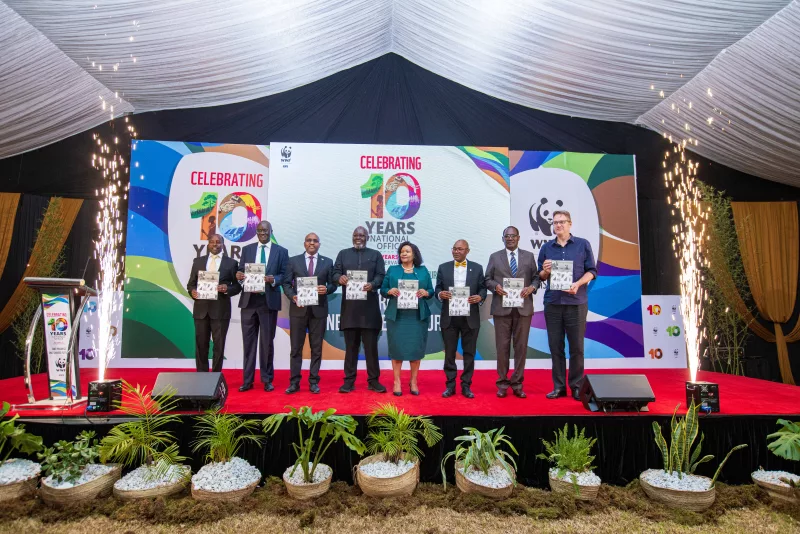
The collaboration, unveiled in Nairobi during WWF-Kenya’s 10th anniversary as a national office, will back nature-based enterprises, create bankable conservation projects and draw both public and private resources for climate resilience.
The partnership also includes activities such as landscape restoration, tree growing, institutional clean-cooking, solarisation and the integration of ESG considerations into business and lending decisions.
WWF-Kenya’s 2026 annual report shows programme investment rising from KSh629.5 million in the 2017 financial year to over KSh1.6 billion in 2026, reflecting growth since the office became autonomous in 2016.
The organisation says it has mobilised over $132 million (about KSh16.88 billion) in sustainable investments since 2020, though the report does not specify how much originated from Kenyan firms, foreign investors or public bodies.
Chief executive Jackson Kiplagat said the organisation has supported the restoration of more than 278,000 hectares of forests, wetlands, riparian zones and rangelands since 2020 and that the scale of impact must be accelerated through stronger corporate partnerships.
Initiatives in 2026 generated KSh80.8 million for beneficiaries, while cumulative benefits from 2020 to 2026 reached roughly KSh606.6 million, covering honey production, farm produce, seedling sales, fishing-related enterprises, ranger employment and ecotourism.
Kiplagat added that over the past seven years WWF-Kenya has directly helped more than 369,000 people and generated over KSh600 million in community income.
The report also notes disbursements of more than KSh400 million to partners in the last year, collaboration with over 50 partners and the restoration of 96,000 acres across five ecosystems.
National Treasury Principal Secretary Chris Kiptoo praised the initiative, citing the Kaptagat Integrated Conservation Programme as an example of linking ecosystem restoration with community development, enterprise creation, water security and sustainable land management.
He said that partnerships among government, communities, conservation groups and businesses are essential for sustaining environmental programmes beyond individual funding cycles.
Earlier this year WWF-Kenya also partnered with Old Mutual Holdings to restore 100 hectares of degraded Chepalungu Forest over a three-year period.