
Columnists
World must unite to save environment
Sunday, June 9, 2019 22:00
By COLLINS ODOTE

UN Environment early this year released the sixth Global Environment Outlook report. The report details the numerous challenges facing the global environment, ranging from climate change, pollution, loss of biodiversity, deforestation, desertification and scarcity of natural resources.
The report argues that to ensure progress of the world, it is important to make a radical shift from our current consumption and production patterns. Without doing so achievement of the Sustainable Development Goals by 2030, with their calls for eradicating hunger and poverty will be a mirage.
At the heart of the actions is the need to undertake activities that help t conserve and improve the environment. This is in recognition of the fact that unless we make our world healthy, it is not possible to improve the health of human beings.
This issue sounds straight forward. It has been debated for long within the context of the quest for sustainable development. I was therefore taken back when during a high-level discussion, heated disagreements arose about the issue. The genesis of the controversy was a statement arguing that it is not possible for African Countries to develop without relying on fossil fuels. The argument, which found support from quite several participants, argued that industrialisation necessitated use of fossil fuel. If these required pollution of the environment and impact on climate change, it was a necessary consequence of the development process. As a result, developing countries should not be made to meet the cost of these processes, or to feel guilty about that development path. In any case, they were following a path well-trodden by their developed counterparts.
The above argument is not new. In the run up to the first global environment conference in 1972, the same points were raised, with developing countries accusing their developed counterparts of conspiring to derail their development ambitions by seeking to focus on pollution control from development activities. These arguments led to the evolution of the concept of sustainable development.
On the energy challenge, the Paris Agreement adopted in 2015, attempted to deal with the long-standing issue of low-carbon development path. In addition, it resolved the sticky challenge around the concept of common but differentiated responsibility. This concept recognized that all countries had a shared responsibility for the carbon emissions that cause climate change and for the climate change impacts on the environment. While the responsibility was shared, it was also differentiated. However, there was lack of consensus of what this meant in practice.
The Paris Accord brought some element of consensus amongst the developed and developing countries. The one take away from the agreement is the need for all countries to take national action to mitigate climate change and adapt to it. It is a recognition that dealing with the global challenge is not a developed country issue. It is every countries’ responsibility.
A low carbon development path is not just possible, it is desirable. The debate cannot therefore be the impossibility of such aspirations, it must be how to make it happen. This is the message from the sixth Global Environment Outlook report.
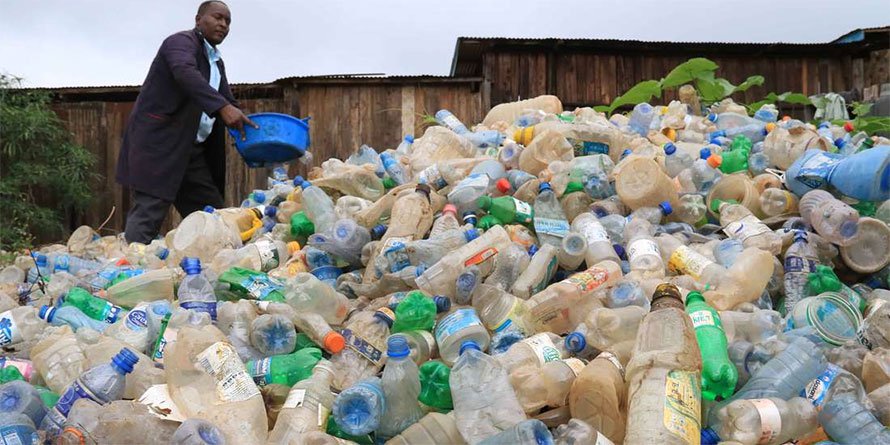
This challenge is not in energy alone. Already the action the country is taking to deal with the pollution from plastics is a demonstration that with resolve and political will, it is possible to achieve the desire of a healthy planet. Within the country, there are still many plastics, including the banned ones.
This is an enforcement challenge. The focus on eradicating plastics from the Kenyan environment remains.
However, it also provides an opportunity for developing alternatives. In doing so, innovative businesses will thrive. The spirit of innovation is at the heart of transiting the country and the world from its current consumption and production patterns, which not only pollutes the world but also threatens lives and livelihoods. Whatever development that arises from such a process is not sustainable.
Kenyan Business Feed is the top Kenyan Business Blog. We share news from Kenya and across the region. To contact us with any alert, please email us to [email protected]