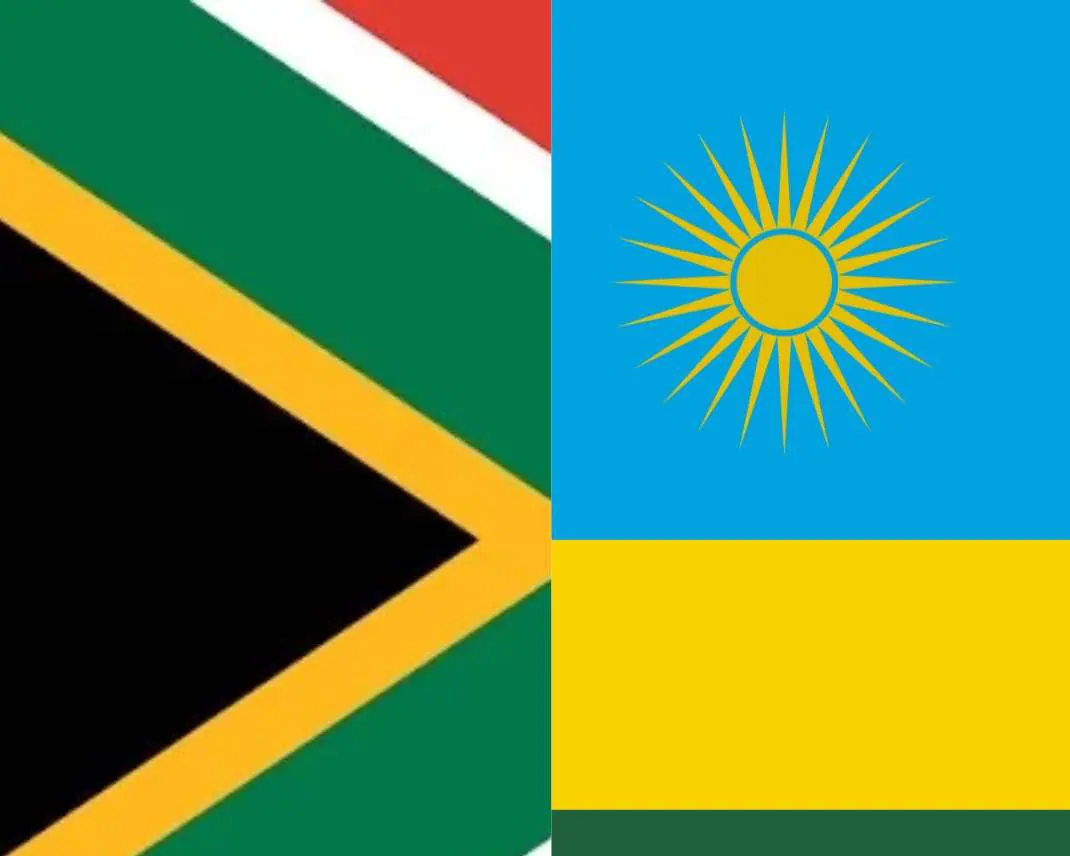
US President Donald Trump has informed Congress that South Africa and Rwanda will lose eligibility for the African Growth and Opportunity Act starting January 1, 2027.
US Trade Representative Jamieson Greer announced the move in a statement on Monday November 2, saying an annual review found the two governments were not meeting the programme’s eligibility standards.
For Rwanda, Washington pointed to obstacles to trade and investment, deficiencies in rule of law, political pluralism, workers’ rights, human rights and concerns over US national security. For South Africa, the United States cited trade and investment barriers, corruption and threats to US security and foreign policy interests.
Greer added that the administration is cooperating with African partners to help them satisfy the required criteria.
US Ambassador to South Africa Leo Brent Bozell III posted on X that the outcome was “predictable and preventable” and resulted from Pretoria’s rejection of US concerns.
The decision follows US Treasury sanctions imposed on Rwanda’s Ministry of Defence and the Zigama Credit and Savings Society on October 28, which accused the ministry of directing thousands of troops to fight alongside M23 rebels in North and South Kivu and of supplying weapons, equipment, logistics and training. Rwanda denied involvement with the rebels. Earlier, the Treasury had sanctioned the Rwanda Defence Force and four senior officers on March 2.
US imports of Rwandan goods were valued at US$43.3 million in 2025, according to USTR data reported by bne IntelliNews.
Rwanda re-established diplomatic ties with Belgium on September 22 after an 18-month hiatus.
South Africa, the biggest beneficiary of AGOA, exported roughly US$1.7 billion of goods to the United States in 2025, including vehicles, auto parts, citrus and wine. The trade ministry said this represented about 10 per cent of its US exports and 1 per cent of its total exports.
Moneyweb estimated that the loss of preferences could eliminate around 3,000 jobs in agriculture and manufacturing and close to 10,000 jobs overall. The Citrus Growers’ Association of South Africa described the loss as a “serious blow”.
Trade Minister Parks Tau called the decision “unfortunate” and said Washington raised issues that had not been part of trade talks that began in 2025. He said Pretoria would accelerate diversification of export markets, naming the African Continental Free Trade Area, the European Union, Asia, Canada, India and the Middle East, and asserted that “our door to the US is open and our economy is resilient”.
Relations between Washington and South Africa have deteriorated since Trump returned to office in 2025, when US assistance was frozen and Trump accused the country of permitting a genocide of white farmers during a May meeting with President Cyril Ramaphosa. The United States also opened a refugee pathway for Afrikaners and excluded South Africa from the 2026 G20 summit after boycotting the 2025 Johannesburg meeting.
South Africa has a 60-day window to lodge a challenge to the removal, which ends on January 1, the date the exclusion takes effect.
AGOA authorisation currently runs until December 31, 2026, after a one-year extension signed by Trump on February 3 and back-dated to September 30, 2025 following a House vote for a three-year term. Kenya remains eligible through that date, and the United States will conduct a 2027 eligibility review only if Congress renews the programme.
Kenyan exporters are exploring alternative markets; the Kenya Association of Manufacturers has launched a Kenya EU Export Catalogue to showcase Kenyan products to European buyers. Congress has not yet decided whether AGOA will be extended beyond December 31. If it is renewed, South Africa and Rwanda will be excluded from day one; if not, no African country will have access in 2027.