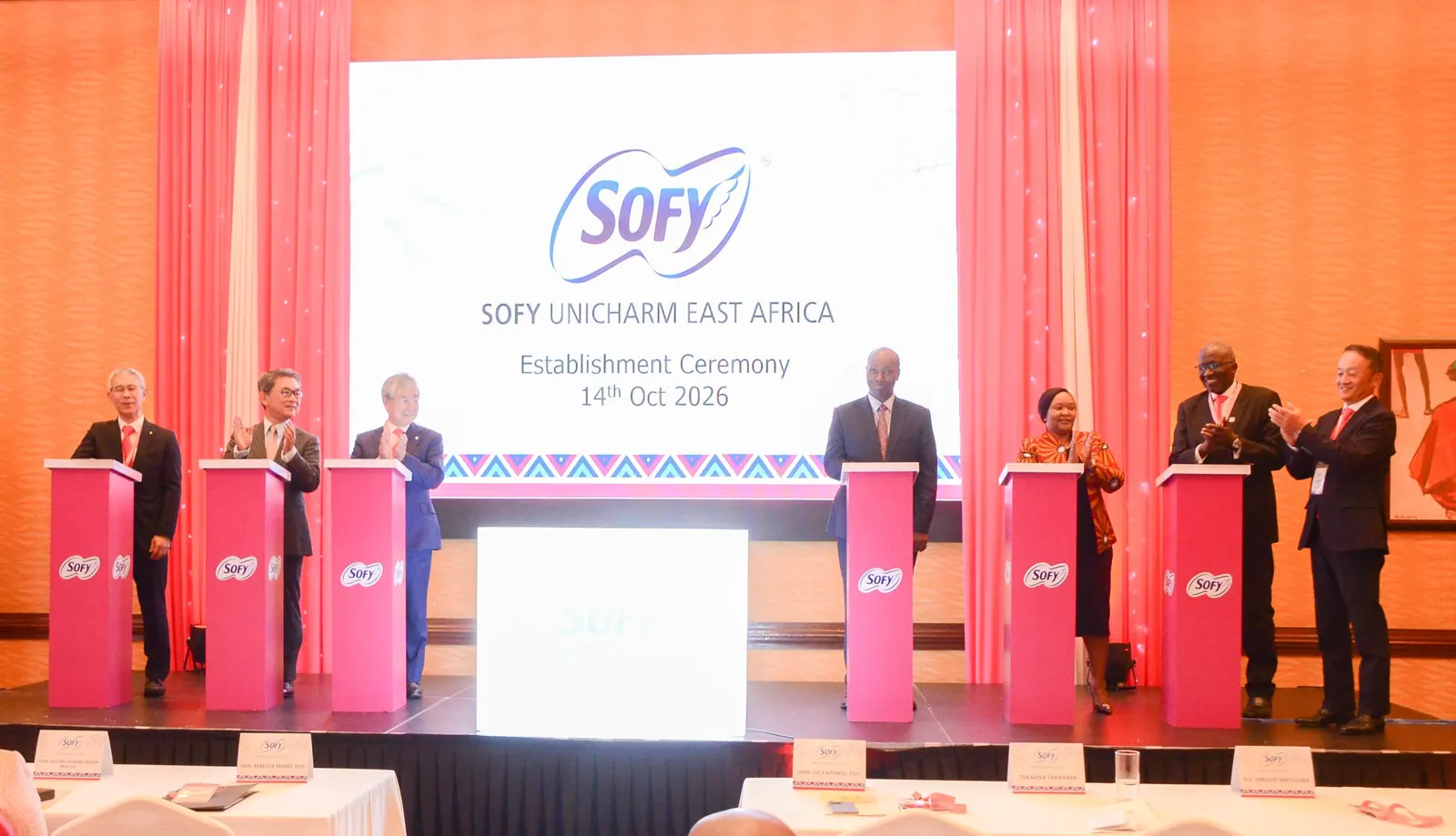
Sofy Unicharm East Africa Limited was launched in Kenya with a KSh2 billion investment.
The joint venture brings together Unicharm Corporation, Toyota Tsusho Corporation and CFAO Kenya Limited, with Unicharm holding a 75 per cent stake, Toyota Tsusho 17.5 per cent and CFAO Kenya 7.5 per cent.
The new firm will integrate product development, manufacturing, sales and marketing in Kenya and plans to supply and export sanitary products to neighbouring East African markets.
Operations began in September 2026 and the company targets revenue of KSh1.5 billion and to reach two million women across East Africa by 2030.
Takahisa Takahara, President and Chief Executive Officer of Unicharm Corporation, said the partnership reflects a commitment to improve quality of life by addressing hygiene challenges and supporting women’s health.
Daigo Fujiwara, Managing Director of Sofy Unicharm East Africa Limited, said the business will provide reliable feminine care solutions, promote better hygiene habits and tackle period poverty.
Kazuyuki Urata, Circular Economy Division CEO at Toyota Tsusho Corporation, said the firm will draw on its experience to build a sustainable long-term business in East Africa.
Amb. Dennis Awori, chairman of CFAO Group Kenya, said the venture will strengthen local manufacturing, develop industrial skills and improve product availability by responding closely to local demand.
Lee Kinyanjui, Cabinet Secretary for Investment, Trade and Industry, welcomed the investment as an opportunity to deepen manufacturing in Kenya and increase the local content of products.
The company entered the Kenyan market in 2023 with the premium SOFY Deep Absorb pads and added locally produced SOFY Long Lasting pads in January 2025, as well as single-pad sachets to address cost barriers.
SOFY has partnered with JICA, UNFPA and UN Women Kenya on menstrual health education programmes aimed at breaking stigma and improving knowledge.
The venture notes that about 54 per cent of Kenyan girls have faced difficulties obtaining sanitary products, underscoring the need for affordable options.
Sustainability will be integrated through local production, waste management and resource circulation as part of the company’s growth strategy.
Takahara added that after focusing on women’s hygiene the company plans to introduce other personal care items such as baby diapers.