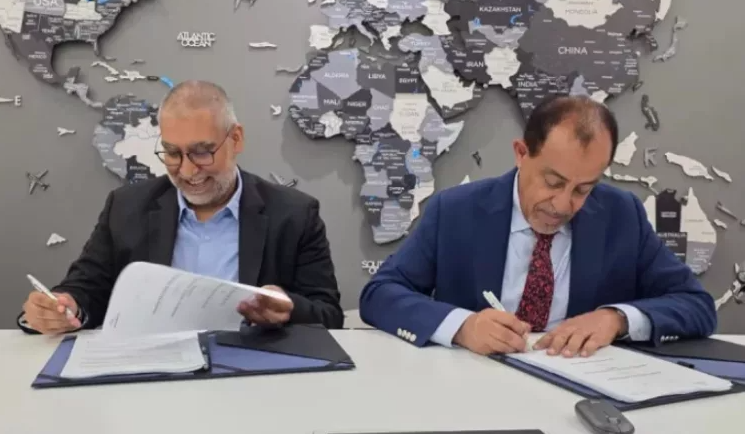
Mombasa is set for a major economic transformation following a landmark KSh12 billion (US$100 million) investment agreement between Kenyan businessman Suleiman Shahbal and global logistics giant DP World.
The deal will see the establishment of a modern Special Economic Zone (SEZ) in Jomvu Sub-County, positioning Kenya's coastal city as one of East Africa's leading industrial, manufacturing and logistics hubs. Suleiman Shahbal DP World.
The investment represents one of the most significant private sector commitments to Mombasa in recent years and is expected to accelerate industrialisation, attract foreign direct investment and create thousands of employment opportunities.
According to reports, the project is projected to generate approximately 7,972 direct jobs, while 67 companies have already expressed interest in establishing operations within the zone before construction begins.
A Vision More Than Two Decades in the Making
The agreement marks the culmination of a vision Shahbal has championed for over 20 years.
He has consistently advocated for the establishment of a Special Economic Zone in Mombasa, arguing that such a development would unlock the county's strategic potential as Kenya's gateway to regional and international trade.
His proposal first gained prominence in 2010 and has since been supported through sustained engagement with investors, government institutions and private sector stakeholders.
Transforming Jomvu into an Industrial Hub
The Special Economic Zone will occupy approximately 535 acres of land in Jomvu Sub-County.
The site, previously used as a cattle staging ground by the Kenya Meat Commission and currently leased from the County Government of Mombasa, will be redeveloped into a state-of-the-art industrial and logistics park.
The development is expected to attract a diverse range of investors, including:
- Manufacturing companies
- Logistics and supply chain firms
- Export-oriented businesses
- Technology companies
- Warehousing and distribution operators
By clustering these industries within one integrated economic zone, the project aims to enhance production efficiency, strengthen Kenya's export capacity and improve supply chain connectivity across the region.
Boosting Kenya's Position in Regional Trade
DP World operates ports, logistics facilities and free zones in more than 70 countries, making it one of the world's leading trade and supply chain companies.
Its partnership with Shahbal is expected to leverage Mombasa's strategic location as the primary maritime gateway for Kenya and several neighbouring countries, including Uganda, Rwanda, South Sudan and parts of the Democratic Republic of Congo.
The investment aligns with Kenya's broader agenda of promoting industrialisation, expanding export markets and strengthening the country's competitiveness under its Special Economic Zones programme.
By attracting international investors and modern industrial infrastructure, the project could significantly enhance Mombasa's role as a regional commercial centre.
Formal Signing Scheduled
Although the investment agreement has been concluded, a formal signing ceremony is expected to take place on 8 September at State House, Nairobi, where Shahbal and the Chairman of DP World are expected to sign the agreement in the presence of President William Ruto.
The event is anticipated to mark the official commencement of one of Kenya's largest private-led industrial development initiatives.
A New Chapter for Mombasa
Business leaders have welcomed the investment as a potential game changer for the Coast region, citing its capacity to create jobs, stimulate local enterprise and attract additional international investment.
Beyond employment, the Special Economic Zone is expected to strengthen Kenya's manufacturing base, improve logistics efficiency and reinforce Mombasa's status as a premier gateway for trade across East and Central Africa.
If implemented as planned, the DP World–Shahbal partnership could become a defining milestone in Kenya's industrial development, demonstrating how strategic private sector investment can unlock regional economic growth while enhancing the country's position in global trade networks.