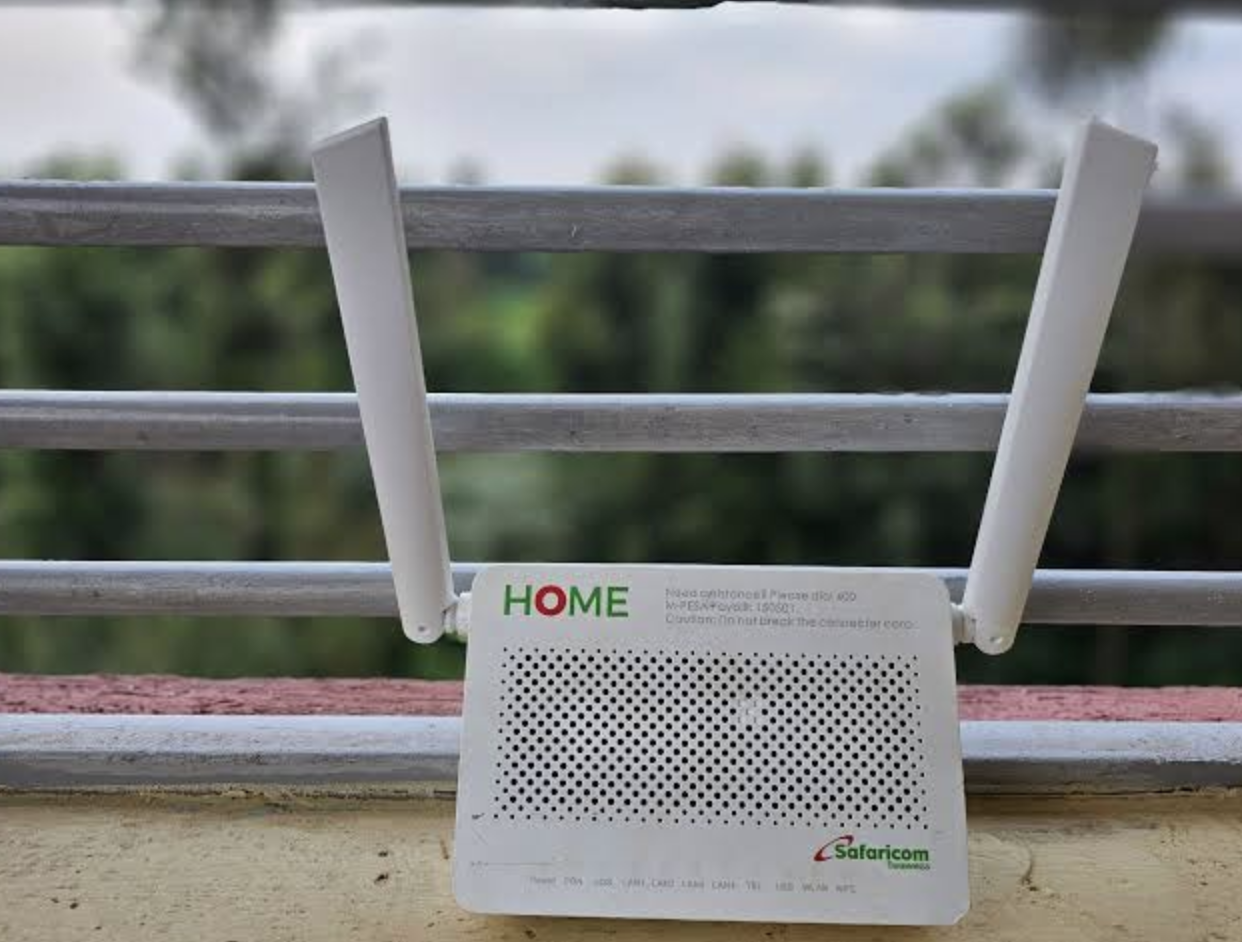
Safaricom has surpassed one million fixed internet subscriptions, cementing its position as Kenya’s largest provider as demand for home and business broadband continues to rise.
Data from the Communications Authority of Kenya (CA) shows Safaricom had 1.025 million fixed data and internet subscriptions by the end of June 2026, representing a market share of 36.1 per cent.
The telecoms company added about 289,000 subscriptions in 12 months, growing its fixed internet customer base by 39.3 per cent from 735,749 a year earlier.
The milestone comes as Kenya’s overall fixed internet market expands rapidly. Total subscriptions rose by 32.4 per cent to 2.84 million in June, compared with 2.14 million in the same period last year.
Broadband Competition Intensifies
Safaricom remains ahead of its main competitors, with Jamii Telecommunications holding 541,003 subscriptions and a 19.1 per cent market share.
Wananchi Group, which operates Zuku, had 294,375 subscriptions, while Ahadi Wireless moved into fourth place with 270,586 customers.
Poa Internet, meanwhile, recorded a decline in subscriptions, while providers including Vilcom Network, Mawingu Networks and Starlink continued to expand their customer bases.
Fibre remains the most widely used fixed-access technology, with subscriptions growing nearly 30 per cent to 1.57 million. Terrestrial wireless connections grew faster at 42.9 per cent, reaching 1.03 million.
Satellite internet subscriptions also increased by more than 54 per cent to 27,695, reflecting growing competition from alternative connectivity technologies.
The expansion comes as internet service providers compete on both price and speed. Safaricom increased speeds on several Home Fibre packages earlier this year without raising monthly charges, while Zuku subsequently introduced upgrades of its own.
Kenya’s broadband market is likely to remain competitive as more households and businesses rely on high-speed internet for work, entertainment, e-commerce and digital services.
For Safaricom, crossing the one-million mark gives the company an even stronger position outside its traditional mobile and mobile money businesses while creating another important growth area in Kenya’s increasingly digital economy.