President William Ruto announced on Sunday, October 18, 2026, in Kapsabet, Nandi County, that the government will raise the farmgate price of milk to KSh65 per litre and will clear roughly KSh400 million owed to dairy farmers by the end of October.
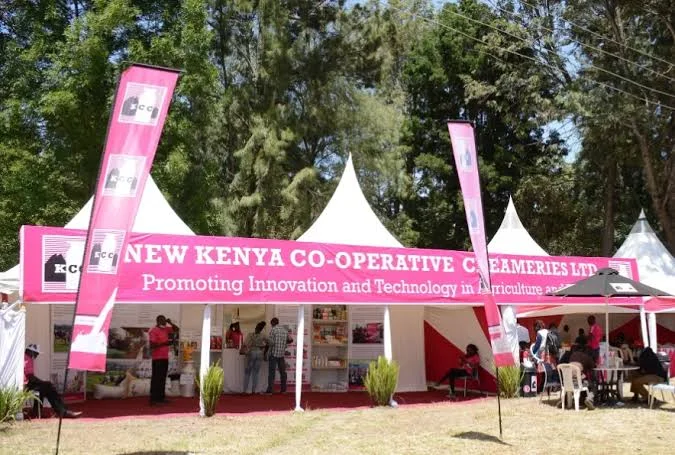
He outlined a plan to split New Kenya Co-operative Creameries into eight independently run factories, each managed locally and supplying milk directly to nearby markets rather than through Nairobi.
“We want New KCC factories to be autonomous and owned by farmers in their jurisdiction as we plan to inject capital to sustain their operations,” Ruto said, adding that local ownership would boost efficiency, speed payments and increase profitability.
He warned against central management of the Eldoret plant, stating “We don’t want a situation where the New KCC factory in Eldoret is managed from Nairobi. The farmers should be allowed to own their factories, get better payments and earn dividends,” and noted that the need to transport milk from a single hub would end.
The reforms will draw on the decentralised models used in the tea, coffee and sugar sectors, particularly the Kenya Tea Development Agency, and follow three years of a KSh8 billion government injection into New KCC.
The announcement coincided with a milk shortage affecting major towns, where retailers have rationed sales and retail prices have risen by about 6 per cent due to drought, poor pasture and high feed costs.
Ruto directed the State Department for Livestock to investigate improved camel and water buffalo breeds to raise milk output.
He also unveiled a dual-carriageway upgrade for the Eldoret-Kapsabet-Chavakali road to reduce congestion and facilitate goods movement, saying “As we construct roads in other parts of the country, we don’t want Kapsabet to be left behind. That’s why we are making the Eldoret-Kapsabet-Chavakali road a dual carriageway to ease the transport of goods and services.”
A road-spending package of KSh21 billion was announced, including KSh1.3 billion earmarked for the Yala-Chepkumia-Kobujoi road, and the President said the Road Maintenance Levy would be used to improve roads nationwide fairly.
“We are going to utilise the Road Maintenance Levy to fix infrastructure countrywide in the spirit of equity and distribution of resources. That’s what we mean when we say Usawa ni sawa,” he said.
In health, Ruto pledged KSh500 million to build a level-five hospital in Kapsabet as part of a plan to establish such facilities in every county, and warned counties not to divert Social Health Authority funds to infrastructure projects.
He reported that 630,000 residents of Nandi had registered with the Social Health Authority and reaffirmed the government’s commitment to affordable healthcare.
On education, he announced that Koitalel Samoei University College will receive its university charter in February 2027 and that about KSh3.5 billion has been set aside for its infrastructure in Nandi Hills.
He also pledged to complete Kipchoge Stadium in Kapsabet and equip it with a gymnasium and modern athletics training facilities, stating “Nandi, being the source of champions, has done us proud by producing athletes who have won medals globally, including the likes of Eliud Kipchoge. We want them to have modern training facilities.”
Prime Cabinet Secretary Musalia Mudavadi, present at the event, predicted that Ruto would win re-election by a wide margin in 2027, while National Assembly Majority Leader Kimani Ichung’wah said the Mount Kenya region had benefited from the President’s development programmes and would support his re-election.