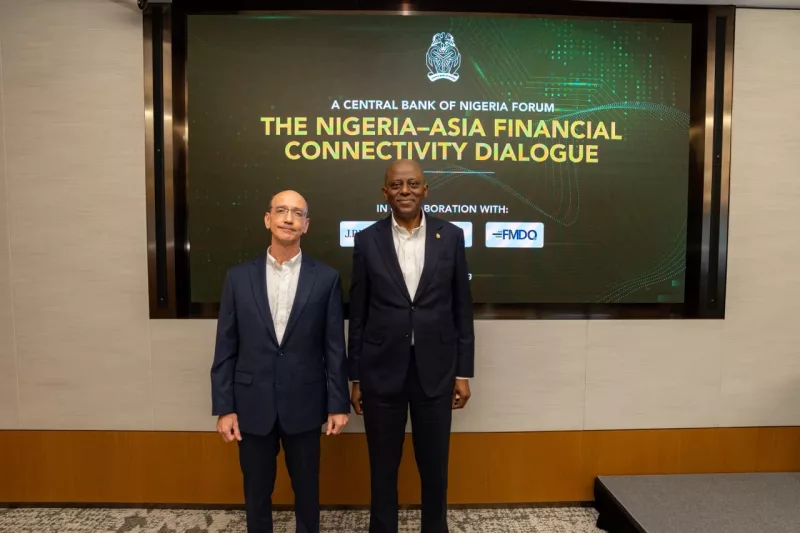
Nigeria has lifted its net foreign reserves to $46bn, up from a trough of under $1bn, while inflation has dropped from over 30 per cent in 2023 to roughly 15 per cent, according to Central Bank of Nigeria Governor Olayemi Cardoso.
Speaking at the Nigeria-Asia Financial Connectivity Dialogue in Singapore on October 8, Cardoso said the improvements stem from reforms intended to restore stability after prolonged foreign-exchange shortages and waning investor confidence.
He added that tighter monetary policy, adjustments to the foreign-exchange market and measures to strengthen commercial banks underpinned the turnaround.
Cardoso highlighted that predictable regulations and a functional currency market are essential for businesses to plan and for investors to commit capital with confidence.
The central bank governor noted that about 72 per cent of the capital raised by Nigerian banks during a recent recapitalisation drive originated from domestic sources.
He suggested that Kenya and other East African economies could benefit by deepening local capital markets and mobilising home-grown savings to lessen dependence on external financing and shield firms from abrupt shifts in foreign investment.
Nigeria is also courting Asian investors for fintech and digital services, a sector where Kenya already has a strong footprint.
Cardoso warned regulators to foster innovation without compromising stability, stating, “We don’t go too far as to stifle innovation, and at the same time, we don’t go too far in the other direction to find that regulation is lax.”
He argued that clear rules protecting consumers while permitting business innovation could keep investor interest alive in Kenya’s digital finance arena.
The governor urged governments to keep policies consistent, pointing to Nigeria’s large population and access to African markets as attractive to foreign firms, and said, “What we bring to the party is scale.”
He cautioned that market size alone does not guarantee investment, and that Kenya and its neighbours must pair regional market potential with sound institutions, smoother cross-border transactions and fewer trade barriers.
Deeper integration across East Africa, he said, could draw investors looking for opportunities in manufacturing, energy, transport and digital services.
Cardoso also mentioned a memorandum of understanding signed between Nigeria’s central bank and the Ministry of Finance to improve coordination between monetary and fiscal authorities.
He concluded that Kenya should not simply replicate Nigeria’s reforms, but should focus on building credible institutions, maintaining policy stability and bolstering financial buffers.
Nigeria is now using its stronger reserves to persuade Asian investors that it offers a more stable environment for business.