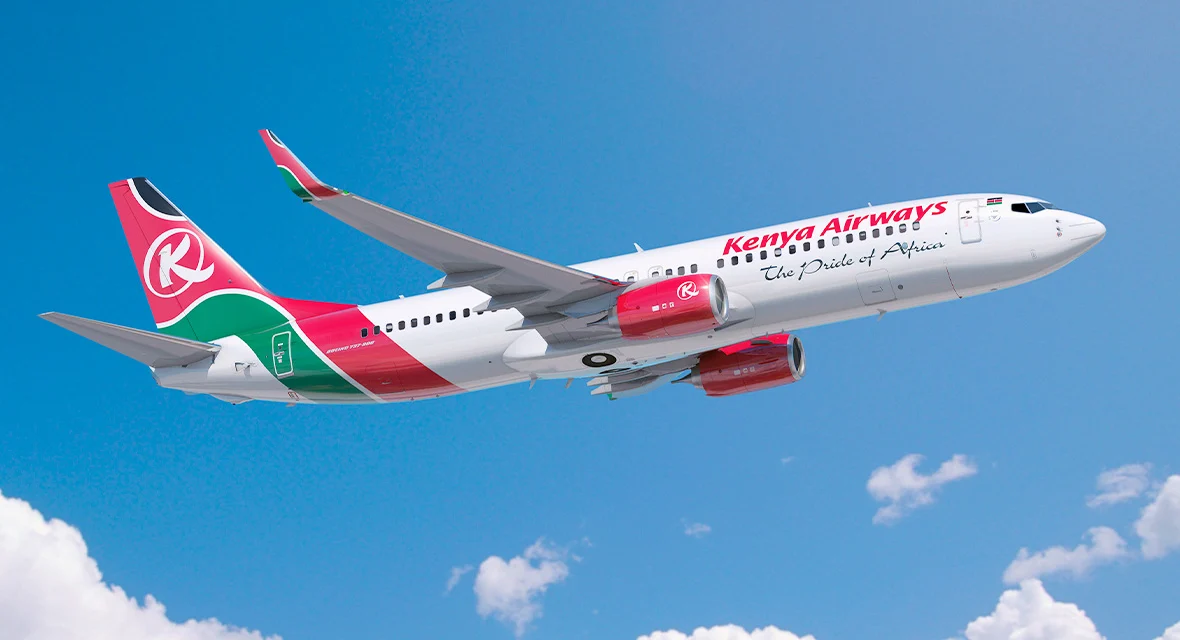
The Cabinet, chaired by President William Ruto, approved an additional shareholder loan of about KSh45.4 billion (approximately $350 million) for Kenya Airways, to be disbursed in stages, repaid over ten years and potentially convertible into equity.
The approval also covered the conversion of KSh122 billion of accrued interest and existing Treasury loans into an equity-qualifying tradable instrument to strengthen the airline’s balance sheet.
The new financing will increase the National Treasury’s 48.9 per cent stake in the Nairobi Securities Exchange-listed carrier and could dilute other shareholders such as KLM, which holds 7.76 per cent.
Kenya Airways reported a net loss of KSh17.16 billion for 2025 after revenue fell 14 per cent to KSh161.47 billion, with borrowings of KSh151.3 billion against cash and bank balances of just KSh5.3 billion, leaving net borrowings of almost KSh146 billion.
In the first half of 2026 the airline’s loss rose to KSh16 billion from KSh12.2 billion a year earlier, while fuel costs jumped 72 per cent and accounted for about half of total expenses.
Three Boeing 787-8 Dreamliners, representing roughly a third of the carrier’s wide-body fleet, were grounded, cutting available seat capacity by 18 per cent and cargo tonnage by 8.5 per cent to 64,780 tonnes.
“The measures form part of Kenya Airways’ long-term turnaround plan and are intended to safeguard an airline that contributes more than $1.3 billion annually to Kenya’s GDP through tourism, trade and regional connectivity,” the Cabinet statement read, noting that implementation remains subject to corporate, shareholder and regulatory approvals.
The airline has already returned two aircraft—a Boeing 787-8 and a Boeing 777-300ER—to service, and Dr George Kamal, Acting Group Managing Director and Chief Executive Officer, said, “We grew revenue by 9 per cent to KSh81 billion despite operating with 9 per cent less capacity. The improvement in our cabin factor and the strength of average coupon values demonstrate that demand for our network remains resilient.”
Operating costs stayed high in 2025, with fleet ownership costs rising to KSh27.14 billion from KSh20.43 billion a year earlier and finance costs of about KSh12.4 billion.